

1⁄12 Ecu – Monaco
Monaco

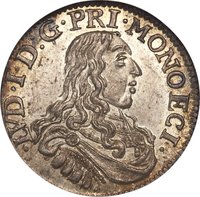
Obverse
Description:
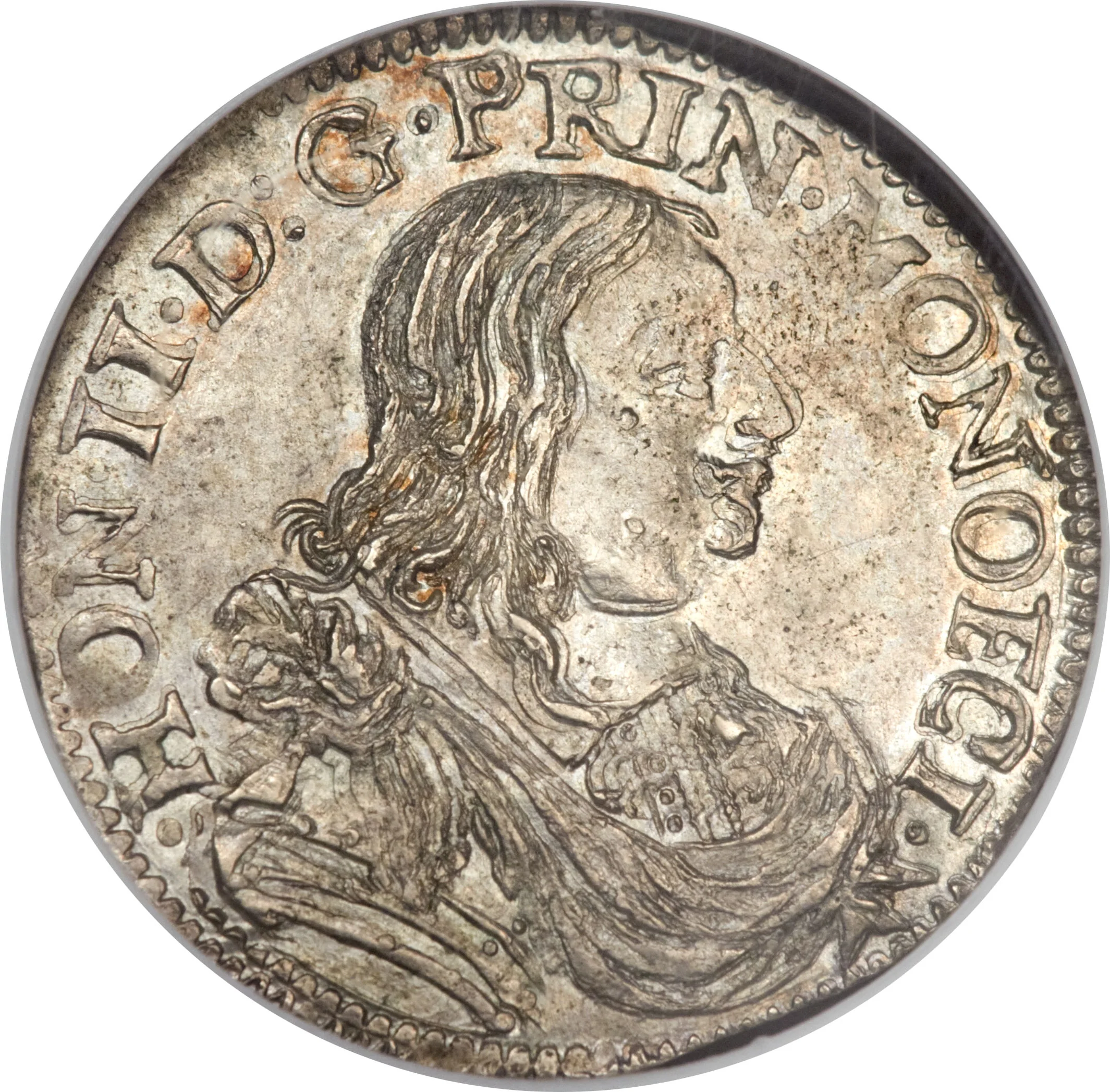
Bust of Prince Honoré II in armor, draped on the right, wearing the cordon of the Holy Spirit.
Inscription:
·HON II·D:G·PRIN·MONOECI·
Script: Latin
Engraver: Jean Solignac
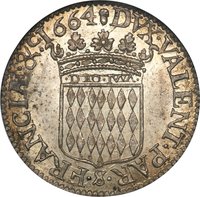
Reverse
Description:
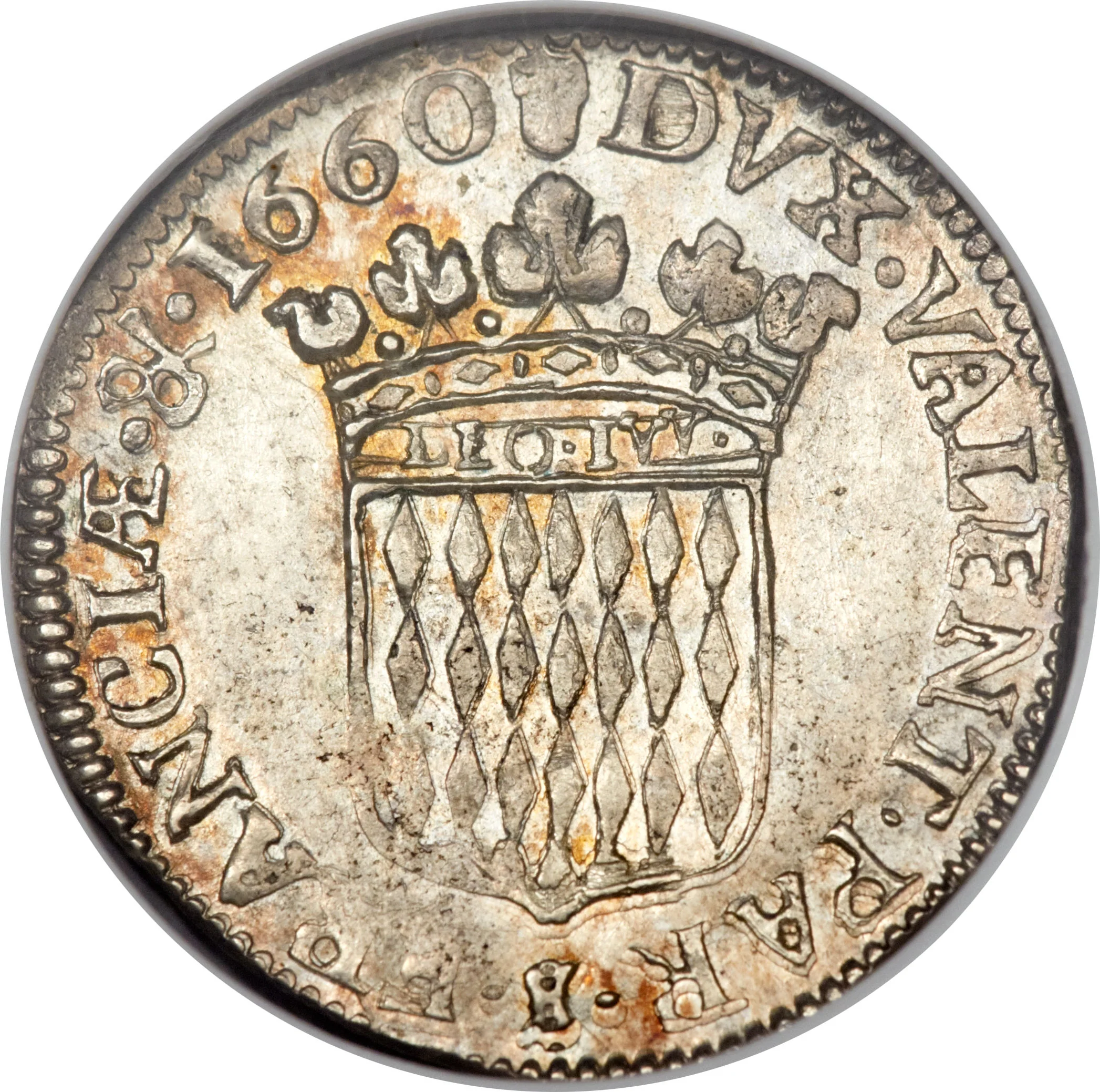
Honore II draped bust right
Inscription:
DEO· IVV.
DVX· VALENT· PAR· FRANCIÆ· &· 1660
DVX· VALENT· PAR· FRANCIÆ· &· 1660
Script: Latin
Engraver: Jean Solignac
Edge
Plain
Mints
| Name | Mark |
|---|---|
| Monaco | — |
Mintings
| Year | Mint Mark | Mintage | Quality | Collection |
|---|---|---|---|---|
| 1660 | — | — | ||
| 1661 | — | — | ||
| 1662 | — | — |
Historical background
In 1660, Monaco’s currency situation was a direct reflection of its precarious political and economic position. The Grimaldi-led principality, while a sovereign state, existed in the orbit of much larger powers, primarily Spain and France. At this time, Monaco was under Spanish protection (a treaty relationship established in 1524), which heavily influenced its monetary circulation. Consequently, the Spanish real and its larger denomination, the silver 8-real piece or "piece of eight," were dominant in everyday commerce. These coins, minted from New World silver, were the de facto international currency of the era and circulated freely alongside various other European coins from Italy and France.
However, this reliance on foreign coinage presented significant challenges. Monaco lacked its own mint and could not issue sovereign currency, leaving it vulnerable to the fluctuating quality and supply of imported specie. The principality’s small economy, based on citrus, olive oil, and its strategic port, was insufficient to dictate monetary policy. This meant prices and trade were subject to the instability of foreign currencies and the debasement practices of neighboring states. For the local population, transactions required a working knowledge of multiple coinage systems and their relative values, a common but inefficient reality in early modern Europe.
The year 1660 falls within a period of transition that would redefine Monaco’s monetary landscape. Spanish power was waning, and French influence was rising. Within two decades, in 1641, Monaco would shift its protectorate from Spain to France under the Treaty of Péronne. While the full monetary consequences of this shift were still unfolding in 1660, the increasing circulation of French livres, sous, and deniers was likely becoming evident. Thus, the currency situation in 1660 was one of hybrid circulation, Spanish dominance, and underlying flux, poised for a definitive reorientation toward the French monetary sphere in the coming decades.
However, this reliance on foreign coinage presented significant challenges. Monaco lacked its own mint and could not issue sovereign currency, leaving it vulnerable to the fluctuating quality and supply of imported specie. The principality’s small economy, based on citrus, olive oil, and its strategic port, was insufficient to dictate monetary policy. This meant prices and trade were subject to the instability of foreign currencies and the debasement practices of neighboring states. For the local population, transactions required a working knowledge of multiple coinage systems and their relative values, a common but inefficient reality in early modern Europe.
The year 1660 falls within a period of transition that would redefine Monaco’s monetary landscape. Spanish power was waning, and French influence was rising. Within two decades, in 1641, Monaco would shift its protectorate from Spain to France under the Treaty of Péronne. While the full monetary consequences of this shift were still unfolding in 1660, the increasing circulation of French livres, sous, and deniers was likely becoming evident. Thus, the currency situation in 1660 was one of hybrid circulation, Spanish dominance, and underlying flux, poised for a definitive reorientation toward the French monetary sphere in the coming decades.
✨ Legendary