

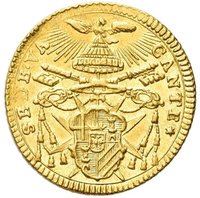
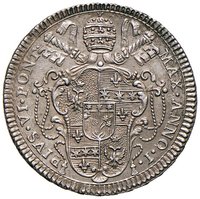
Obverse
Description:
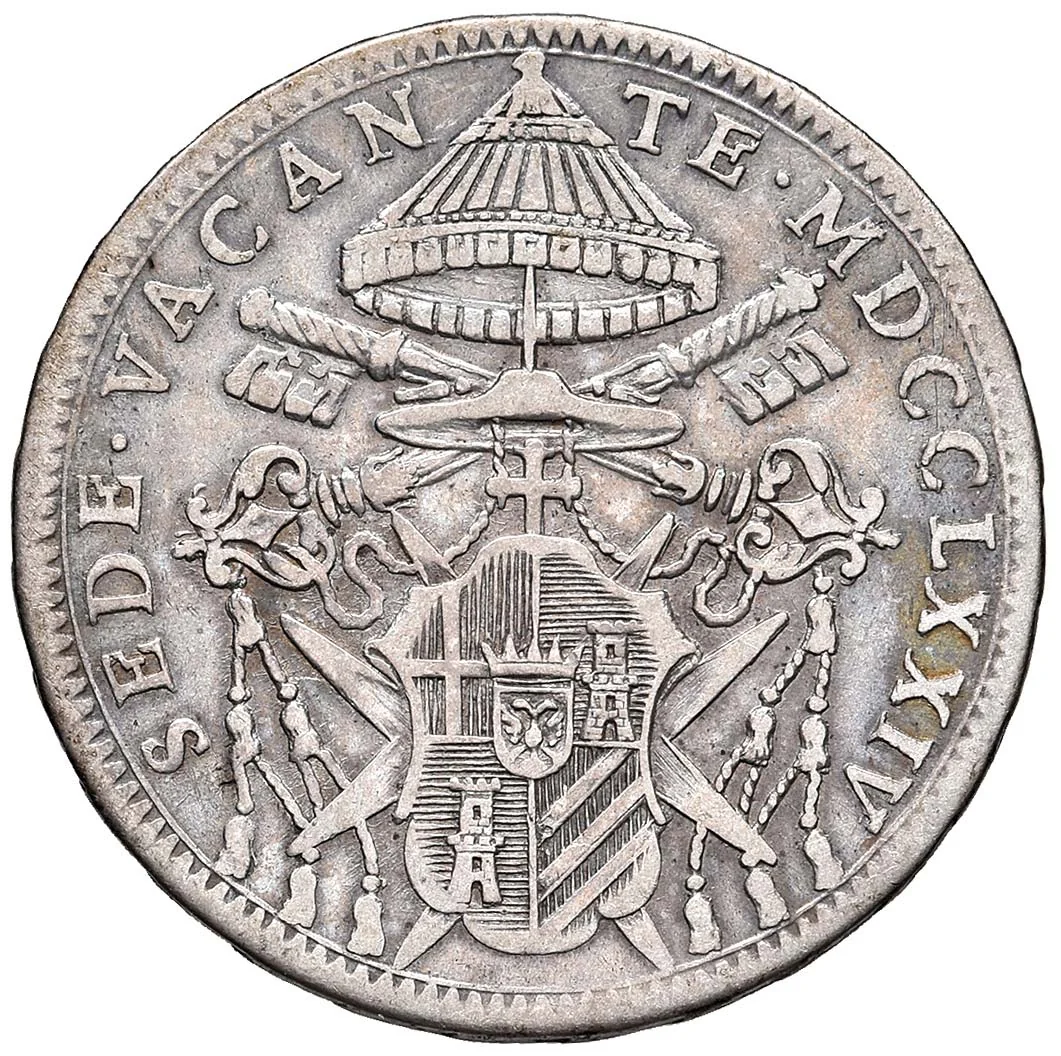
Cardinal arms with encircling lettering and roman numeral date.
Inscription:
SEDE • VACAN - TE • MDCCLXXIV
Script: Latin
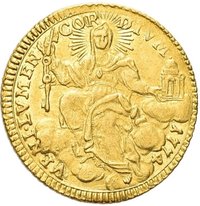
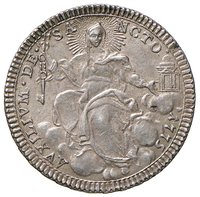
Reverse
Description:
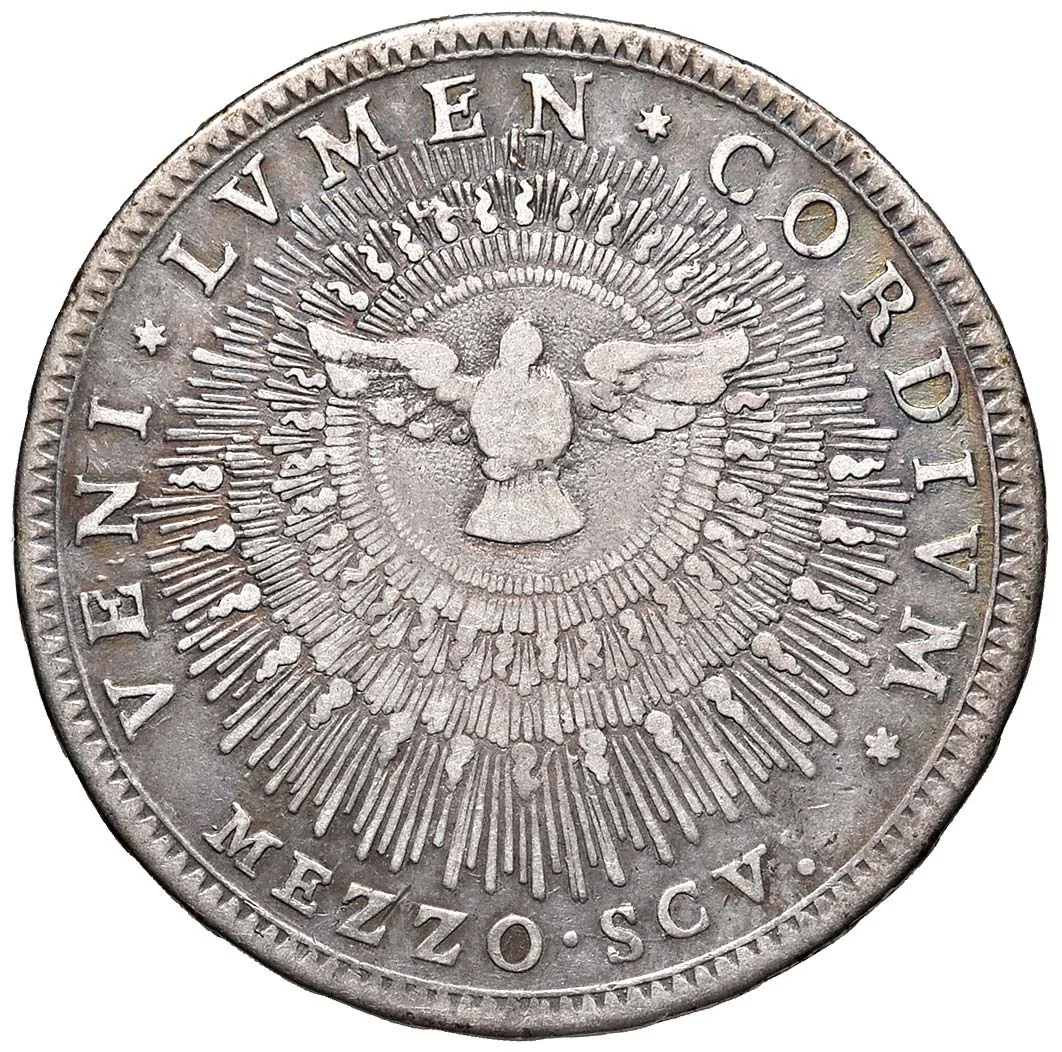
Flaming double circle surrounds a radiant dove, with lettering above and value below.
Inscription:
VENI * LVMEN * CORDIVM *
MEZZO • SCV •
MEZZO • SCV •
Script: Latin
Edge
Embossed leaves
Mints
| Name | Mark |
|---|---|
| Rome | — |
Mintings
| Year | Mint Mark | Mintage | Quality | Collection |
|---|---|---|---|---|
| 1774 | — | — |
Historical background
In 1774, the Papal States' currency system was a complex and fragmented relic of medieval and early modern practices, reflecting the temporal power's decentralized administration. The primary unit was the Papal Scudo, a silver coin theoretically divided into 100 Baiocchi, with subsidiary coins like the Grosso and Quattrino in circulation. However, the reality was far from uniform. Several major cities within the Papal territories, including Bologna, Ancona, and Ravenna, minted their own local coinage with varying values and metallic content. This created a confusing monetary landscape where exchange rates between Roman scudi and regional coins fluctuated, hindering internal trade and efficient tax collection.
The period was marked by significant inflationary pressures and debasement. Successive popes, facing chronic fiscal shortfalls due to lavish court expenditures, monumental building projects, and inefficient tax farming, often resorted to reducing the silver content in coins to increase seigniorage revenue. This practice, particularly acute earlier in the 18th century, had eroded public confidence in the currency. By 1774, under Pope Pius VI (elected in 1775), the financial situation was precarious, though his early reign would focus on draining the Pontine Marshes and acquiring antiquities, continuing the strain on the treasury rather than implementing thorough monetary reform.
Consequently, alongside the official papal and civic coinage, a multitude of foreign currencies—especially Spanish silver pieces and gold coins from other Italian states and beyond—circulated widely for substantial transactions. This de facto monetary pluralism was a direct result of the weak and unreliable domestic coinage. Thus, in 1774, the Papal States' currency situation was characterized by internal inconsistency, inflationary legacy, and dependence on more stable foreign specie, highlighting the broader economic and administrative challenges facing the ancien régime papal government.
The period was marked by significant inflationary pressures and debasement. Successive popes, facing chronic fiscal shortfalls due to lavish court expenditures, monumental building projects, and inefficient tax farming, often resorted to reducing the silver content in coins to increase seigniorage revenue. This practice, particularly acute earlier in the 18th century, had eroded public confidence in the currency. By 1774, under Pope Pius VI (elected in 1775), the financial situation was precarious, though his early reign would focus on draining the Pontine Marshes and acquiring antiquities, continuing the strain on the treasury rather than implementing thorough monetary reform.
Consequently, alongside the official papal and civic coinage, a multitude of foreign currencies—especially Spanish silver pieces and gold coins from other Italian states and beyond—circulated widely for substantial transactions. This de facto monetary pluralism was a direct result of the weak and unreliable domestic coinage. Thus, in 1774, the Papal States' currency situation was characterized by internal inconsistency, inflationary legacy, and dependence on more stable foreign specie, highlighting the broader economic and administrative challenges facing the ancien régime papal government.
💎 Extremely Rare