

Obverse
Description:
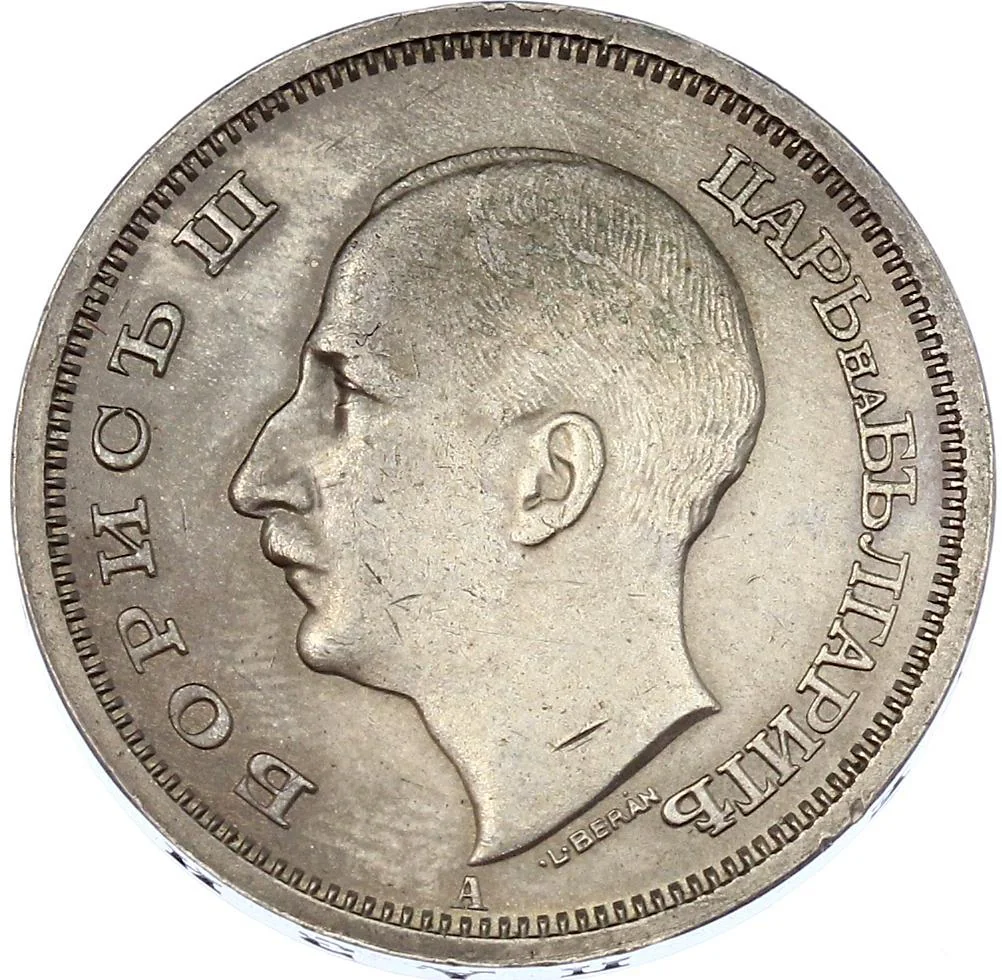
Bust of Boris III with surrounding lettering.
Inscription:
БОРИСЪ III
ЦАРЬ на БЪЛГАРИТѢ
L.Beran
ЦАРЬ на БЪЛГАРИТѢ
L.Beran
Translation:
BORIS III
TSAR OF BULGARIA
L.Beran
TSAR OF BULGARIA
L.Beran
Script: Cyrillic
Languages: Church Slavonic, Bulgarian
Engraver: Lajos Berán
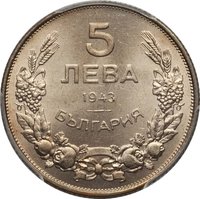
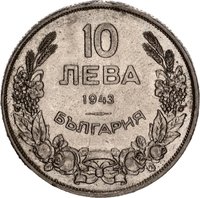
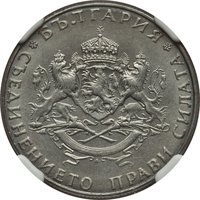
Reverse
Edge
Smooth with inscription
Legend:
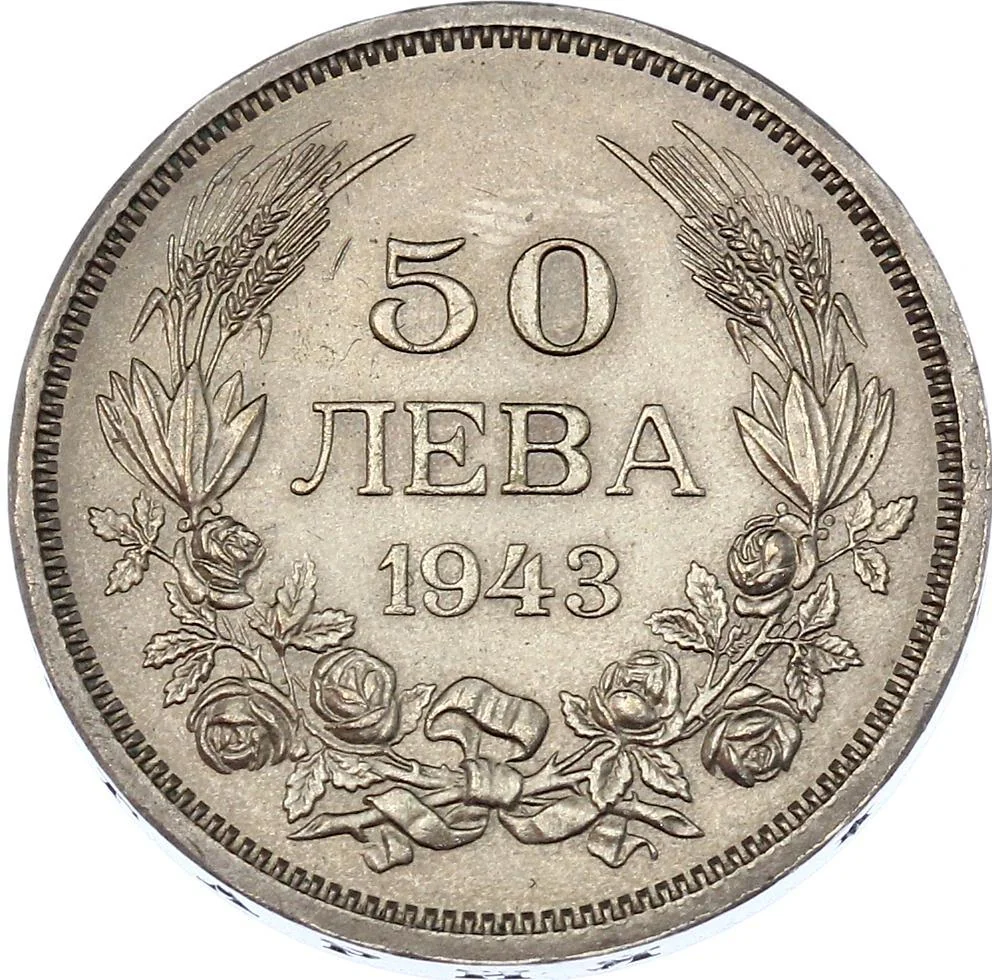
БОЖЕ ПАЗИ БЪЛГАРИЯ *
Translation:
God Save Bulgaria *
Language: Bulgarian
Mints
| Name | Mark |
|---|---|
| Berlin | A |
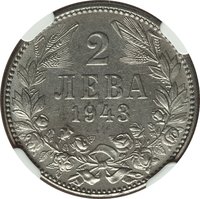
Mintings
| Year | Mint Mark | Mintage | Quality | Collection |
|---|---|---|---|---|
| 1943 | A | 15,000,000 |
Historical background
In 1943, Bulgaria's currency situation was defined by its complex position in the Second World War. Officially aligned with the Axis powers under Tsar Boris III, the country had avoided directly sending troops to the Eastern Front and had not yet enacted the Holocaust against its Jewish population. However, its wartime economy was under severe strain. The Bulgarian lev, managed by the Bulgarian National Bank, was subject to inflationary pressures common in a commandeered wartime economy. These were driven by the costs of occupying parts of Greece and Yugoslavia, supplying the German war effort with raw materials and agricultural goods, and dealing with Allied economic blockades and bombing raids that disrupted trade.
The monetary system was characterized by strict government controls and a growing black market. While official prices and exchange rates were fixed by authorities to maintain a facade of stability, the reality was a shortage of consumer goods and rampant inflation. This disconnect between official and real value led to widespread hoarding of goods and the use of barter, while more stable foreign currencies like the German Reichsmark and, clandestinely, British pounds or US dollars, were sought for significant transactions. The state financed its expenditures largely through borrowing from the central bank, effectively printing money, which further devalued the lev.
Ultimately, the currency situation of 1943 was one of controlled decay, masking underlying economic fragility. The stability of the lev was artificial and unsustainable, propped up by political decrees rather than genuine economic strength. This precarious position foreshadowed the severe monetary crisis and hyperinflation that would engulf Bulgaria in the immediate post-war years, following the communist takeover and before the 1947 currency reform. The wartime economy had drained reserves and set the stage for a profound economic restructuring.
The monetary system was characterized by strict government controls and a growing black market. While official prices and exchange rates were fixed by authorities to maintain a facade of stability, the reality was a shortage of consumer goods and rampant inflation. This disconnect between official and real value led to widespread hoarding of goods and the use of barter, while more stable foreign currencies like the German Reichsmark and, clandestinely, British pounds or US dollars, were sought for significant transactions. The state financed its expenditures largely through borrowing from the central bank, effectively printing money, which further devalued the lev.
Ultimately, the currency situation of 1943 was one of controlled decay, masking underlying economic fragility. The stability of the lev was artificial and unsustainable, propped up by political decrees rather than genuine economic strength. This precarious position foreshadowed the severe monetary crisis and hyperinflation that would engulf Bulgaria in the immediate post-war years, following the communist takeover and before the 1947 currency reform. The wartime economy had drained reserves and set the stage for a profound economic restructuring.
🌱 Common