

½ baiocco – Ferrara
Add to wishlist
Italy
Context
Years: 1719–1720
Country: Italy
Issuer: Ferrara
Ruler: Clement XI
Currency:
(1534—1835)
Demonetized: Yes
Material
References
KM: #
Numista: #239260
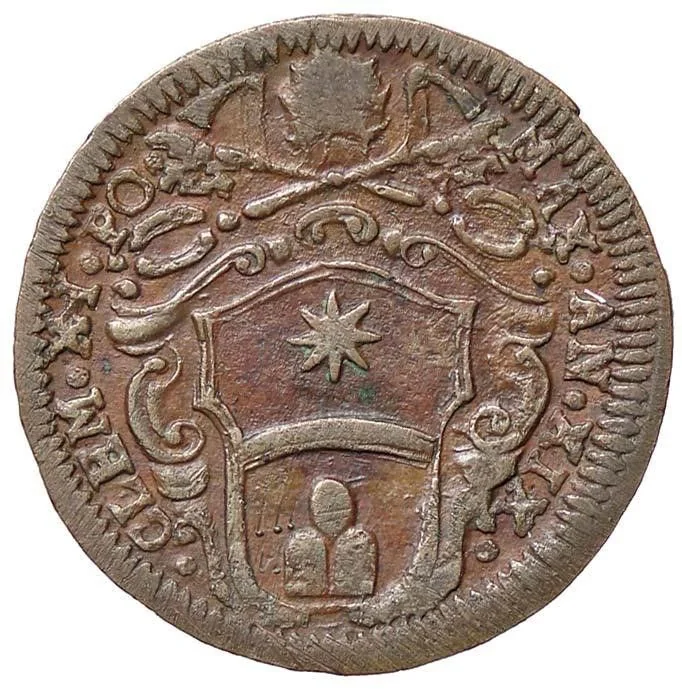
Obverse
Description:
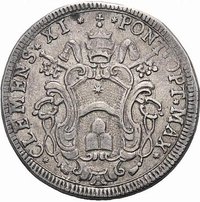
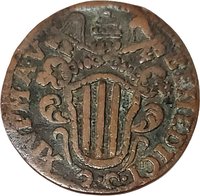
Albani arms in cartouche, topped by papal tiara and keys.
Inscription:
*CLEM* XI* PO* MAX*AN XIX*
Script: Latin
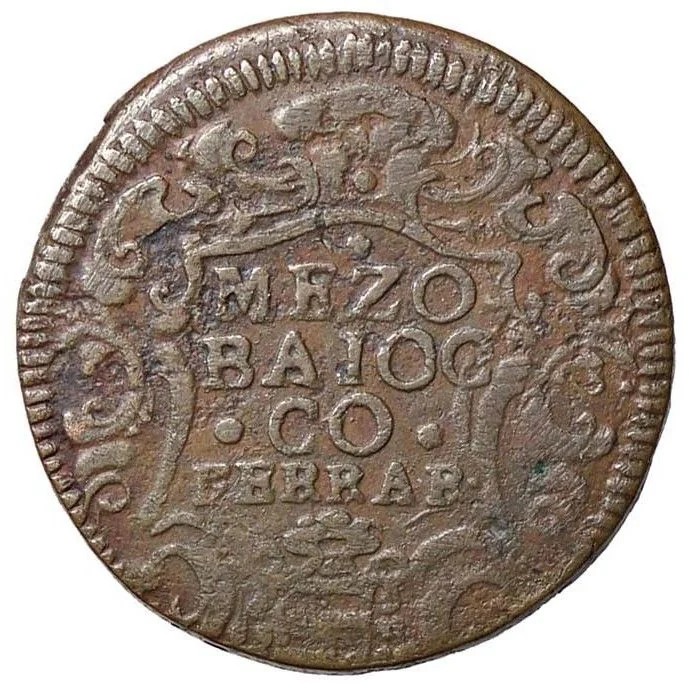
Reverse
Description:
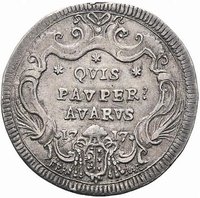
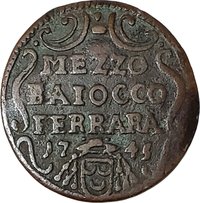
Four-line inscription within cartouche.
Inscription:
*
MEZO
BAIOC
.CO.
FERRAR
MEZO
BAIOC
.CO.
FERRAR
Script: Latin
Edge
Categories
| Symbol> Crown |
| Symbols> Coat of Arms |
Mints
| Name | Mark |
|---|---|
| Ferrara | — |
Mintings
| Year | Mint Mark | Mintage | Quality | Collection |
|---|---|---|---|---|
| 1719 | — | — | ||
| 1720 | — | — |
Historical background
In 1719, the Duchy of Ferrara was under the direct rule of the Papal States, having been annexed in 1598 following the extinction of the Este family's main line. As such, its currency situation was intrinsically tied to the complex and often chaotic monetary system of the Papal territories. The circulating medium was a confusing mix of physical coins—including scudi, giuli, and baiochi—and a plethora of imaginary or "money of account" units like the lira and soldo, used for bookkeeping but not minted. This system created constant difficulties in trade and taxation, as the values of coins relative to each other and to the money of account were subject to fluctuation and local interpretation.
The year itself was not one of major monetary reform but rather of ongoing strain within this inherited framework. The Papal government in Rome struggled with chronic fiscal deficits, often resorting to debasement (reducing the precious metal content in coins) to raise revenue. While such policies were decreed centrally, their impact was felt acutely in provincial territories like Ferrara, where the sudden influx of poorer-quality coinage could disrupt local markets and erode trust. Furthermore, Ferrara's economy, once a Renaissance powerhouse, was now largely agricultural and somewhat stagnant, making it particularly vulnerable to monetary instability that affected prices and debts.
Consequently, merchants, landowners, and citizens in Ferrara navigated a daily reality of calculating values across multiple tiers of coinage, wary of the quality and origin of each physical coin they received. The lack of a uniform, reliable currency hindered economic activity and was a persistent administrative headache for local officials, who had to enforce papal ordinances often designed for Rome's benefit rather than Ferrara's specific conditions. Thus, the currency situation in 1719 Ferrara was characterized by a fragile and convoluted system, a legacy of its political subordination and a reflection of the broader monetary malaise within the Papal States during the early 18th century.
The year itself was not one of major monetary reform but rather of ongoing strain within this inherited framework. The Papal government in Rome struggled with chronic fiscal deficits, often resorting to debasement (reducing the precious metal content in coins) to raise revenue. While such policies were decreed centrally, their impact was felt acutely in provincial territories like Ferrara, where the sudden influx of poorer-quality coinage could disrupt local markets and erode trust. Furthermore, Ferrara's economy, once a Renaissance powerhouse, was now largely agricultural and somewhat stagnant, making it particularly vulnerable to monetary instability that affected prices and debts.
Consequently, merchants, landowners, and citizens in Ferrara navigated a daily reality of calculating values across multiple tiers of coinage, wary of the quality and origin of each physical coin they received. The lack of a uniform, reliable currency hindered economic activity and was a persistent administrative headache for local officials, who had to enforce papal ordinances often designed for Rome's benefit rather than Ferrara's specific conditions. Thus, the currency situation in 1719 Ferrara was characterized by a fragile and convoluted system, a legacy of its political subordination and a reflection of the broader monetary malaise within the Papal States during the early 18th century.
✨ Legendary