

4 Mariengroschen – Brunswick-Lüneburg-Calenberg
Germany
Context
Year: 1676
Country: Germany 
Issuer: Brunswick-Lüneburg-Calenberg
Ruler: John Frederick
Currency:
Demonetized: Yes
Material
References
KM: #Click to copy to clipboard180
Numista: #237974
Value
Bullion value: $6.68
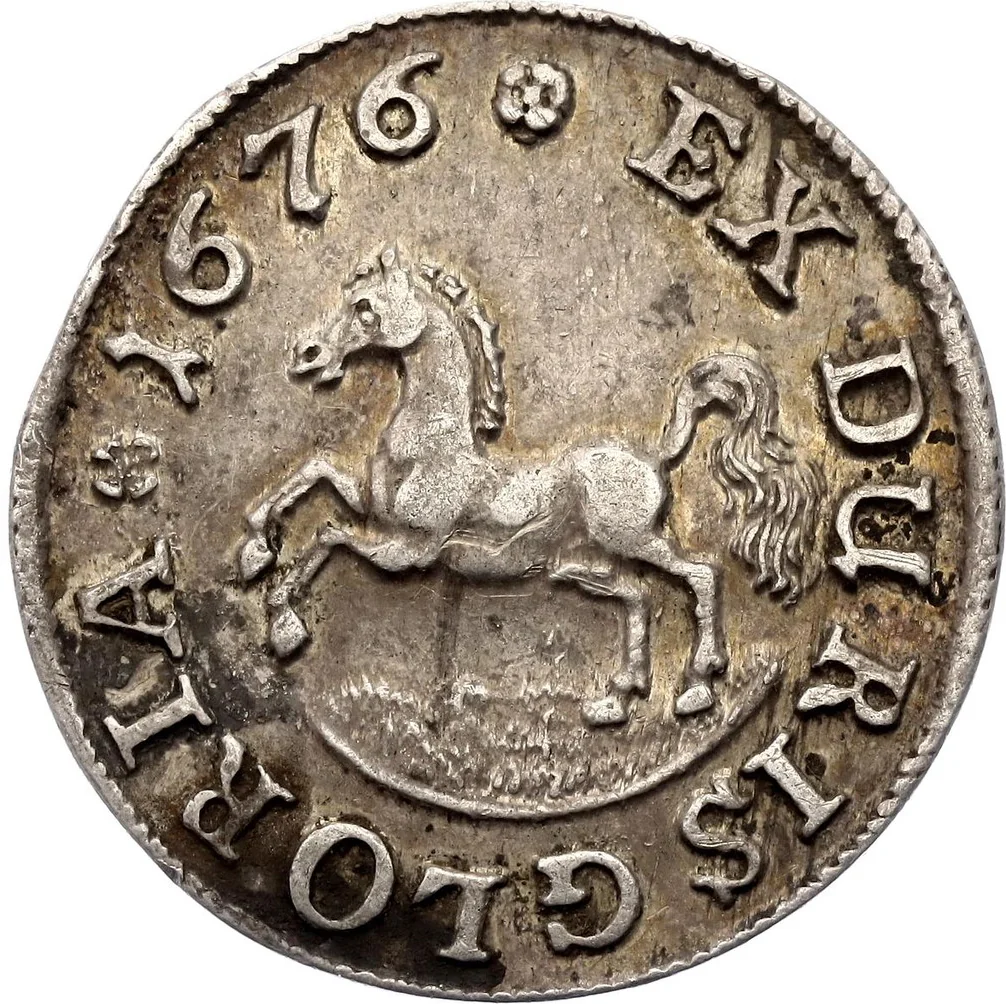
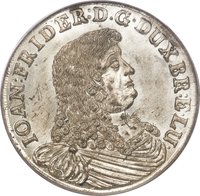
Obverse
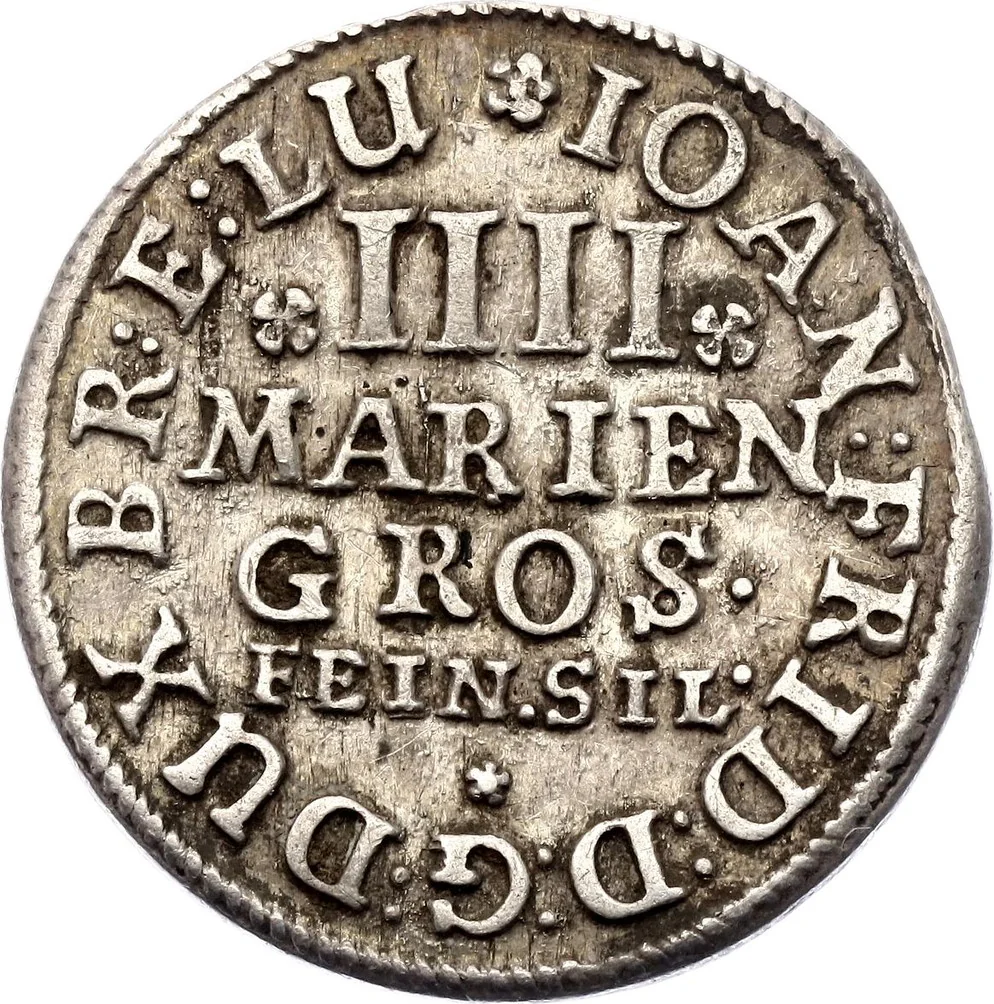
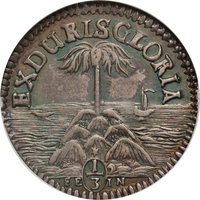
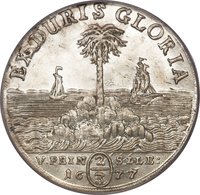
Reverse
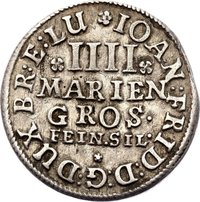
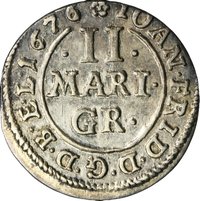
Description:
Inner circle: three values. Outer ring: legend.
Inscription:
IIII
MARIEN
GROS.
FEIN.SIL.
IOA : N : FRID : D : G: DUX BR : E : LU
MARIEN
GROS.
FEIN.SIL.
IOA : N : FRID : D : G: DUX BR : E : LU
Script: Latin
Edge
Mintings
| Year | Mint Mark | Mintage | Quality | Collection |
|---|---|---|---|---|
| 1676 | — | — |
Historical background
In 1676, the Duchy of Brunswick-Lüneburg, specifically the Principality of Calenberg under Duke John Frederick, was entangled in the complex and debilitating monetary chaos common to the Holy Roman Empire in the 17th century. The region suffered from a severe proliferation of debased coinage, a problem stemming from the fragmentation of minting rights among numerous imperial states and cities. Neighboring territories, notably the Bishopric of Münster, were aggressively issuing low-quality Kipper und Wipper coins, flooding the market with currency containing less precious metal than its face value. This practice triggered Gresham's Law, where "bad money drives out good," causing older, full-value coins to be hoarded or melted down, thus destabilizing Calenberg's economy.
Duke John Frederick attempted to combat this crisis through regional agreements, most significantly by adhering to the currency standards of the Braunschweig-Lüneburgische Münzkonvention (Brunswick-Lüneburg Monetary Convention). This treaty among the various Brunswick-Lüneburg lines aimed to standardize coinage by defining consistent silver content and denominations, such as the Taler and Gute Groschen. However, the effectiveness of this convention was limited in 1676, as enforcement against external "bad money" was difficult, and the financial pressures of maintaining his court and political ambitions (including his role as a Prince-Elector from 1665) strained the ducal finances, creating temptation for occasional debasement.
Consequently, the currency situation in Calenberg in 1676 was one of fragile and contested stability. While Duke John Frederick officially upheld treaty standards for his own mint, his subjects contended with a mixed and unreliable circulation of coins. This environment eroded public trust, hampered trade, and created constant tension between the need for sound money and the short-term fiscal demands of the state. The situation underscored the fundamental challenge of maintaining monetary sovereignty within the Empire's decentralized political structure.
Duke John Frederick attempted to combat this crisis through regional agreements, most significantly by adhering to the currency standards of the Braunschweig-Lüneburgische Münzkonvention (Brunswick-Lüneburg Monetary Convention). This treaty among the various Brunswick-Lüneburg lines aimed to standardize coinage by defining consistent silver content and denominations, such as the Taler and Gute Groschen. However, the effectiveness of this convention was limited in 1676, as enforcement against external "bad money" was difficult, and the financial pressures of maintaining his court and political ambitions (including his role as a Prince-Elector from 1665) strained the ducal finances, creating temptation for occasional debasement.
Consequently, the currency situation in Calenberg in 1676 was one of fragile and contested stability. While Duke John Frederick officially upheld treaty standards for his own mint, his subjects contended with a mixed and unreliable circulation of coins. This environment eroded public trust, hampered trade, and created constant tension between the need for sound money and the short-term fiscal demands of the state. The situation underscored the fundamental challenge of maintaining monetary sovereignty within the Empire's decentralized political structure.
✨ Legendary