

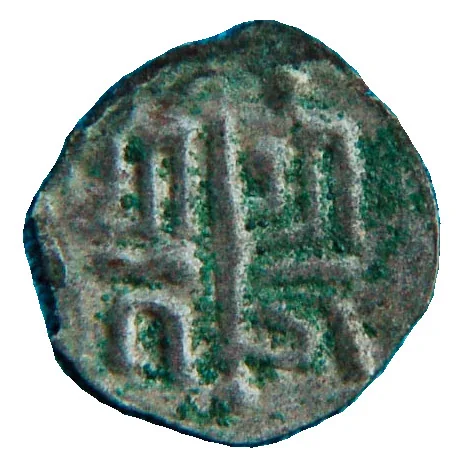
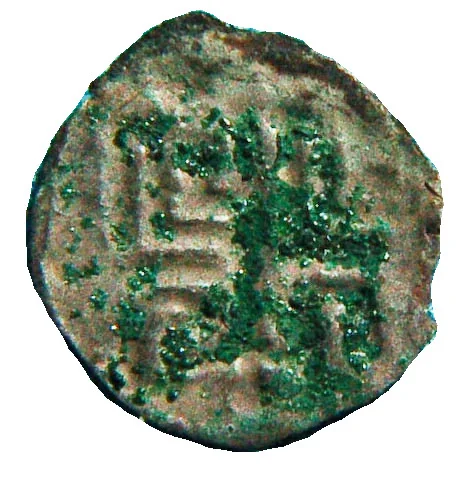
1 Dam – Patan Kingdom
Nepal
Context
Year: 1765
Country: Nepal 
Issuer: Patan Kingdom
Ruler: Tej Narasimha Malla
Currency:
(1546—1932)
Demonetized: Yes
Material
References
KM: #Click to copy to clipboard435
Numista: #234088
Obverse
Reverse
Description:
Blank.
Edge
Mintings
| Year | Mint Mark | Mintage | Quality | Collection |
|---|---|---|---|---|
| 1765 | — | — |
Historical background
In 1765, the Patan Kingdom (one of the three core city-states of the Kathmandu Valley, now part of modern Nepal) operated within a complex and fragmented monetary system. The kingdom, like its neighbours Kathmandu and Bhaktapur, minted its own distinct silver mohar coins, which served as the primary currency for significant trade and state transactions. These coins bore the symbols and script of the Malla dynasty, asserting Patan's sovereignty and cultural identity. However, the system was not exclusive; coins from the other Malla kingdoms, from larger Indian rupees (especially from the Mughal Empire), and even older debased issues circulated concurrently, their value determined by weight and metallic purity rather than a centralised fiat.
This monetary landscape was directly shaped by the kingdom's precarious political and economic position. By the mid-18th century, the Malla kingdoms were weakened by incessant rivalry and trade disputes, which often involved blocking the minting or circulation of each other's coins. Furthermore, the rising Gorkha Kingdom to the west, under Prithvi Narayan Shah, had begun an economic and military blockade of the valley. This stranglehold severely disrupted the vital trans-Himalayan trade routes that were the lifeblood of Patan's economy, threatening the inflow of silver bullion needed to mint coins and causing potential hoarding and instability in the local money supply.
Consequently, the currency situation in 1765 Patan was one of underlying tension and transition. While the kingdom still exercised its royal prerogative to mint coins, its monetary autonomy was being steadily eroded by external pressure and internal fragility. The coexistence of multiple coinages reflected both the valley's historic commercial links and its current political fragmentation. Within a few years, this unstable system would collapse entirely with the Gorkha conquest of the valley in 1768-69, after which the new Shah dynasty would impose a unified, valley-wide currency, ending the centuries-old tradition of separate Malla coinages.
This monetary landscape was directly shaped by the kingdom's precarious political and economic position. By the mid-18th century, the Malla kingdoms were weakened by incessant rivalry and trade disputes, which often involved blocking the minting or circulation of each other's coins. Furthermore, the rising Gorkha Kingdom to the west, under Prithvi Narayan Shah, had begun an economic and military blockade of the valley. This stranglehold severely disrupted the vital trans-Himalayan trade routes that were the lifeblood of Patan's economy, threatening the inflow of silver bullion needed to mint coins and causing potential hoarding and instability in the local money supply.
Consequently, the currency situation in 1765 Patan was one of underlying tension and transition. While the kingdom still exercised its royal prerogative to mint coins, its monetary autonomy was being steadily eroded by external pressure and internal fragility. The coexistence of multiple coinages reflected both the valley's historic commercial links and its current political fragmentation. Within a few years, this unstable system would collapse entirely with the Gorkha conquest of the valley in 1768-69, after which the new Shah dynasty would impose a unified, valley-wide currency, ending the centuries-old tradition of separate Malla coinages.

✨ Legendary