

1 Dam – Patan Kingdom
Nepal
Context

Material
Diameter: 7 mm
Weight: 0.04 g
Silver weight: 0.04 g
Shape: Irregular round
Composition: Silver
Magnetic: No
Technique: Hammered
References
KM: #Click to copy to clipboard430
Numista: #466376
Value
Bullion value: $0.11
Obverse
Description:
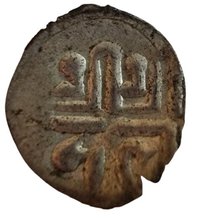
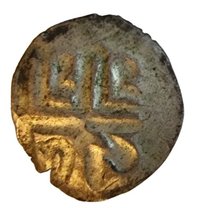
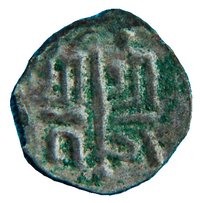
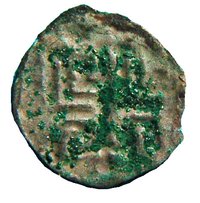
Sword-splitting legend.
Inscription:
Sri Sri
Da La
Da La
Reverse
Edge
Mintings
| Year | Mint Mark | Mintage | Quality | Collection |
|---|---|---|---|---|
| — | — | — |
Historical background
In 1764, the Patan Kingdom (one of the three core city-states of the Kathmandu Valley, now part of modern Nepal) operated within a complex and fragmented monetary system. The kingdom did not issue its own sovereign coinage but relied heavily on the prolific silver mohar coins of the neighboring Kantipur (Kathmandu) Kingdom, which served as the valley's primary currency. Alongside these, a variety of older Malla dynasty coinages, debased issues, and foreign currencies—particularly Tibetan silver tangkas and Indian rupees from the Mughal Empire and emerging regional powers—circulated in trade. This monetary plurality reflected Patan’s position as a vital hub on the trans-Himalayan trade route between India and Tibet, where currencies from both regions met and were exchanged.
The economic landscape was one of looming crisis and transition. The valley kingdoms were chronically weakened by internecine warfare and extravagant religious expenditures, leading to the debasement of the silver coinage. The silver content in the circulating mohars had been steadily reduced over the decades, eroding public trust and causing price instability. Furthermore, the 1764 period placed Patan on the precipice of a major political shift; the aggressive Gorkha Kingdom, under Prithvi Narayan Shah, had already begun its conquest of the valley, implementing a economic blockade that severely disrupted the trade flows upon which Patan’s prosperity and currency stability depended.
Thus, the currency situation in Patan in 1764 was characterized by dependency, fragmentation, and vulnerability. It was a system in decay, reliant on the coinage of a rival city-state and influenced by foreign trade currencies, all while being undermined by debasement and the stranglehold of the Gorkha blockade. This financial instability mirrored the kingdom's political fragility, culminating just two years later in Patan’s fall to the Gorkhali forces in 1766, which would eventually lead to the unification of Nepal and the imposition of a centralized monetary system.
The economic landscape was one of looming crisis and transition. The valley kingdoms were chronically weakened by internecine warfare and extravagant religious expenditures, leading to the debasement of the silver coinage. The silver content in the circulating mohars had been steadily reduced over the decades, eroding public trust and causing price instability. Furthermore, the 1764 period placed Patan on the precipice of a major political shift; the aggressive Gorkha Kingdom, under Prithvi Narayan Shah, had already begun its conquest of the valley, implementing a economic blockade that severely disrupted the trade flows upon which Patan’s prosperity and currency stability depended.
Thus, the currency situation in Patan in 1764 was characterized by dependency, fragmentation, and vulnerability. It was a system in decay, reliant on the coinage of a rival city-state and influenced by foreign trade currencies, all while being undermined by debasement and the stranglehold of the Gorkha blockade. This financial instability mirrored the kingdom's political fragility, culminating just two years later in Patan’s fall to the Gorkhali forces in 1766, which would eventually lead to the unification of Nepal and the imposition of a centralized monetary system.
✨ Legendary