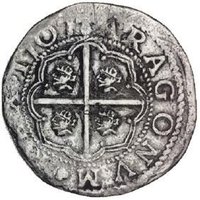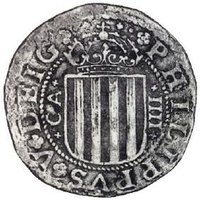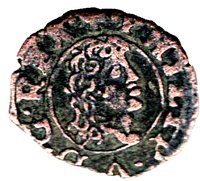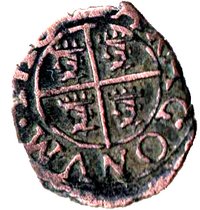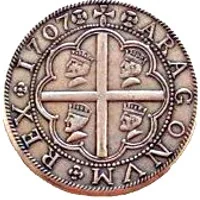
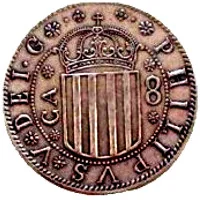
By 1707, the Kingdom of Aragon was in a state of profound political and monetary crisis due to the War of the Spanish Succession. Having backed the Habsburg Archduke Charles against the Bourbon Philip V, the Aragonese territories faced severe repercussions following their military defeat. The Nueva Planta decrees, issued by the victorious Philip V in 1707, systematically dismantled Aragon's historic
fueros (laws and institutions), incorporating the region into a centralized, Castilian-style administration. This political upheaval directly shattered the framework for Aragon's separate monetary system, which had been governed by the
Cortes and the
Diputación del General.
The currency in circulation was a complex mix, reflecting Aragon's historic autonomy and its integration into broader Spanish trade. The standard unit was the
libra jaquesa (pound of Jaca), divided into 20
sueldos or 240
dineros. However, in practice, a plethora of coins circulated: local Catalan-Aragonese
croatas and
pessetes, Castilian
reales and
escudos, and significant quantities of French, Italian, and Dutch coins from Mediterranean commerce. The war had caused severe inflation, debasement of coinage, and widespread economic disruption, leaving the monetary landscape chaotic and unstable.
The Nueva Planta decrees resolved this chaos by imposition, abolishing Aragon's separate minting rights and monetary standards. From 1707 onward, the Castilian monetary system became the sole legal standard across the former kingdom. The
real and the
escudo replaced the
libra jaquesa, and all taxes were required to be paid in the new official currency. This change was not merely financial but symbolic, marking the end of Aragon as a distinct political entity and its forced assimilation into a unified Bourbon Spain, where economic policy was dictated entirely from Madrid.