

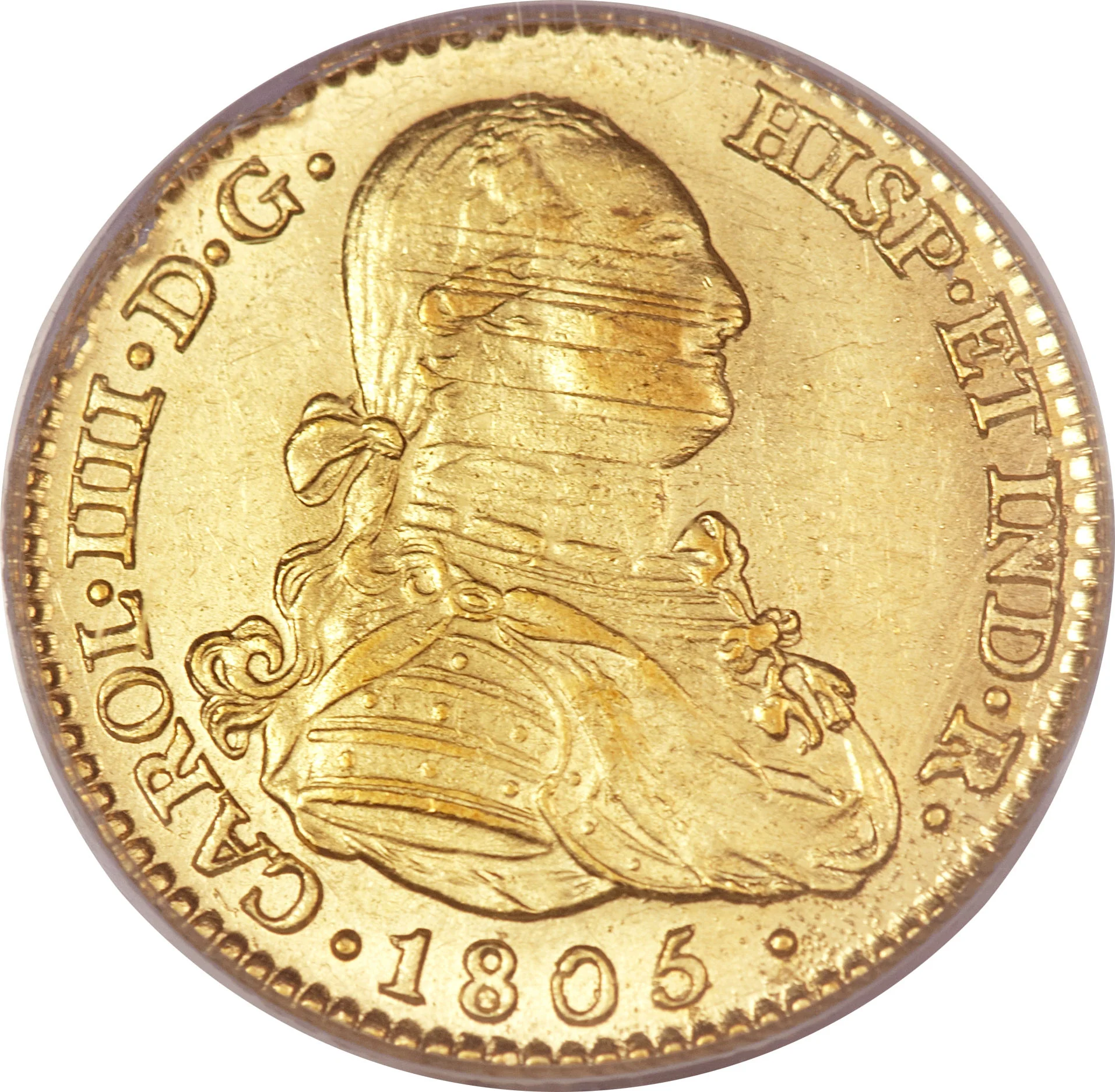
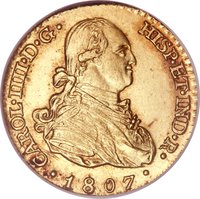
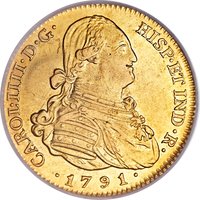
Obverse
Description:
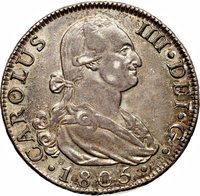
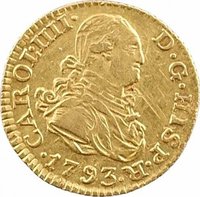
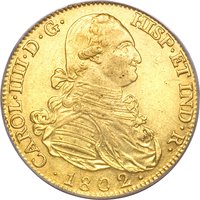
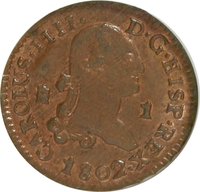
Armored bust of Charles IV facing right.
Inscription:
CAROL · IIII · D · G · HISP · ET IND · R ·
· 1805 ·
· 1805 ·
Script: Latin
Engraver: Pedro González de Sepúlveda
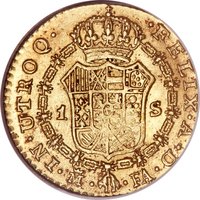
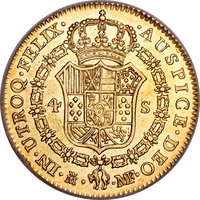
Reverse
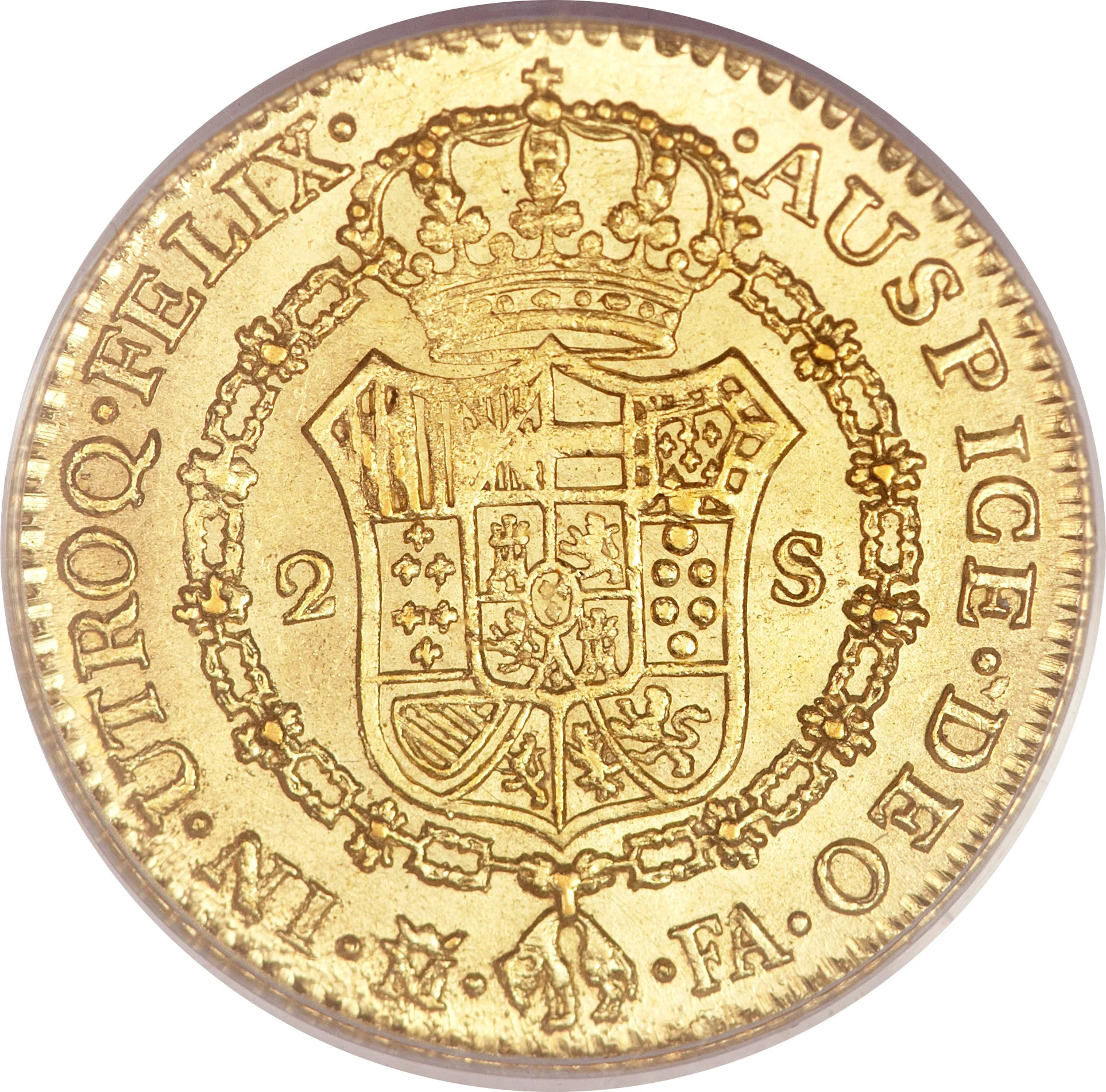
Description:
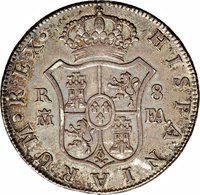
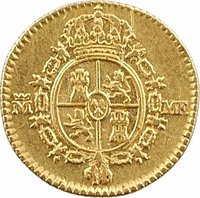
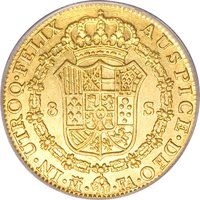
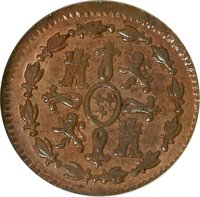
Crowned Spanish coat of arms with the Golden Fleece.
Inscription:
IN · UTROQ · FELIX · · AUSPICE · DEO
2 S
·M· ·FA·
2 S
·M· ·FA·
Script: Latin
Engraver: Pedro González de Sepúlveda
Edge
Categories
| Symbols> Coat of Arms |
Mints
| Name | Mark |
|---|---|
| Royal Mint of Madrid | (M) |
| Royal Mint of Seville | S |
Mintings
| Year | Mint Mark | Mintage | Quality | Collection |
|---|---|---|---|---|
| 1788 | MMF | — | ||
| 1789 | MMF | — | ||
| 1790 | MMF | — | ||
| 1790 | SC | — | ||
| 1791 | MMF | — | ||
| 1791 | SC | — | ||
| 1791 | SCN | — | ||
| 1792 | MMF | — | ||
| 1793 | MM | — | ||
| 1793 | MMF | — | ||
| 1793 | SCN | — | ||
| 1794 | MM | — | ||
| 1794 | MMF | — | ||
| 1794 | SCN | — | ||
| 1795 | MM | — | ||
| 1795 | MMF | — | ||
| 1795 | SCN | — | ||
| 1796 | SCN | — | ||
| 1796 | MMF | — | ||
| 1797 | MAJ | — | ||
| 1797 | MMF | — | ||
| 1797 | SCN | — | ||
| 1798 | MMF | — | ||
| 1798 | SCN | — | ||
| 1799 | MMF | — | ||
| 1799 | SCN | — | ||
| 1800 | MFA | — | ||
| 1800 | MMF | — | ||
| 1800 | SCN | — | ||
| 1801 | MFA | — | ||
| 1801 | MFM | — | ||
| 1801 | MMF | — | ||
| 1801 | SCN | — | ||
| 1802 | MFA | — | ||
| 1802 | SCN | — | ||
| 1803 | MFA | — | ||
| 1803 | SCN | — | ||
| 1804 | MFA | — | ||
| 1804 | SCN | — | ||
| 1805 | MFA | — | ||
| 1805 | SCN | — | ||
| 1806 | MFA | — | ||
| 1806 | SCN | — | ||
| 1807 | MFA | — | ||
| 1807 | SCN | — | ||
| 1807 | MAI | — | ||
| 1808 | MAI | — | ||
| 1808 | MFA | — | ||
| 1808 | SCN | — |
Historical background
In 1788, Spain's currency system was a complex and strained patchwork, reflecting the broader fiscal exhaustion of the Spanish Empire under King Charles III. The primary circulating coin was the silver real, with eight reales making the famous "piece of eight" (real de a ocho). However, the system was plagued by a severe shortage of physical specie, particularly high-quality silver. Decades of costly wars, colonial administration, and a chronic trade deficit had drained bullion from the peninsula, despite the empire's nominal wealth from American mines. This scarcity led to widespread use of lower-value copper coins (vellón) for everyday transactions, creating a bimetallic imbalance and frequent public grievance.
The monarchy attempted to manage this through repeated debasements and recoinages, most notably the heavy reliance on vellón currency. These copper coins, often overvalued by royal decree, flooded the market and drove scarce silver into hoarding or export, a classic example of Gresham's Law. Furthermore, the state's immense debt led to the proliferation of various paper instruments, like vales reales (royal bonds), first issued in 1780. While intended as interest-bearing debt, they began to circulate as a form of paper money, but their value was unstable and they traded at a significant discount to specie, eroding public confidence.
Consequently, on the eve of the French Revolution and the reign of Charles IV, Spain's monetary situation was fragile and inflationary. The economy suffered from a lack of trustworthy uniform currency, with simultaneous shortages of sound money and an oversupply of depreciated copper and paper. This financial instability weakened the crown's ability to respond to crises, creating a vulnerable economic foundation that would be catastrophically tested by the coming wars and the loss of American colonies in the following decades.
The monarchy attempted to manage this through repeated debasements and recoinages, most notably the heavy reliance on vellón currency. These copper coins, often overvalued by royal decree, flooded the market and drove scarce silver into hoarding or export, a classic example of Gresham's Law. Furthermore, the state's immense debt led to the proliferation of various paper instruments, like vales reales (royal bonds), first issued in 1780. While intended as interest-bearing debt, they began to circulate as a form of paper money, but their value was unstable and they traded at a significant discount to specie, eroding public confidence.
Consequently, on the eve of the French Revolution and the reign of Charles IV, Spain's monetary situation was fragile and inflationary. The economy suffered from a lack of trustworthy uniform currency, with simultaneous shortages of sound money and an oversupply of depreciated copper and paper. This financial instability weakened the crown's ability to respond to crises, creating a vulnerable economic foundation that would be catastrophically tested by the coming wars and the loss of American colonies in the following decades.
Series: 1788 Spain circulation coins
⭐ Somewhat Rare