

1 kronenthaler – Austrian Netherlands
Add to wishlist
Belgium
Context
Years: 1792–1800
Country: Belgium
Issuer: Austrian Netherlands
Ruler: Francis II
Currency:
(1744—1798)
Demonetized: Yes
Material
References
KM: #
Numista: #23333
Value
Bullion value: $64.14
Obverse
Description:
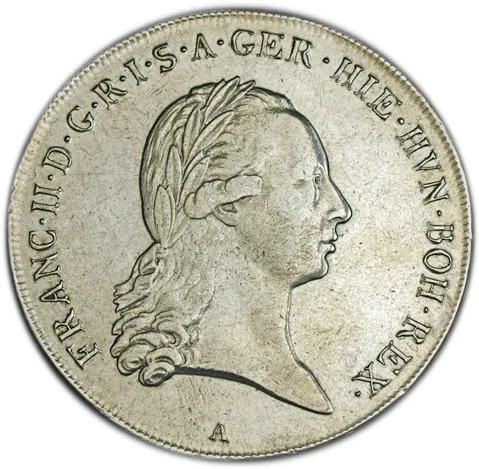
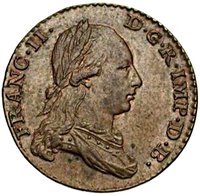
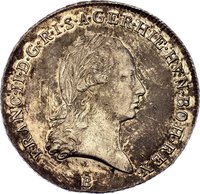
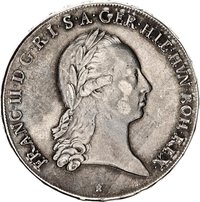
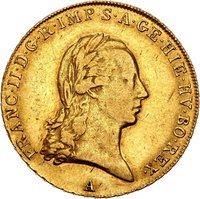
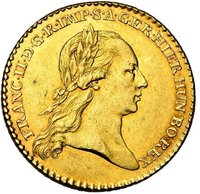
Laureate bust right, mintmark beneath.
Inscription:
FRANC II D G R I S A GER HIE HVN BOH REX
ou
FRANCISC
ou
FRANCISC
Script: Latin
Engraver: Théodore Van Berckel
Reverse
Description:
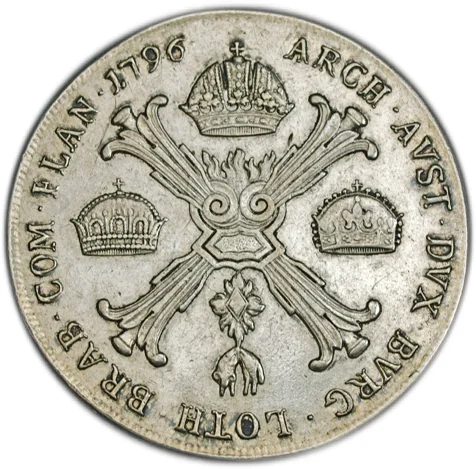
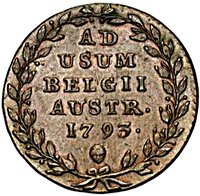
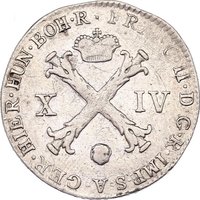
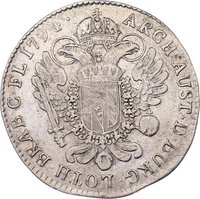
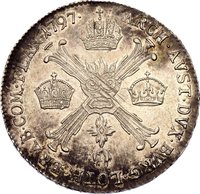
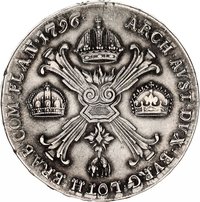
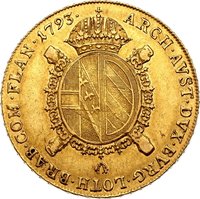
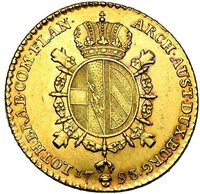
Burgundian cross with three crowns and the Golden Fleece below; date in upper-left legend.
Inscription:
ARCH·AVST·DVX·BVRG·LOTH·BRAB·COM·FLAN·
1796
1796
Script: Latin
Engraver: Théodore Van Berckel
Edge
Embossed lettering
Legend:
LEGE ET FIDE
or
FIDE ET LEGE
or
FIDE ET LEGE
Mints
| Name | Mark |
|---|---|
| Münze Österreich | A |
| Kremnica | B |
| Prague | C |
| Alba Iulia | E |
| Hall | F |
| Baia Mare | G |
| Günzburg | H |
| Milan | M |
Mintings
Historical background
In 1792, the currency situation in the Austrian Netherlands (approximately modern-day Belgium and Luxembourg) was complex and strained, reflecting the region's political and economic turbulence. The monetary system was a fragmented bimetallic one, operating on the Carolus guilder (or florin), divided into 20 stuivers. However, the circulation was a chaotic mix of domestic coinage, foreign coins (particularly Dutch guilders and French écus), and a proliferation of paper money issued by various public and private institutions. This lack of uniformity created significant challenges for trade and daily transactions, as the value and acceptance of different forms of money were inconsistent.
The instability was exacerbated by the Brabant Revolution (1789-1790), a brief period of independence from Habsburg rule, which had disrupted fiscal policy and damaged confidence. Although Austrian authority was reasserted by the end of 1790, the government in Vienna, preoccupied with war with the Ottoman Empire and growing tensions with revolutionary France, paid little attention to the province's economic woes. Consequently, the money supply was inadequate for the region's commercial needs, leading to liquidity shortages and facilitating the circulation of debased and counterfeit coins.
Most critically, the year 1792 was one of impending invasion, as revolutionary French armies were massing on the border. This imminent military threat triggered capital flight, hoarding of specie (gold and silver coins), and a severe collapse in the value of paper notes, as public trust evaporated. By the time the Battle of Jemappes in November 1792 resulted in a French conquest, the monetary system was already in a state of de facto crisis, setting the stage for the radical currency reforms and upheavals that would follow under French occupation.
The instability was exacerbated by the Brabant Revolution (1789-1790), a brief period of independence from Habsburg rule, which had disrupted fiscal policy and damaged confidence. Although Austrian authority was reasserted by the end of 1790, the government in Vienna, preoccupied with war with the Ottoman Empire and growing tensions with revolutionary France, paid little attention to the province's economic woes. Consequently, the money supply was inadequate for the region's commercial needs, leading to liquidity shortages and facilitating the circulation of debased and counterfeit coins.
Most critically, the year 1792 was one of impending invasion, as revolutionary French armies were massing on the border. This imminent military threat triggered capital flight, hoarding of specie (gold and silver coins), and a severe collapse in the value of paper notes, as public trust evaporated. By the time the Battle of Jemappes in November 1792 resulted in a French conquest, the monetary system was already in a state of de facto crisis, setting the stage for the radical currency reforms and upheavals that would follow under French occupation.
🌱 Fairly Common