

5 Baiocchi – Civitavecchia
Italy
Context
Year: 1797
Country: Italy 
Issuer: Civitavecchia
Ruler: Pius VI
Currency:
(1534—1835)
Demonetized: Yes
Material
References
KM: #Click to copy to clipboard6.1
Numista: #232421
Obverse
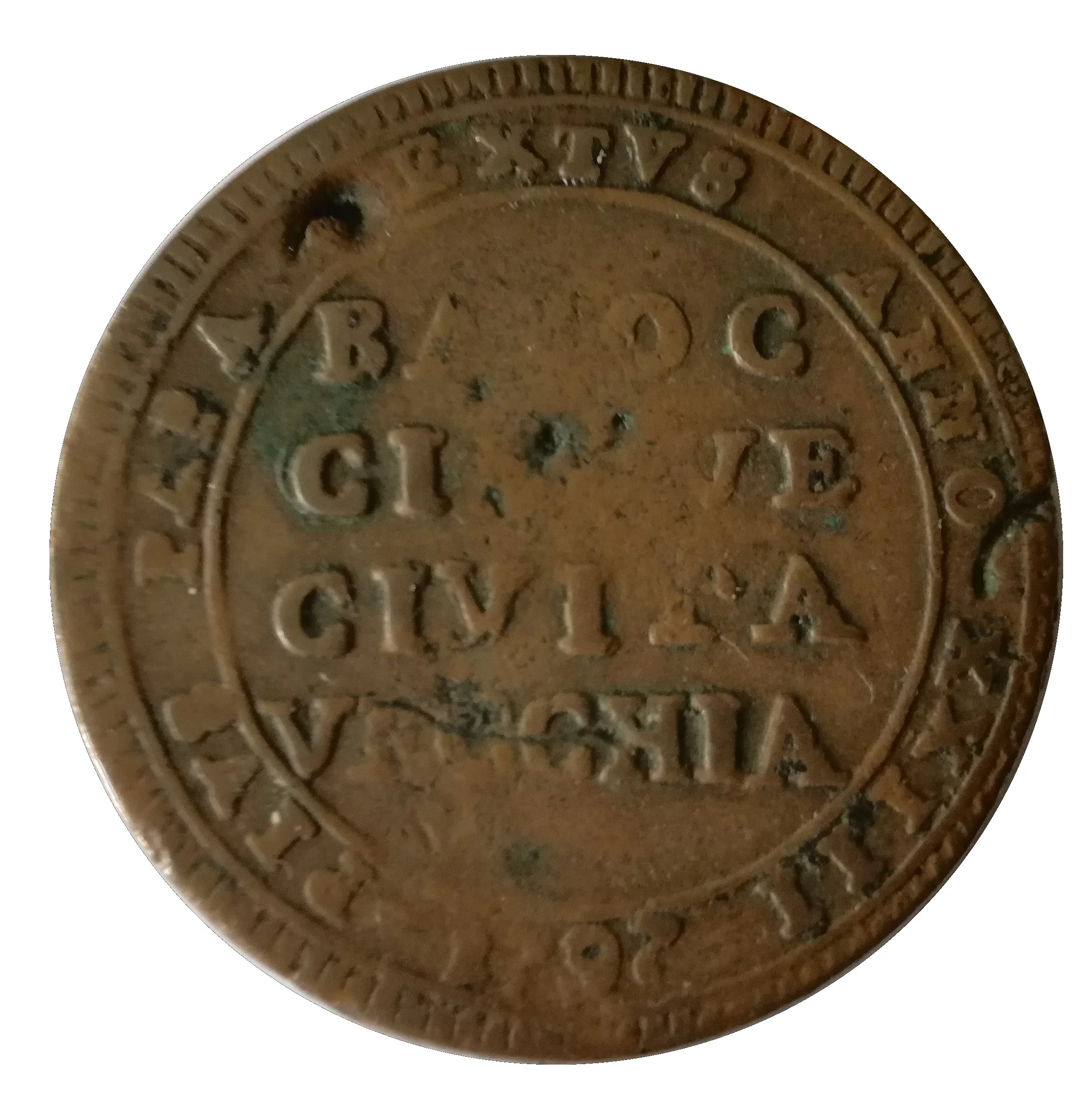
Description:
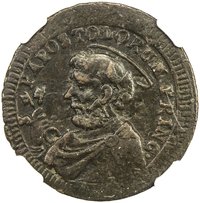
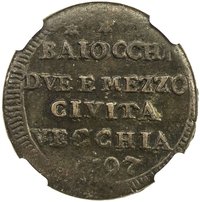
Inner circle: value. Outer circle: date and inscription.
Inscription:
PIVS PAPA SEXTVS ANNO XXIII
BAIOC
CINQVE
CIVITA
VECCHIA
1797
BAIOC
CINQVE
CIVITA
VECCHIA
1797
Script: Latin
Engraver: Tommaso Mercandetti
Reverse
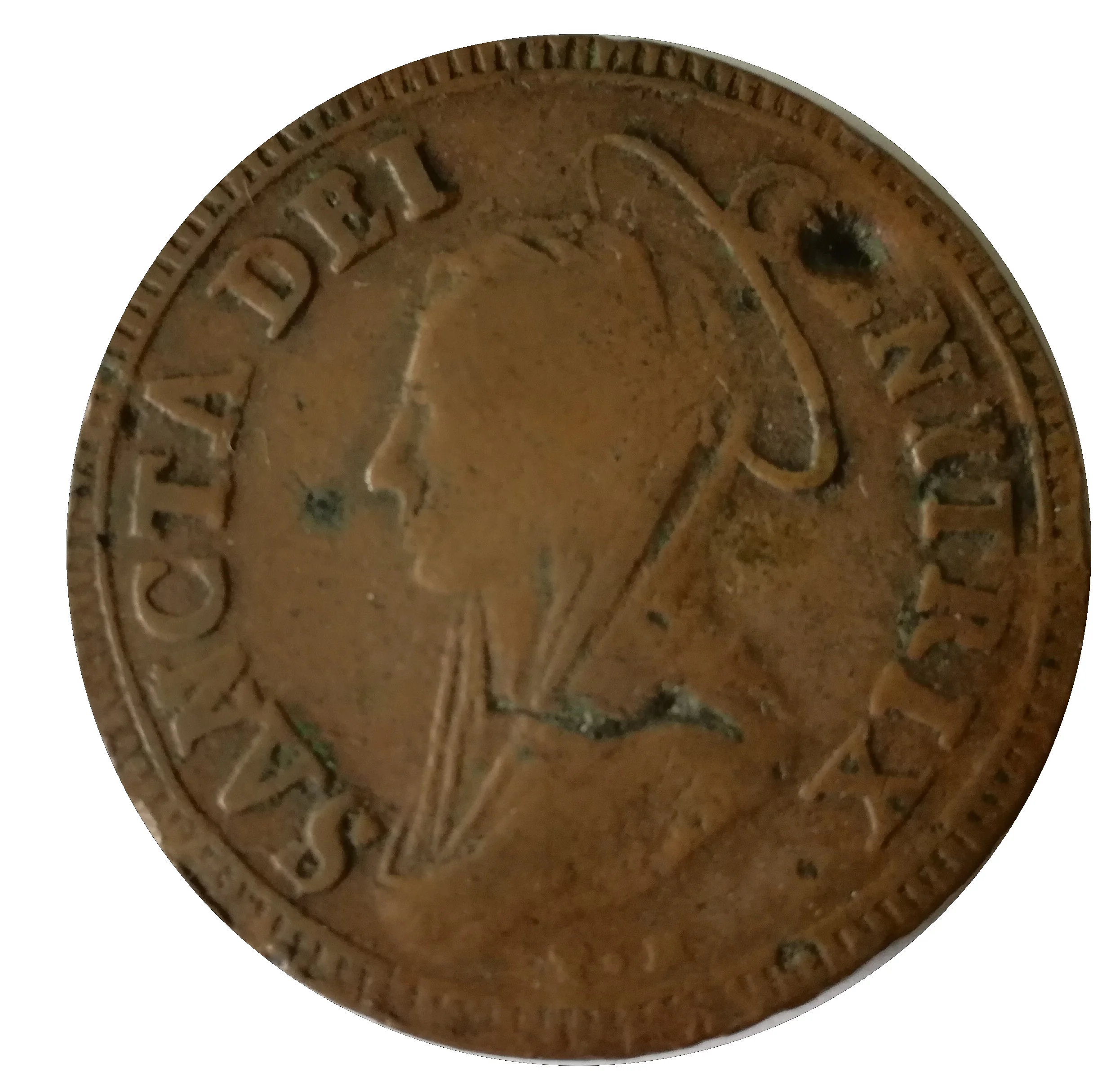
Description:
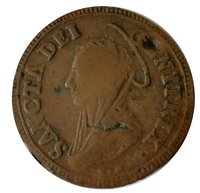
Madonna bust
Inscription:
SANCTA DEI GENITRIX
T M
T M
Script: Latin
Engraver: Tommaso Mercandetti
Edge
Leafy or meandering
Categories
| Person> Religious figure |
Mints
| Name | Mark |
|---|---|
| Civitavecchia | — |
Mintings
| Year | Mint Mark | Mintage | Quality | Collection |
|---|---|---|---|---|
| 1797 | — | — |
Historical background
In 1797, Civitavecchia, the primary port of the Papal States, found itself in a complex and unstable monetary situation, mirroring the political upheaval of the era. The city operated under the Papal monetary system, based on the scudo (divided into 100 baiochi, each of 5 quattrini). However, the French Revolutionary Wars had severely disrupted Mediterranean trade and finance. The French invasion of northern Italy in 1796 and the subsequent establishment of the French-aligned Roman Republic in early 1798 created a period of transition and uncertainty in Civitavecchia, as French forces approached and Papal authority crumbled.
This political vacuum led to a chaotic currency environment. While official Papal coinage remained in circulation, its value and acceptance became volatile. More critically, the port city was a hub for diverse foreign currencies—Spanish pieces of eight, Tuscan fiorini, Neapolitan ducats, and French francs—used by merchants and sailors. The impending French occupation meant that assignats (French paper currency) and new republican coinage began to circulate alongside, and often at a forced discount to, traditional metallic coins, causing confusion and inflation in local markets.
Ultimately, the currency situation in Civitavecchia in 1797 was one of overlapping systems and declining confidence. It was a transitional year where the established Papal monetary order was breaking down but had not yet been fully replaced by a new French-imposed system. This instability reflected the broader collapse of Papal temporal power, creating a climate of financial insecurity for merchants and residents in the port, who had to navigate a volatile mix of depreciating official coinage, foreign specie, and the uncertain promise of revolutionary paper money.
This political vacuum led to a chaotic currency environment. While official Papal coinage remained in circulation, its value and acceptance became volatile. More critically, the port city was a hub for diverse foreign currencies—Spanish pieces of eight, Tuscan fiorini, Neapolitan ducats, and French francs—used by merchants and sailors. The impending French occupation meant that assignats (French paper currency) and new republican coinage began to circulate alongside, and often at a forced discount to, traditional metallic coins, causing confusion and inflation in local markets.
Ultimately, the currency situation in Civitavecchia in 1797 was one of overlapping systems and declining confidence. It was a transitional year where the established Papal monetary order was breaking down but had not yet been fully replaced by a new French-imposed system. This instability reflected the broader collapse of Papal temporal power, creating a climate of financial insecurity for merchants and residents in the port, who had to navigate a volatile mix of depreciating official coinage, foreign specie, and the uncertain promise of revolutionary paper money.
💎 Extremely Rare