

2½ Baiocchi – Civitavecchia
Italy
Context
Years: 1796–1797
Country: Italy 
Issuer: Civitavecchia
Ruler: Pius VI
Currency:
(1534—1835)
Demonetized: Yes
Material
References
KM: #Click to copy to clipboard5
Numista: #51256
Obverse
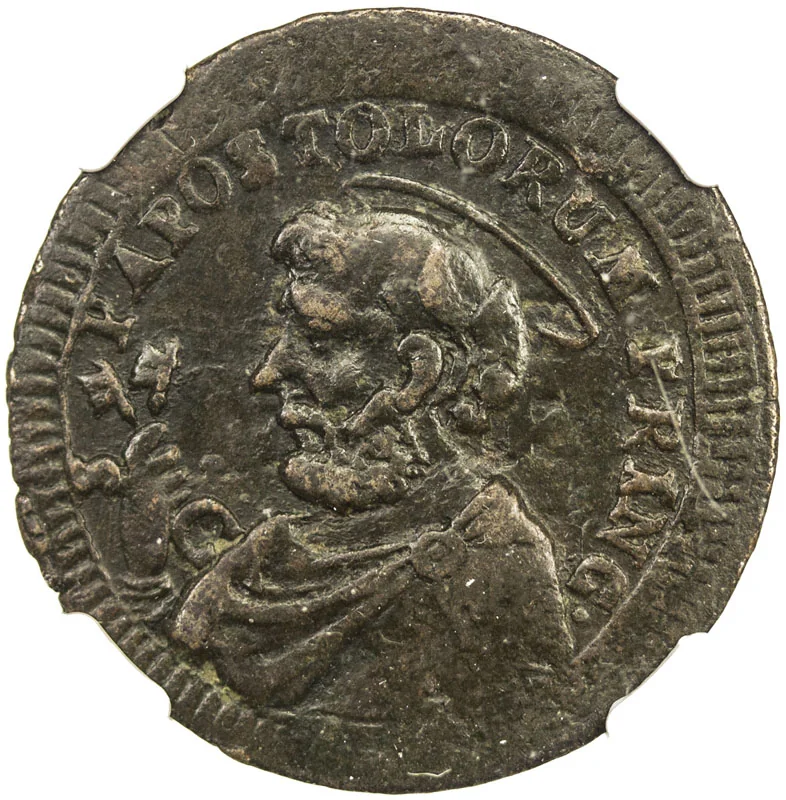
Description:
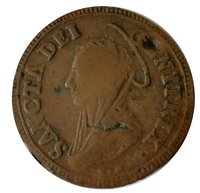
St. Peter facing left, holding keys.
Inscription:
S P APOSTOLORUM PRINC.
Script: Latin
Engraver: T. Mercandetti
Reverse
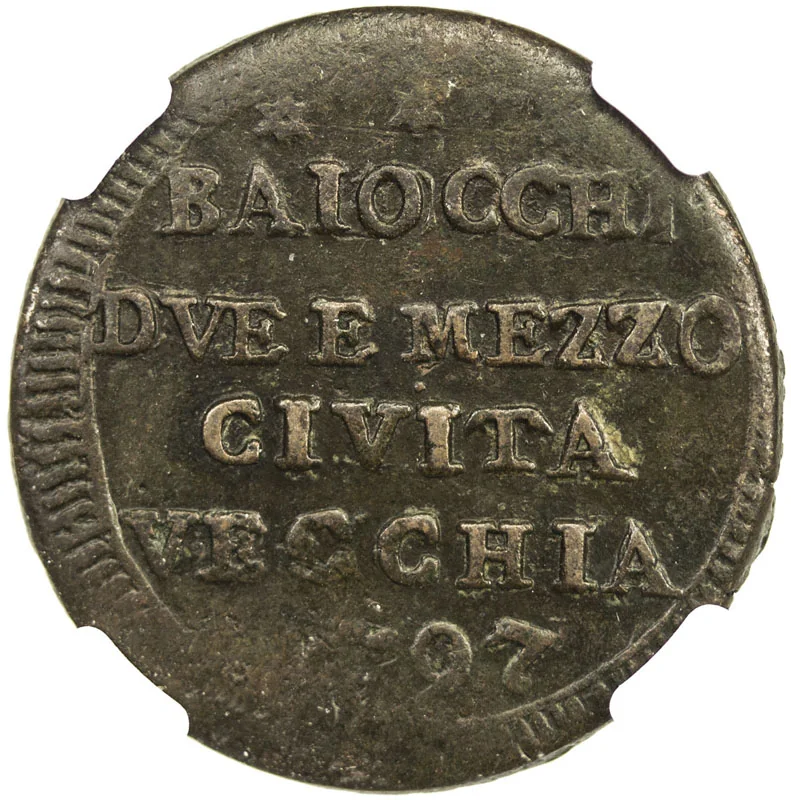
Description:
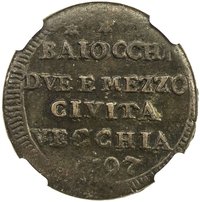
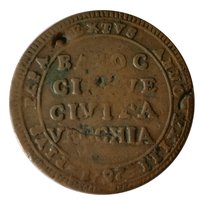
Value, date, city.
Inscription:
BAIOCCHI
DVE E MEZZO
CIVITA
VECCHIA
1797
DVE E MEZZO
CIVITA
VECCHIA
1797
Script: Latin
Engraver: T. Mercandetti
Edge
Categories
| Person> Religious figure |
| Mustache/Beard |
Mints
| Name | Mark |
|---|---|
| Civitavecchia | — |
Mintings
| Year | Mint Mark | Mintage | Quality | Collection |
|---|---|---|---|---|
| 1796 | — | — | ||
| 1797 | — | — |
Historical background
In 1796, Civitavecchia, the primary port of the Papal States, found itself in a complex and strained monetary situation, heavily influenced by the wider European turmoil of the French Revolutionary Wars. The local economy operated on the Papal monetary system, based on the scudo (divided into 100 baiochi, each of 10 quattrini), but this system was under severe pressure. The French invasion of Italy under Napoleon Bonaparte that very year destabilized the entire peninsula, leading to military requisitions, disrupted trade routes, and a general climate of economic uncertainty that devalued currency and spurred inflation.
The circulation of coinage in the city was likely chaotic and heterogeneous. Alongside official Papal coinage, foreign coins—particularly Spanish pieces of eight and French écus—circulated widely due to the port's international maritime traffic. However, the advancing French forces often imposed forced loans and demanded tributes in specie (hard coin), draining precious metal from local economies. This would have caused a scarcity of sound money in Civitavecchia, leading to a reliance on lower-value fractional coinage for daily transactions and a probable distrust of paper instruments.
Furthermore, the political sovereignty over the city was in flux. By the end of 1796, French troops were advancing toward the Papal States, forcing the Treaty of Tolentino in early 1797. This immediate threat of invasion and subsequent treaty, which imposed massive financial indemnities on the Pope, would have directly impacted Civitavecchia. The port's finances were likely co-opted for war preparations and reparations, exacerbating the currency shortage and creating a period of monetary instability where the value and reliability of coins shifted rapidly with the changing political tides.
The circulation of coinage in the city was likely chaotic and heterogeneous. Alongside official Papal coinage, foreign coins—particularly Spanish pieces of eight and French écus—circulated widely due to the port's international maritime traffic. However, the advancing French forces often imposed forced loans and demanded tributes in specie (hard coin), draining precious metal from local economies. This would have caused a scarcity of sound money in Civitavecchia, leading to a reliance on lower-value fractional coinage for daily transactions and a probable distrust of paper instruments.
Furthermore, the political sovereignty over the city was in flux. By the end of 1796, French troops were advancing toward the Papal States, forcing the Treaty of Tolentino in early 1797. This immediate threat of invasion and subsequent treaty, which imposed massive financial indemnities on the Pope, would have directly impacted Civitavecchia. The port's finances were likely co-opted for war preparations and reparations, exacerbating the currency shortage and creating a period of monetary instability where the value and reliability of coins shifted rapidly with the changing political tides.
💎 Extremely Rare