

Switzerland
Context

Material
References
KM: #Click to copy to clipboard20
Numista: #23099
Value
Bullion value: $26.40
Obverse
Description:
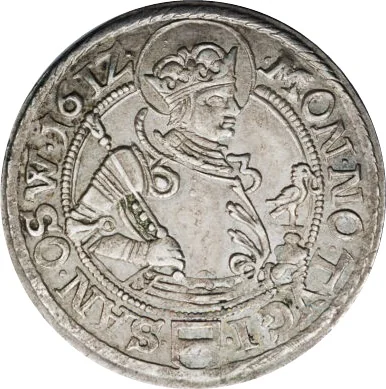
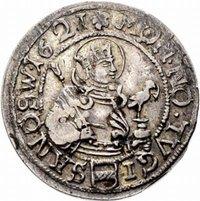
Saint Oswald armored, facing right with scepter and raven; shield below, date in legend.
Inscription:
MON·NO·TVGI·SAN·OSW
Script: Latin
Reverse
Description:
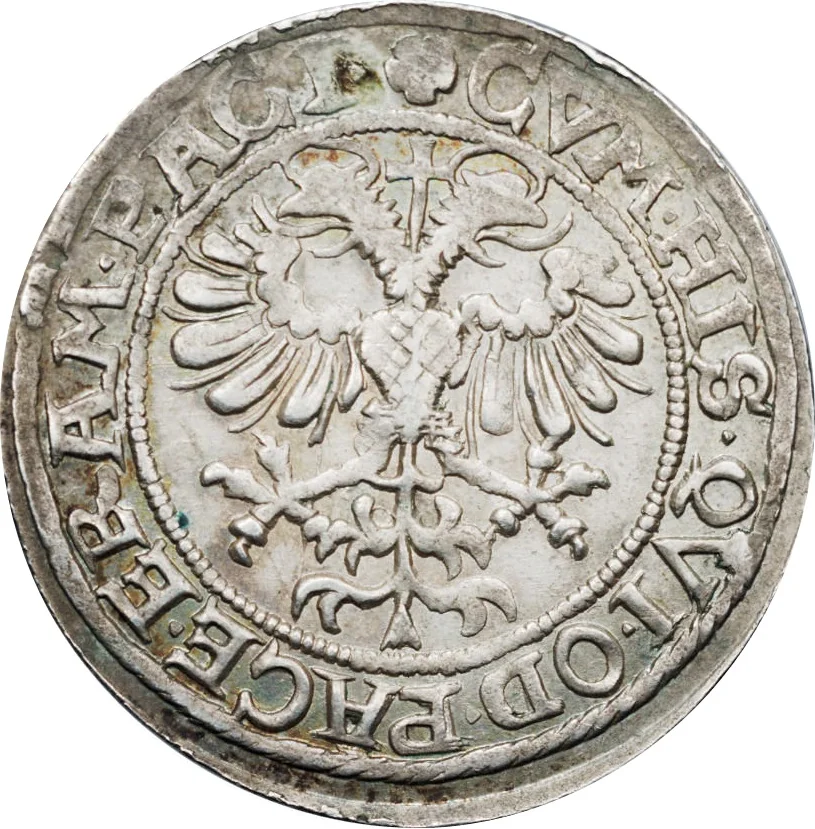
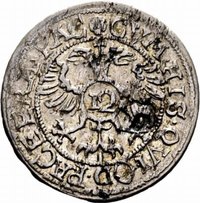
Cross over double-headed eagle encircled.
Inscription:
CVM·HIS·QVI·OD·PACE·ERAM·PACI
Script: Latin
Edge
Mintings
| Year | Mint Mark | Mintage | Quality | Collection |
|---|---|---|---|---|
| 1609 | — | — | ||
| 1610 | — | — | ||
| 1611 | — | — | ||
| 1612 | — | — | ||
| 1613 | — | — | ||
| 1615 | — | — | ||
| 1616 | — | — | ||
| 1617 | — | — | ||
| 1618 | — | — | ||
| 1619 | — | — | ||
| 1620 | — | — | ||
| 1621 | — | — | ||
| 1622 | — | — |
Historical background
In 1609, Zug, like other Swiss cantons, operated within a complex and fragmented monetary landscape. It did not mint its own coins but was subject to a flood of diverse currencies circulating within its borders. These included coins from other Swiss cantons (like Bern and Zurich), regional episcopal mints, and a vast array of foreign coins from trade, particularly French écus, Spanish thalers, and Italian ducats. This proliferation created chronic confusion in commerce, as the intrinsic silver or gold content of coins—their real value—often differed from their declared face value, leading to frequent disputes and instability.
The situation was formally governed by the Münzordnung (coinage ordinance) of the Swiss Confederation, which aimed to standardize the monetary system across the allied states. However, these regulations were difficult to enforce, and individual cantons and even cities often set their own exchange rates and valuations for the myriad of coins. For Zug, a small, largely agrarian canton, this monetary chaos posed a significant challenge to local trade and administration. Authorities had to constantly publish official conversion lists (Tarife) to dictate the acceptable rates for common coins, a stopgap measure against devaluation and fraud.
Therefore, the "currency situation" in Zug in 1609 was one of managed disorder. The canton’s economy functioned within a broader, unstable system where the value of money was not guaranteed by a single sovereign authority but was a matter of constant negotiation and regulation. This environment underscored the political and economic interdependence of the Swiss Confederation, while also highlighting the practical daily difficulties of conducting reliable trade in an era before standardized national currencies.
The situation was formally governed by the Münzordnung (coinage ordinance) of the Swiss Confederation, which aimed to standardize the monetary system across the allied states. However, these regulations were difficult to enforce, and individual cantons and even cities often set their own exchange rates and valuations for the myriad of coins. For Zug, a small, largely agrarian canton, this monetary chaos posed a significant challenge to local trade and administration. Authorities had to constantly publish official conversion lists (Tarife) to dictate the acceptable rates for common coins, a stopgap measure against devaluation and fraud.
Therefore, the "currency situation" in Zug in 1609 was one of managed disorder. The canton’s economy functioned within a broader, unstable system where the value of money was not guaranteed by a single sovereign authority but was a matter of constant negotiation and regulation. This environment underscored the political and economic interdependence of the Swiss Confederation, while also highlighting the practical daily difficulties of conducting reliable trade in an era before standardized national currencies.
✨ Legendary