


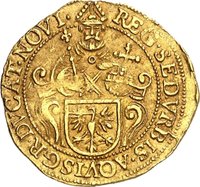
Obverse
Description:
Square with wreath, enclosing four-line inscription.
Inscription:
DVCATVS
NOVVS
REG : S . VR
AQUISGR
NOVVS
REG : S . VR
AQUISGR
Script: Latin
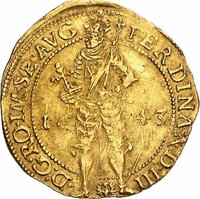
Reverse
Description:
Madonna and child, radiant.
Inscription:
TV . HONORI ------ D . IA . POPVLI . NOSTRI
Script: Latin
Edge
Mintings
| Year | Mint Mark | Mintage | Quality | Collection |
|---|---|---|---|---|
| 1640 | — | — |
Historical background
In 1640, the Free Imperial City of Aachen, like much of the Holy Roman Empire, was navigating a complex and debased monetary landscape exacerbated by the Thirty Years' War. The city did not mint its own coins but operated within the broader regional monetary systems, primarily the Reichstaler (Imperial Thaler) as the standard for large transactions and accounting. However, the actual circulating medium consisted of a chaotic mix of lower-denomination coins from various neighboring territories, such as the Albus and Groschen from the Rhineland, and a flood of small, often heavily debased coins known as Kipper- und Wipperzeit issues from the 1620s.
This period was characterized by severe inflation and monetary instability. The war had led numerous German states to drastically reduce the silver content in their coinage to finance military expenditures, leading to a loss of public trust. For Aachen's merchants and craftsmen, this meant constant difficulties in daily commerce, as the value of coins fluctuated wildly and foreign, inferior coins drove better-quality money out of circulation (Gresham's Law). The city council would have been engaged in a continuous struggle to regulate exchange rates and police the influx of "bad money" at its markets and annual fairs, which were vital to the local economy.
Ultimately, Aachen's currency situation was one of vulnerability to external forces. Its status as a Free Imperial City meant it had some autonomy, but it lacked the sovereign minting power to control its own monetary destiny. The city's economic stability was therefore dependent on imperial monetary ordinances, which were largely ineffective during the war, and on its own administrative vigilance to maintain a functional, if fragmented, currency system for its citizens and the important trade passing through its territory.
This period was characterized by severe inflation and monetary instability. The war had led numerous German states to drastically reduce the silver content in their coinage to finance military expenditures, leading to a loss of public trust. For Aachen's merchants and craftsmen, this meant constant difficulties in daily commerce, as the value of coins fluctuated wildly and foreign, inferior coins drove better-quality money out of circulation (Gresham's Law). The city council would have been engaged in a continuous struggle to regulate exchange rates and police the influx of "bad money" at its markets and annual fairs, which were vital to the local economy.
Ultimately, Aachen's currency situation was one of vulnerability to external forces. Its status as a Free Imperial City meant it had some autonomy, but it lacked the sovereign minting power to control its own monetary destiny. The city's economic stability was therefore dependent on imperial monetary ordinances, which were largely ineffective during the war, and on its own administrative vigilance to maintain a functional, if fragmented, currency system for its citizens and the important trade passing through its territory.

✨ Legendary