

1 lev – Bulgaria
Add to wishlist
Bulgaria
Context
Year: 1910
Issuer: Bulgaria
Ruler: Ferdinand I
Currency:
(1881—1952)
Demonetized: Yes
Total mintage: 3,000,000
Material
References
KM: #
Numista: #12344
Value
Bullion value: $10.59
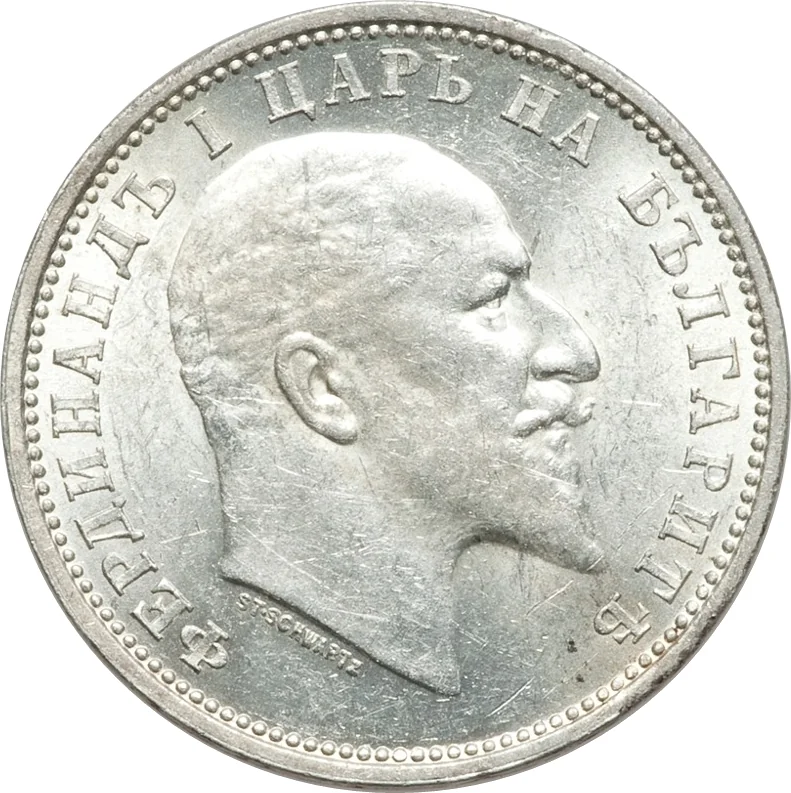
Obverse
Description:
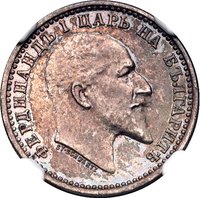
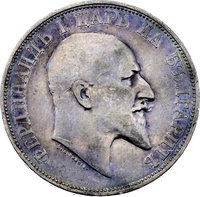
Ferdinand I bust right, surrounded by lettering.
Inscription:
ФЕРДИНАНДЪ I ЦАРЬ НА БЪЛГАРИТѢ
Translation:
FERDINAND I TSAR OF BULGARIA
Script: Cyrillic
Language: Bulgarian
Engraver: Stefan Schwartz
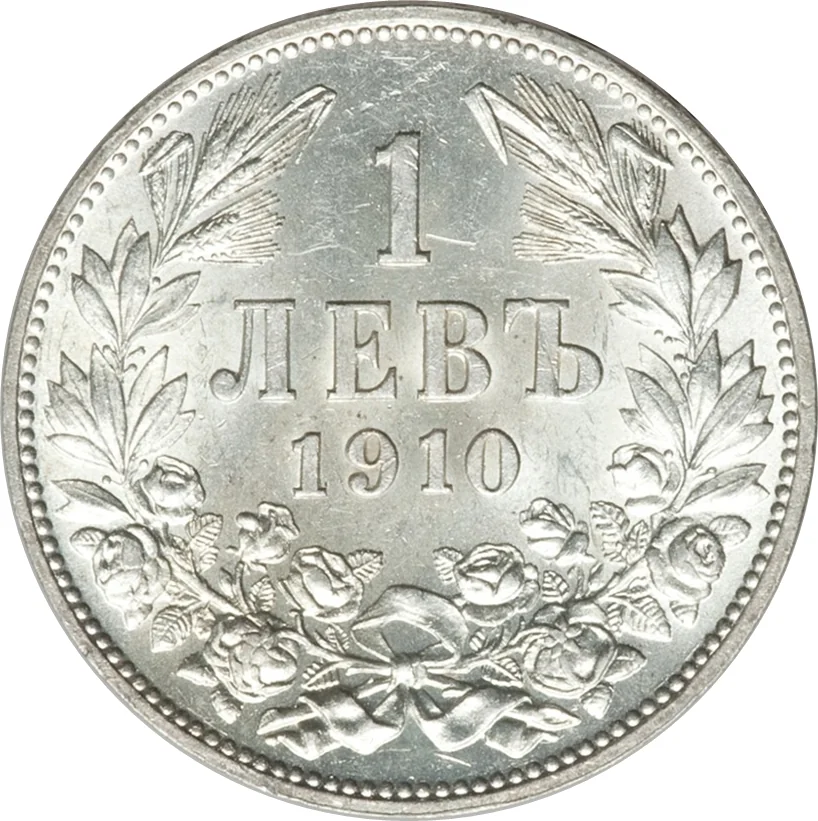
Reverse
Edge
Plain with inscription
Legend:
БОЖЕ ПАЗИ БЪЛГАРИЯ *
Translation:
God Save Bulgaria *
Language: Bulgarian
Mints
| Name | Mark |
|---|---|
| Kremnica | — |
| Münze Österreich | — |
Mintings
| Year | Mint Mark | Mintage | Quality | Collection |
|---|---|---|---|---|
| 1910 | — | 3,000,000 |
Historical background
In 1910, Bulgaria's currency situation was defined by its political status as an autonomous principality within the Ottoman Empire, though it operated with full economic independence. The official currency was the Bulgarian Lev (plural: Leva), which had been introduced in 1880 following the establishment of the Bulgarian National Bank in 1879. The Lev was initially pegged to the French Franc at a rate of 1 Lev = 1 Franc, adhering to the Latin Monetary Union's bimetallic (gold and silver) standards, which provided stability and facilitated international trade with major European powers.
Despite this formal peg, the Bulgarian monetary system faced practical challenges. The state struggled with a chronic shortage of metallic currency, particularly gold, leading to a heavy reliance on silver and even paper banknotes for everyday transactions. Furthermore, the country's finances were still recovering from the substantial debt incurred after the 1877-1878 Russo-Turkish War and the subsequent unification with Eastern Rumelia in 1885. This economic strain meant that while the currency was legally defined by a metallic standard, in practice, the value and credibility of the Lev were closely tied to the fiscal policies and foreign reserves of the still-young Bulgarian state.
Looking ahead, the currency situation was on the cusp of significant change. The pressures of the Balkan Wars (1912-1913) and the approaching World War I would soon force Bulgaria to abandon the gold standard in 1912, leading to a period of inflation and monetary instability. Thus, the 1910 moment represents a fragile period of nominal stability under the Latin Monetary Union framework, but one underpinned by fiscal vulnerabilities that would be severely tested in the turbulent decade to follow.
Despite this formal peg, the Bulgarian monetary system faced practical challenges. The state struggled with a chronic shortage of metallic currency, particularly gold, leading to a heavy reliance on silver and even paper banknotes for everyday transactions. Furthermore, the country's finances were still recovering from the substantial debt incurred after the 1877-1878 Russo-Turkish War and the subsequent unification with Eastern Rumelia in 1885. This economic strain meant that while the currency was legally defined by a metallic standard, in practice, the value and credibility of the Lev were closely tied to the fiscal policies and foreign reserves of the still-young Bulgarian state.
Looking ahead, the currency situation was on the cusp of significant change. The pressures of the Balkan Wars (1912-1913) and the approaching World War I would soon force Bulgaria to abandon the gold standard in 1912, leading to a period of inflation and monetary instability. Thus, the 1910 moment represents a fragile period of nominal stability under the Latin Monetary Union framework, but one underpinned by fiscal vulnerabilities that would be severely tested in the turbulent decade to follow.
🌱 Common