

1 silver daler – Sweden
Add to wishlist
Sweden
Context
Years: 1776–1777
Issuer: Sweden
Ruler: Gustav III
Currency:
(1719—1798)
Demonetized: Yes
Total mintage: 762,804
Material
References
KM: #
Numista: #22920
Value
Bullion value: $21.70
Obverse
Description:
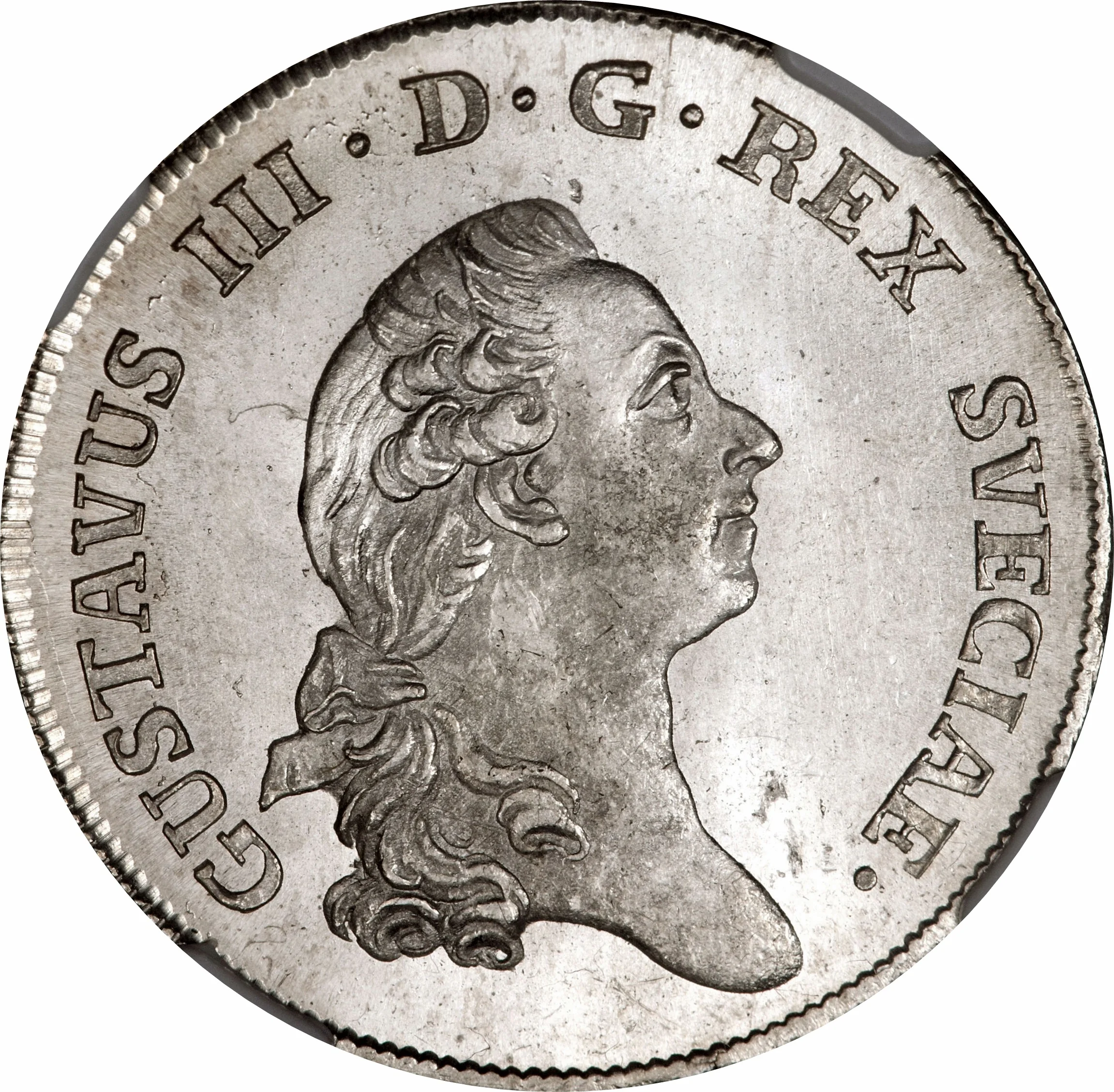
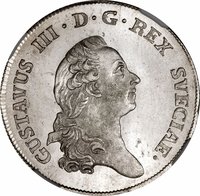
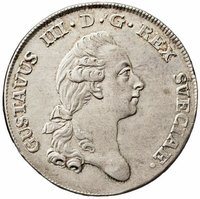
Bust of Gustav III facing right, encircled by legend.
Inscription:
GUSTAVUS III · D · G · REX SVECIAE·
Script: Latin
Reverse
Description:
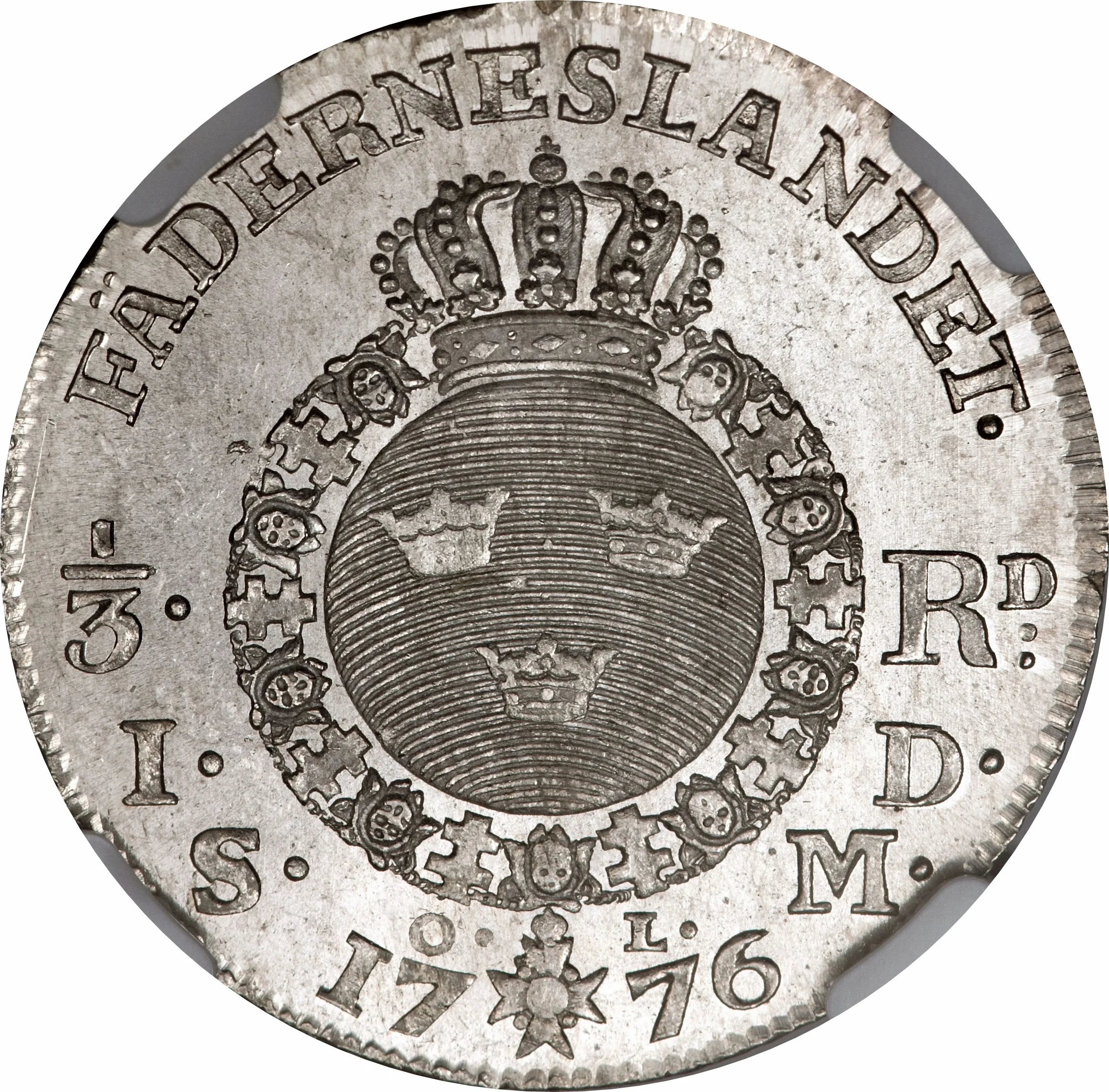
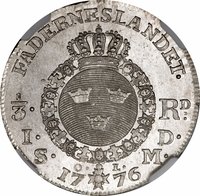
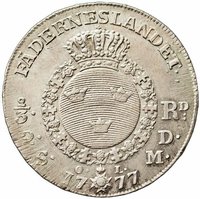
A crowned, lined orb features the Three Crowns within the Seraphim Order chain. The chain's pendant separates the date and mintmark below, with the value on both sides of the orb. The King's motto appears above the crown.
Inscription:
FÄDERNESLANDET·
1/3· RD.
1· D·
S· M·
O· L·
17 76
1/3· RD.
1· D·
S· M·
O· L·
17 76
Script: Latin
Edge
Categories
| Symbols> Coat of Arms |
Mintings
| Year | Mint Mark | Mintage | Quality | Collection |
|---|---|---|---|---|
| 1776 | OL | 97,473 | ||
| 1777 | OL | 665,331 |
Historical background
In 1776, Sweden was operating under a complex and strained monetary system, a legacy of decades of war and economic experimentation. The official currency was the Riksdaler, but it existed in a confusing multiplicity of forms: there was the Riksdaler specie (backed by silver), the Riksdaler banco (an accounting unit used by the influential Riksens Ständers Bank, precursor to the Riksbank), and the widely circulated Riksdaler riksgälds (a fiat currency issued by the National Debt Office to finance state expenses). This fragmentation created significant exchange rate fluctuations and public distrust, as the value of the physical coinage and paper notes in one's hand was often uncertain.
The root of the problem lay in Sweden's participation in the Seven Years' War (1756-1763) and the earlier "Hat" party's expensive foreign policy, which had drained the treasury. To pay for these ventures, the state had resorted to heavy borrowing and, most damagingly, the massive issuance of riksgäldssedlar (treasury notes). These were nominally valued in Riksdaler but were not convertible to silver, leading to rapid depreciation. By 1776, the public had little confidence in this paper money, and a wide gap existed between the value of silver coin and the depreciated notes, hampering both domestic trade and international commerce.
The political response was the Riksd of 1778-1779, where the newly ascended King Gustav III and the estates grappled with the crisis. While major monetary reform would not be enacted until the Riksdaler riksmynt was established in 1777 (fully implemented later), the situation in 1776 was one of precarious transition. The economy suffered from inflation, a shortage of trustworthy specie, and a burdensome national debt, setting the stage for the king's subsequent efforts to stabilize the currency and consolidate state finances, which remained a central challenge of his reign.
The root of the problem lay in Sweden's participation in the Seven Years' War (1756-1763) and the earlier "Hat" party's expensive foreign policy, which had drained the treasury. To pay for these ventures, the state had resorted to heavy borrowing and, most damagingly, the massive issuance of riksgäldssedlar (treasury notes). These were nominally valued in Riksdaler but were not convertible to silver, leading to rapid depreciation. By 1776, the public had little confidence in this paper money, and a wide gap existed between the value of silver coin and the depreciated notes, hampering both domestic trade and international commerce.
The political response was the Riksd of 1778-1779, where the newly ascended King Gustav III and the estates grappled with the crisis. While major monetary reform would not be enacted until the Riksdaler riksmynt was established in 1777 (fully implemented later), the situation in 1776 was one of precarious transition. The economy suffered from inflation, a shortage of trustworthy specie, and a burdensome national debt, setting the stage for the king's subsequent efforts to stabilize the currency and consolidate state finances, which remained a central challenge of his reign.
Series: 1776 Sweden circulation coins
💎 Extremely Rare