

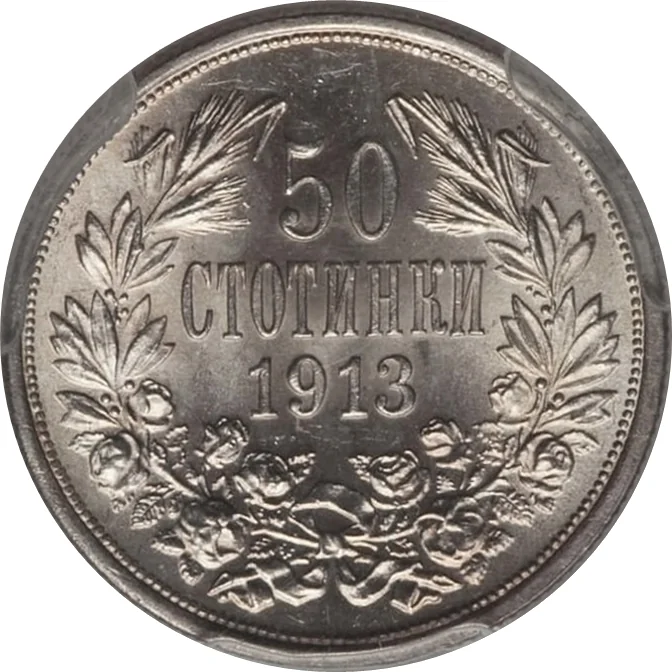
50 Stotinki – Bulgaria
Bulgaria
Context
Years: 1912–1916
Issuer: Bulgaria 
Ruler: Ferdinand I
Currency:
(1881—1952)
Demonetized: Yes
Total mintage: 9,562,000
Material
References
KM: #Click to copy to clipboard30
Numista: #12341
Value
Bullion value: $5.97
Obverse
Description:
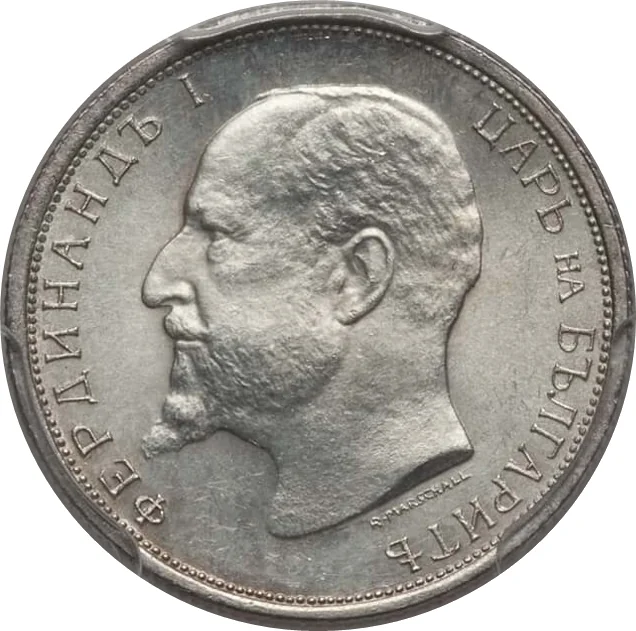
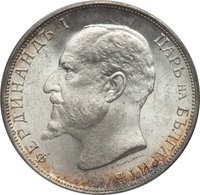
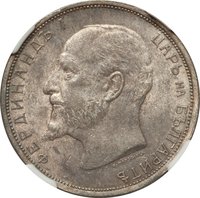
Ferdinand I bust left, surrounded by lettering.
Inscription:
ФЕРДИНАНДЪ I ЦАРЬ НА БЪЛГАРИТѢ
R.MARSCHALL
R.MARSCHALL
Translation:
FERDINAND I TSAR OF BULGARIA
R.MARSCHALL
R.MARSCHALL
Script: Cyrillic
Language: Bulgarian
Engraver: Rudolf Marschall
Reverse
Edge
Reeded
Mints
| Name | Mark |
|---|---|
| Kremnica | — |
Mintings
| Year | Mint Mark | Mintage | Quality | Collection |
|---|---|---|---|---|
| 1912 | — | 2,000,000 | ||
| 1913 | — | 3,000,000 | ||
| 1916 | — | 4,562,000 |
Historical background
In 1912, Bulgaria operated under a currency board system established in 1885, which pegged the Bulgarian lev directly to gold. This meant the lev was fully convertible and its value was fixed at one lev equalling 1.455 grams of fine gold, a parity identical to that of the French franc. This "gold standard" regime, managed by the Bulgarian National Bank, provided remarkable monetary stability and fostered international confidence, which was crucial for a young state seeking foreign investment for infrastructure and industrial development. The system imposed strict fiscal discipline, as the money supply was directly tied to the bank's gold and foreign exchange reserves, preventing the government from financing itself through inflationary money printing.
This stability, however, existed within a context of significant economic strain. The period leading up to the Balkan Wars (1912-1913) saw Bulgaria burdened with large foreign debts from its earlier independence and nation-building efforts. Furthermore, the state was actively preparing for military conflict, which required substantial, disruptive expenditures. The currency board's rigidity meant the government could not easily create money to fund these war preparations; instead, it had to rely on borrowing, both domestically and abroad, and taxation. Consequently, while the lev itself remained strong and stable on foreign exchanges, the underlying economy was under pressure from growing debt and the redirection of resources toward the impending war.
Therefore, on the eve of the First Balkan War in October 1912, Bulgaria's currency situation was paradoxical. Externally, it presented a picture of robust monetary integrity, with a lev as sound as any major European currency, which helped maintain creditworthiness. Internally, however, the fixed system limited financial flexibility at a time of extreme national effort. The coming wars would severely test this framework, leading eventually to the suspension of gold convertibility in 1916, as the state resorted to printing money to cover massive war costs, ending the classic gold standard era in Bulgaria.
This stability, however, existed within a context of significant economic strain. The period leading up to the Balkan Wars (1912-1913) saw Bulgaria burdened with large foreign debts from its earlier independence and nation-building efforts. Furthermore, the state was actively preparing for military conflict, which required substantial, disruptive expenditures. The currency board's rigidity meant the government could not easily create money to fund these war preparations; instead, it had to rely on borrowing, both domestically and abroad, and taxation. Consequently, while the lev itself remained strong and stable on foreign exchanges, the underlying economy was under pressure from growing debt and the redirection of resources toward the impending war.
Therefore, on the eve of the First Balkan War in October 1912, Bulgaria's currency situation was paradoxical. Externally, it presented a picture of robust monetary integrity, with a lev as sound as any major European currency, which helped maintain creditworthiness. Internally, however, the fixed system limited financial flexibility at a time of extreme national effort. The coming wars would severely test this framework, leading eventually to the suspension of gold convertibility in 1916, as the state resorted to printing money to cover massive war costs, ending the classic gold standard era in Bulgaria.
Series: 1912 Bulgaria circulation coins
🌱 Common