

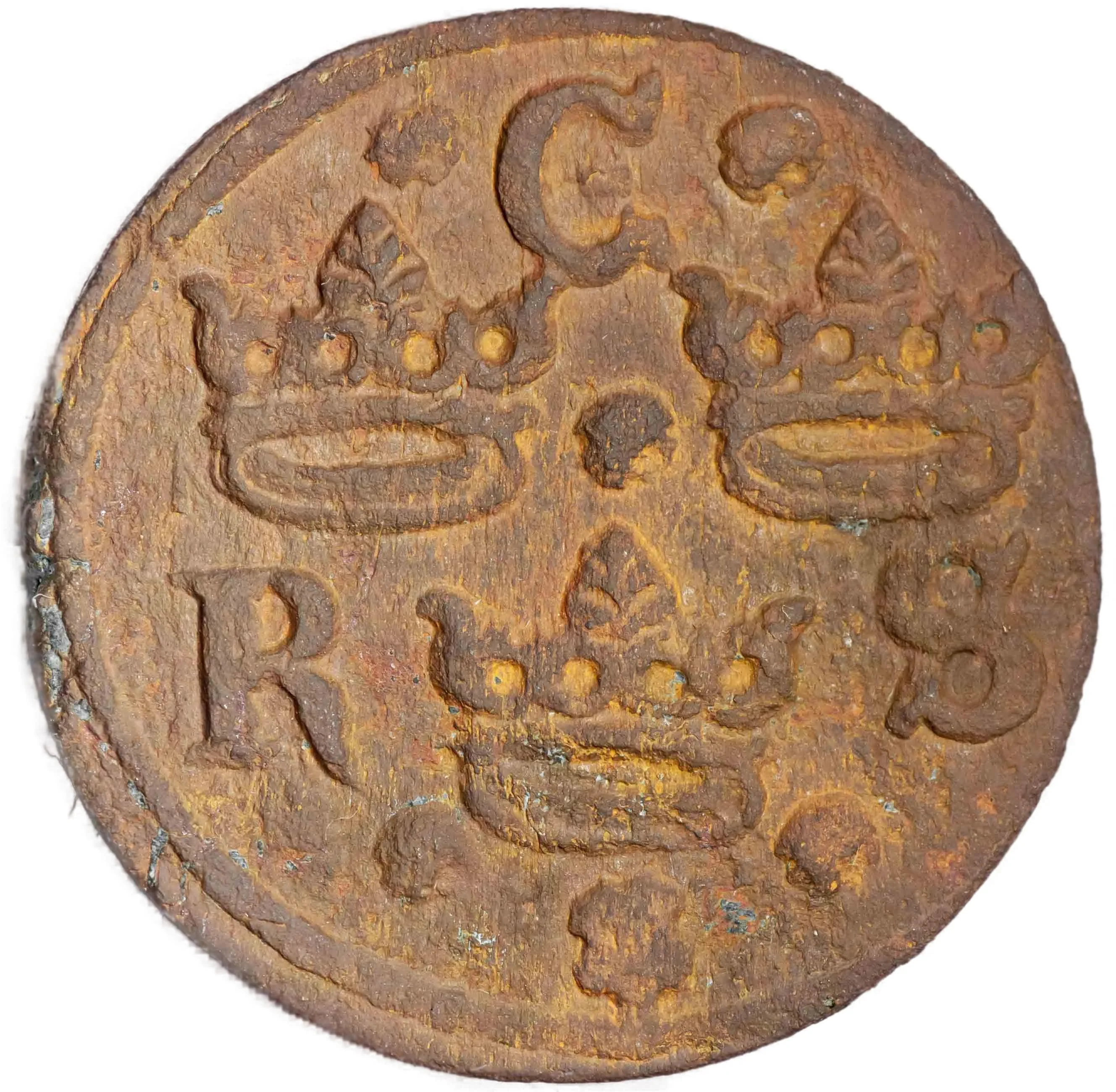
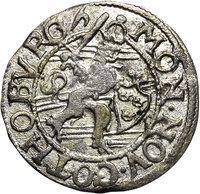
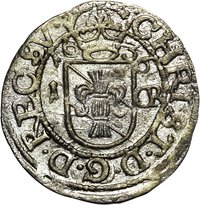
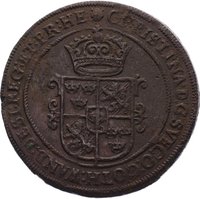
Obverse
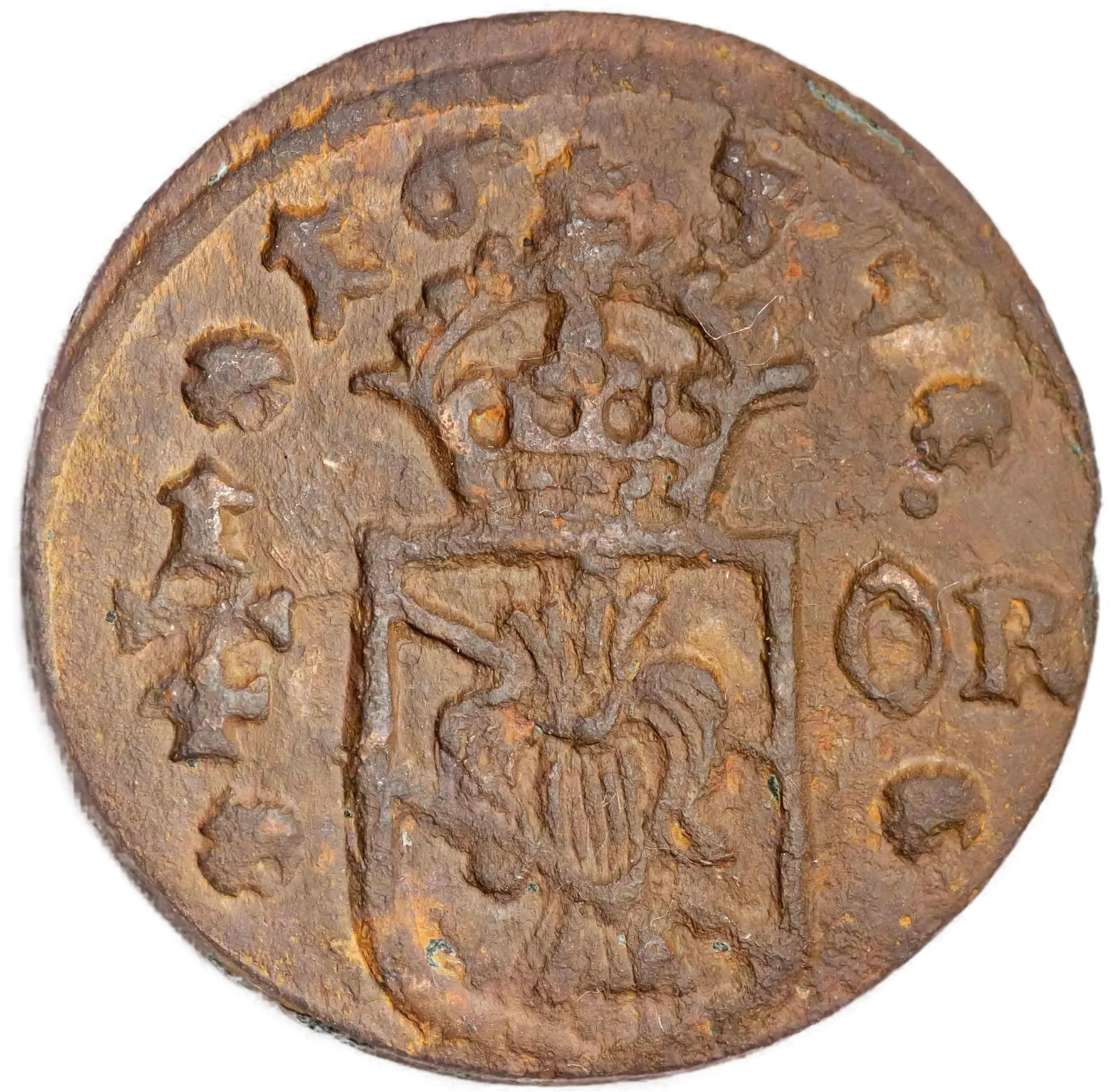
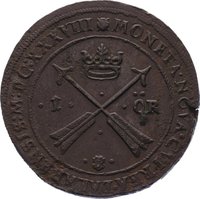
Reverse
Edge
Mints
| Name | Mark |
|---|---|
| Säter | — |
Mintings
| Year | Mint Mark | Mintage | Quality | Collection |
|---|---|---|---|---|
| 1637 | — | 54,502,400 | ||
| 1638 | — | 5,068,800 | ||
| 1640 | — | 435,000 | ||
| 1641 | — | 13,981,449 | ||
| 1642 | — | 7,138,560 |
Historical background
In 1637, Sweden was in the midst of the Thirty Years' War, a conflict that placed immense financial strain on the state. King Gustavus Adolphus's earlier military successes had come at a tremendous cost, and after his death in 1632, the government, led by Chancellor Axel Oxenstierna, struggled to fund continued campaigns. The primary response was the heavy debasement of the Swedish copper currency. Sweden, uniquely rich in copper, used it as a monetary metal alongside silver, and the state-owned copper mines were leveraged to mint vast quantities of lower-value coins to pay troops and suppliers, leading to inflation and a complex bi-metallic system.
The currency situation was defined by the myntrealisation of 1633, which officially set the legal exchange rate between the silver daler and the copper daler. However, as the government issued more copper money to cover deficits, the real market value of copper coins fell sharply against silver. This created a chaotic monetary environment where prices in copper dalers soared, creditors were paid in devalued coin, and foreign trade was hampered. The public lost confidence in the currency, and the kingdom effectively operated with two diverging price levels—one for silver and a much higher one for copper.
This inflationary crisis peaked around 1637, causing widespread economic distress and social unrest. It exposed the limitations of Sweden's resource-based monetary policy and directly led to the establishment of the Stockholm Banco in 1656, a precursor to the central bank, in an attempt to create more stable financial institutions. Thus, the currency situation of 1637 was a pivotal moment, born of wartime exigency, that forced a reckoning with public finance and set the stage for future innovations in Swedish banking.
The currency situation was defined by the myntrealisation of 1633, which officially set the legal exchange rate between the silver daler and the copper daler. However, as the government issued more copper money to cover deficits, the real market value of copper coins fell sharply against silver. This created a chaotic monetary environment where prices in copper dalers soared, creditors were paid in devalued coin, and foreign trade was hampered. The public lost confidence in the currency, and the kingdom effectively operated with two diverging price levels—one for silver and a much higher one for copper.
This inflationary crisis peaked around 1637, causing widespread economic distress and social unrest. It exposed the limitations of Sweden's resource-based monetary policy and directly led to the establishment of the Stockholm Banco in 1656, a precursor to the central bank, in an attempt to create more stable financial institutions. Thus, the currency situation of 1637 was a pivotal moment, born of wartime exigency, that forced a reckoning with public finance and set the stage for future innovations in Swedish banking.
🌟 Limited