

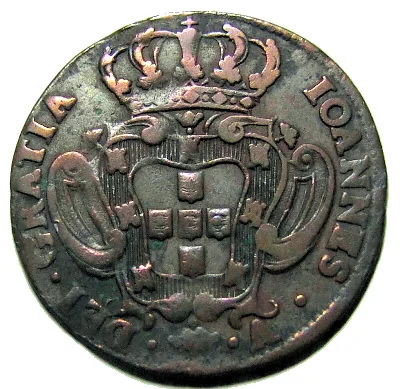
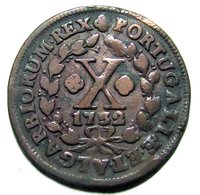
Obverse
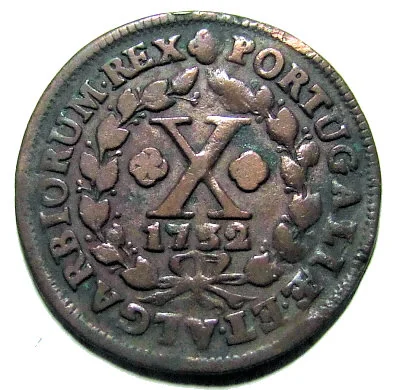
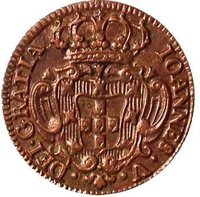
Reverse
Description:
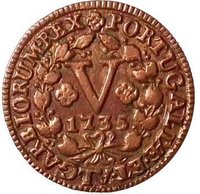
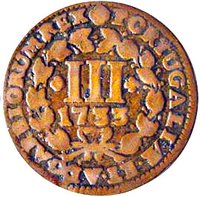
Value and date encircled by wreath.
Inscription:
PORTUGALIÆ·ET·ALGARBIORUM·REX
X
1732
X
1732
Script: Latin
Edge
Plain
Mints
| Name | Mark |
|---|---|
| Imprensa Nacional - Casa da Moeda | — |
Mintings
| Year | Mint Mark | Mintage | Quality | Collection |
|---|---|---|---|---|
| 1723 | — | — | ||
| 1724 | — | — | ||
| 1726 | — | — | ||
| 1727 | — | — | ||
| 1731 | — | — | ||
| 1732 | — | — | ||
| 1733 | — | — | ||
| 1734 | — | — | ||
| 1735 | — | — | ||
| 1736 | — | — | ||
| 1737 | — | — |
Historical background
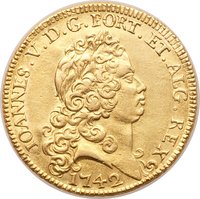
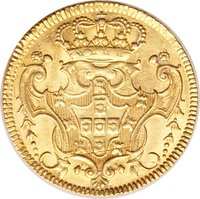
In 1723, Portugal's currency situation was characterized by significant instability and complexity, a direct legacy of the gold discoveries in Brazil, particularly in Minas Gerais. The massive influx of Brazilian gold into the Portuguese economy, which began in the late 17th century, had led to profound monetary consequences. Rather than strengthening the currency, the increased gold supply contributed to inflation and a steady devaluation of the Portuguese real. The monarchy, under King João V, struggled to manage this new wealth effectively, leading to a system where the intrinsic value of coins often fell below their face value, causing widespread confusion in both domestic and international trade.
The monetary system itself was a tangled mix of old and new units. The primary coin was the cruzado, but accounts were often kept in the older unit of réis (plural réis), with values commonly expressed in mil-réis (1,000 réis). Alongside gold coins like the moeda and the peça (a high-value coin struck from Brazilian gold), there circulated a plethora of silver and copper coins, including Spanish pieces of eight, which were vital for everyday transactions. This created a tri-metallic system (gold, silver, copper) with fluctuating exchange rates between the metals, further complicated by frequent royal attempts to re-tariff coins by decree to generate seigniorage revenue for the crown's lavish expenditures.
Consequently, the year 1723 fell within a period of ongoing monetary experimentation and difficulty. The Crown's attempts to fix prices and values were largely ineffective against market forces, leading to periodic shortages of small-denomination coinage for daily commerce. This unstable environment hindered economic planning and was a point of contention within the kingdom. The situation would eventually prompt more systematic reforms later in the 18th century, but in 1723, Portugal's currency remained a problematic symbol of an economy adjusting, with mixed success, to the sudden wealth of its empire.
The monetary system itself was a tangled mix of old and new units. The primary coin was the cruzado, but accounts were often kept in the older unit of réis (plural réis), with values commonly expressed in mil-réis (1,000 réis). Alongside gold coins like the moeda and the peça (a high-value coin struck from Brazilian gold), there circulated a plethora of silver and copper coins, including Spanish pieces of eight, which were vital for everyday transactions. This created a tri-metallic system (gold, silver, copper) with fluctuating exchange rates between the metals, further complicated by frequent royal attempts to re-tariff coins by decree to generate seigniorage revenue for the crown's lavish expenditures.
Consequently, the year 1723 fell within a period of ongoing monetary experimentation and difficulty. The Crown's attempts to fix prices and values were largely ineffective against market forces, leading to periodic shortages of small-denomination coinage for daily commerce. This unstable environment hindered economic planning and was a point of contention within the kingdom. The situation would eventually prompt more systematic reforms later in the 18th century, but in 1723, Portugal's currency remained a problematic symbol of an economy adjusting, with mixed success, to the sudden wealth of its empire.
🌱 Fairly Common