

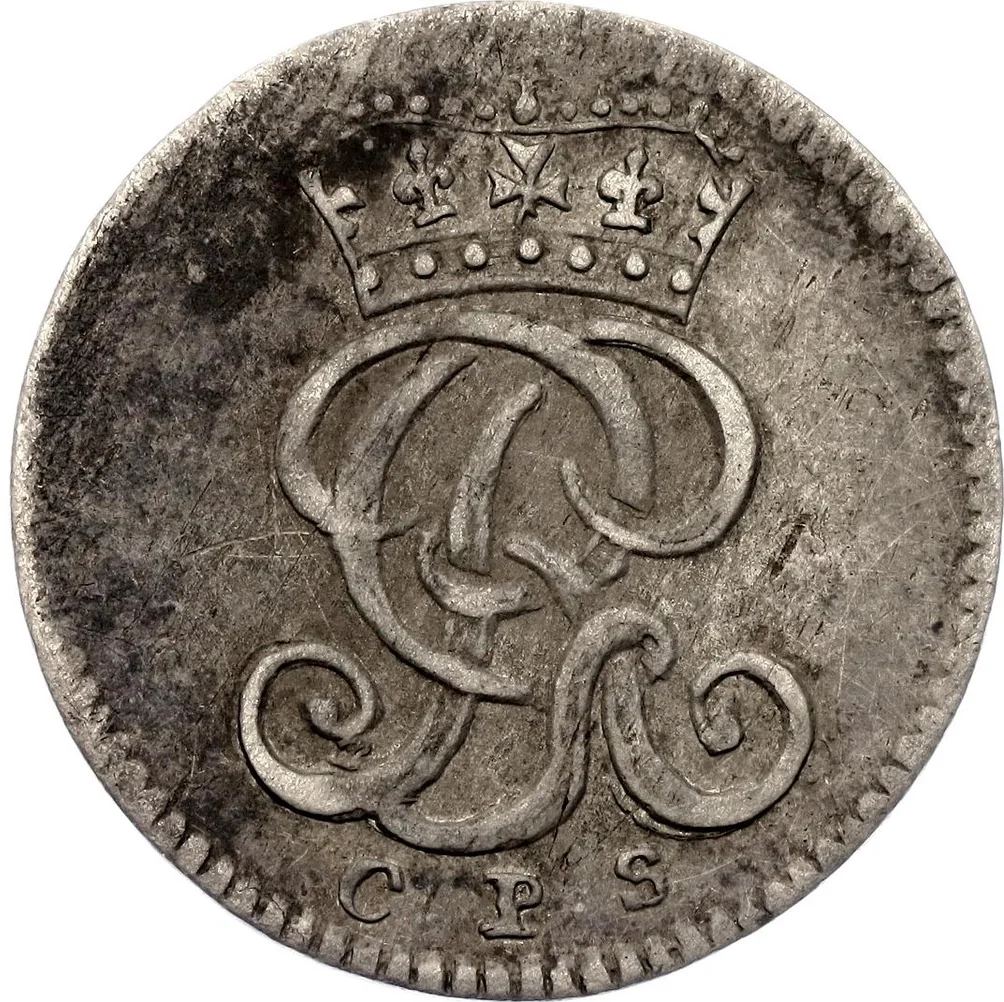
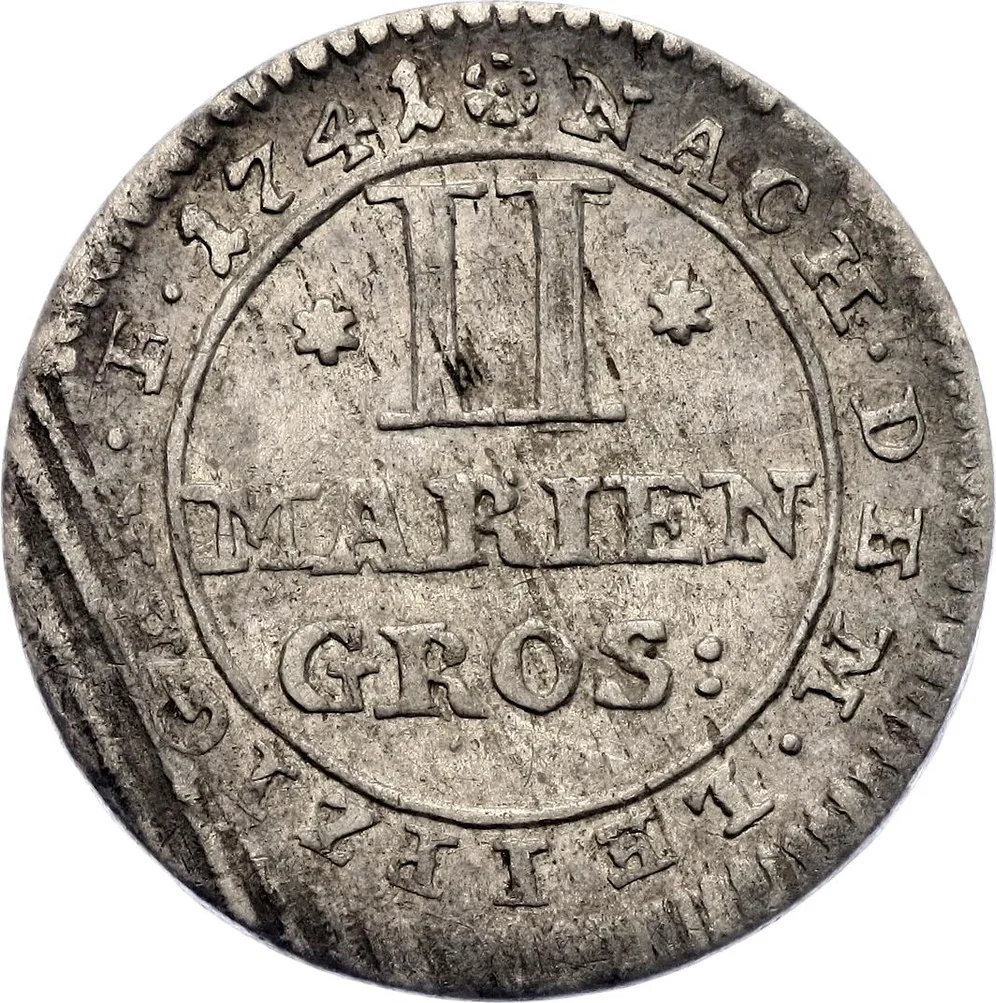
2 Mariengroschen – Brunswick-Lüneburg-Calenberg-Hannover
Germany

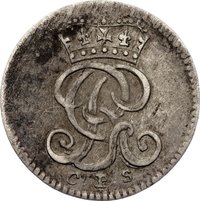
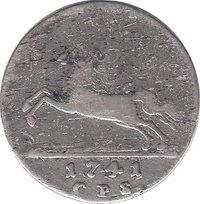
Obverse
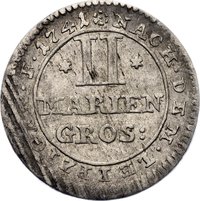
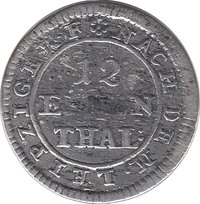
Reverse
Description:
Central inscription (denomination, date) within surrounding legend.
Inscription:
MARIEN
GROSCH:
1749
.NACH.DHM.LEIPZIGER.FUS
GROSCH:
1749
.NACH.DHM.LEIPZIGER.FUS
Script: Latin
Edge
Plain
Mints
| Name | Mark |
|---|---|
| Clausthal | — |
Mintings
| Year | Mint Mark | Mintage | Quality | Collection |
|---|---|---|---|---|
| 1741 | — | — | ||
| 1743 | — | — | ||
| 1748 | — | — | ||
| 1749 | — | — | ||
| 1750 | — | — | ||
| 1751 | C | — | ||
| 1757 | — | — | ||
| 1759 | — | — | ||
| 1760 | — | — |
Historical background
In 1741, the currency situation in the Duchy of Brunswick-Lüneburg, specifically the Principality of Calenberg (with its capital in Hanover), was characterized by significant complexity and instability. The Holy Roman Empire was a mosaic of over 300 states, each with the right to mint coinage, leading to a chaotic system where numerous foreign and domestic coins circulated simultaneously. The primary accounting unit was the Reichsthaler, but everyday transactions relied on a bewildering array of smaller regional coins like Gute Groschen and Mariengroschen, whose values fluctuated based on their silver content and the authority of the minting prince.
This period was particularly turbulent due to the ongoing War of the Austrian Succession (1740-1748), in which Elector George II of Hanover (also King of Great Britain) was a key participant. The financial demands of warfare placed immense strain on the treasury, creating a strong temptation to engage in Kipper- und Wipperzeit-style debasement—reducing the precious metal content in coins to mint more money for state expenses. While not as severe as the crisis of the early 17th century, the pressure led to inflationary tendencies and a loss of public confidence in the coinage, as the intrinsic value of coins often fell below their face value.
Consequently, the monetary landscape was one of confusion and risk for merchants and the populace. Trade was hampered by the constant need to evaluate and exchange currencies, and the economy suffered from the uncertainty. This environment would eventually contribute to broader calls for monetary reform within the Empire, but in 1741, the situation in Calenberg-Hannover remained a challenging patchwork of depreciating coins, war-finance pressures, and unreliable specie, reflecting the fragmented political structure of the Holy Roman Empire itself.
This period was particularly turbulent due to the ongoing War of the Austrian Succession (1740-1748), in which Elector George II of Hanover (also King of Great Britain) was a key participant. The financial demands of warfare placed immense strain on the treasury, creating a strong temptation to engage in Kipper- und Wipperzeit-style debasement—reducing the precious metal content in coins to mint more money for state expenses. While not as severe as the crisis of the early 17th century, the pressure led to inflationary tendencies and a loss of public confidence in the coinage, as the intrinsic value of coins often fell below their face value.
Consequently, the monetary landscape was one of confusion and risk for merchants and the populace. Trade was hampered by the constant need to evaluate and exchange currencies, and the economy suffered from the uncertainty. This environment would eventually contribute to broader calls for monetary reform within the Empire, but in 1741, the situation in Calenberg-Hannover remained a challenging patchwork of depreciating coins, war-finance pressures, and unreliable specie, reflecting the fragmented political structure of the Holy Roman Empire itself.
✨ Legendary