

20 schilling (Krems) – Austria
Add to wishlist
Circulating commemorative coins
Commemoration: 1000 Years of Krems
Austria
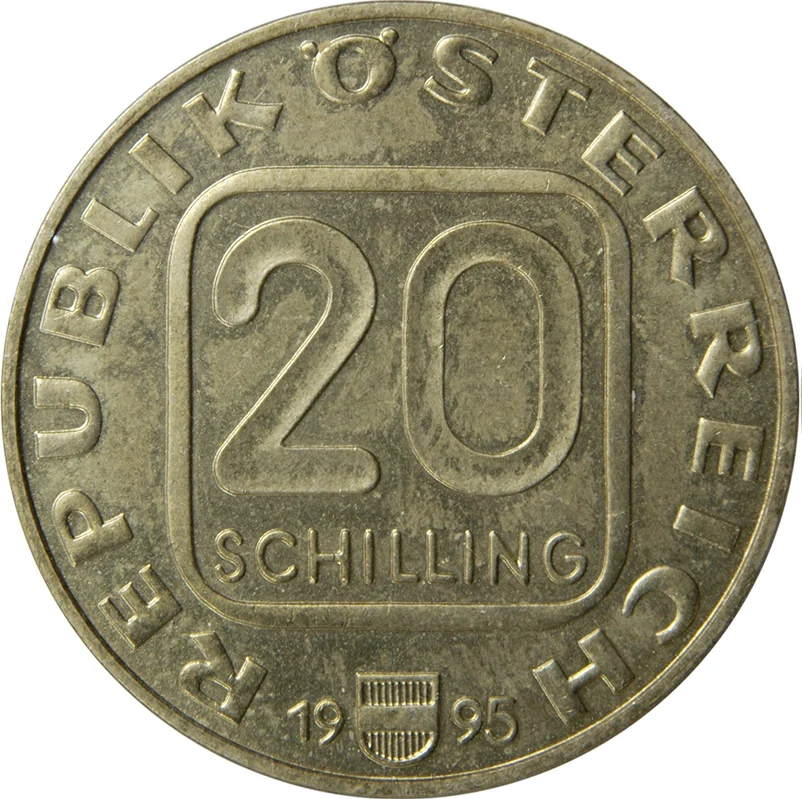
Obverse
Description:
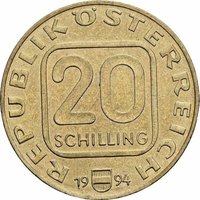
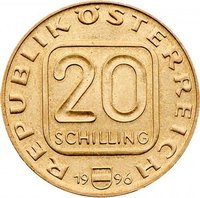
Austrian shield above date in rounded square frame.
Inscription:
REPUBLIK ÖSTERREICH
20
SCHILLING
19 95
20
SCHILLING
19 95
Translation:
REPUBLIC OF AUSTRIA
20
SCHILLING
19 95
20
SCHILLING
19 95
Script: Latin
Language: German
Engraver: Kurt Bodlak
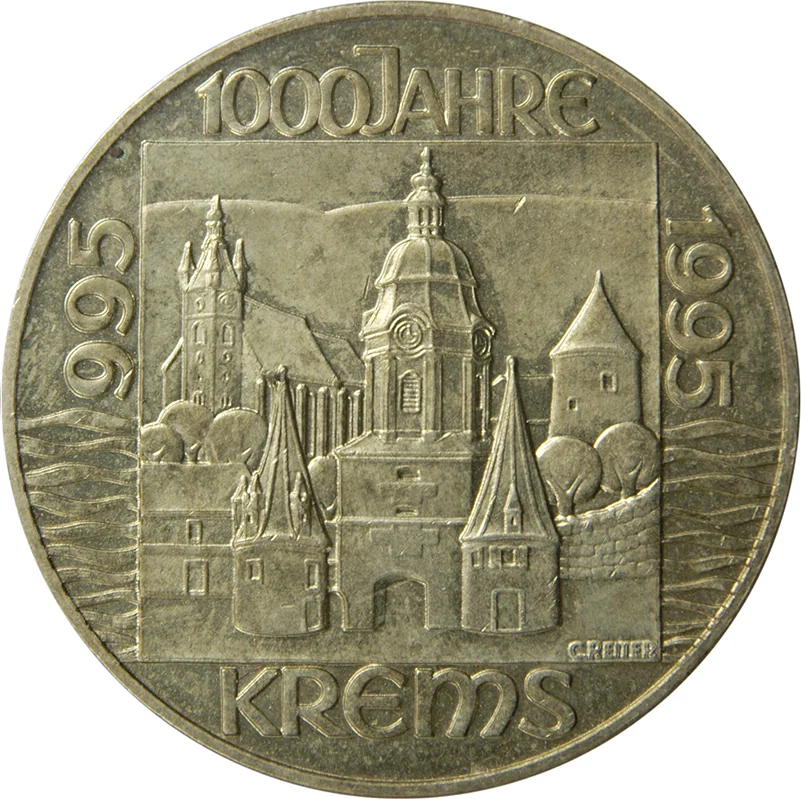
Reverse
Description:
Square featuring Krems' landmarks: Stonegate, Piarist Church, Powder Tower, a stone wall, and Wachau vineyards. Waves symbolize the nearby Danube, encircled by the event description.
Inscription:
1000 JAHRE
995 1995
C.REITER
KREMS
995 1995
C.REITER
KREMS
Script: Latin
Engravers: Thomas Pesendorfer, Christa Reiter
Edge
Plain
Categories
| Building> Religious building |
| Building> Tower |
Mints
| Name | Mark |
|---|---|
| Münze Österreich | — |
Mintings
| Year | Mint Mark | Mintage | Quality | Collection |
|---|---|---|---|---|
| 1995 | — | 27,000 | Proof | |
| 1995 | — | 2,000,000 |
Historical background
In 1995, Austria's currency situation was defined by its final full year operating the Austrian Schilling (ATS) as a national currency within the framework of the European Exchange Rate Mechanism (ERM). Having joined the ERM in January 1995, the Schilling was pegged to a central rate against other European currencies, primarily the Deutsche Mark, to which it had maintained a stable and credible link for years. This stability was a cornerstone of Austrian economic policy, reflecting the country's deep economic integration with Germany and its strategic path toward European Monetary Union (EMU).
The primary focus for Austrian policymakers and financial institutions was meticulous preparation for the upcoming launch of the single European currency, the Euro. While the official conversion and launch were set for 1999, the 1995-1997 period was critical for meeting the Maastricht Treaty's convergence criteria on inflation, interest rates, budget deficits, and public debt. Austria's economy was well-positioned, with low inflation and a historically strong Schilling, but maintaining fiscal discipline to satisfy the strict deficit and debt rules required continued political commitment.
Therefore, the 1995 currency landscape was one of transition and anticipation. The Schilling remained in daily use, stable and trusted, but its future was clearly mapped out. Economic policy was not aimed at independent monetary goals but was subordinated to the requirements of Euro convergence, ensuring Austria would be a founding member of the Eurozone from its inception on January 1, 1999.
The primary focus for Austrian policymakers and financial institutions was meticulous preparation for the upcoming launch of the single European currency, the Euro. While the official conversion and launch were set for 1999, the 1995-1997 period was critical for meeting the Maastricht Treaty's convergence criteria on inflation, interest rates, budget deficits, and public debt. Austria's economy was well-positioned, with low inflation and a historically strong Schilling, but maintaining fiscal discipline to satisfy the strict deficit and debt rules required continued political commitment.
Therefore, the 1995 currency landscape was one of transition and anticipation. The Schilling remained in daily use, stable and trusted, but its future was clearly mapped out. Economic policy was not aimed at independent monetary goals but was subordinated to the requirements of Euro convergence, ensuring Austria would be a founding member of the Eurozone from its inception on January 1, 1999.
🌱 Common