

½ cent – Penang
Add to wishlist
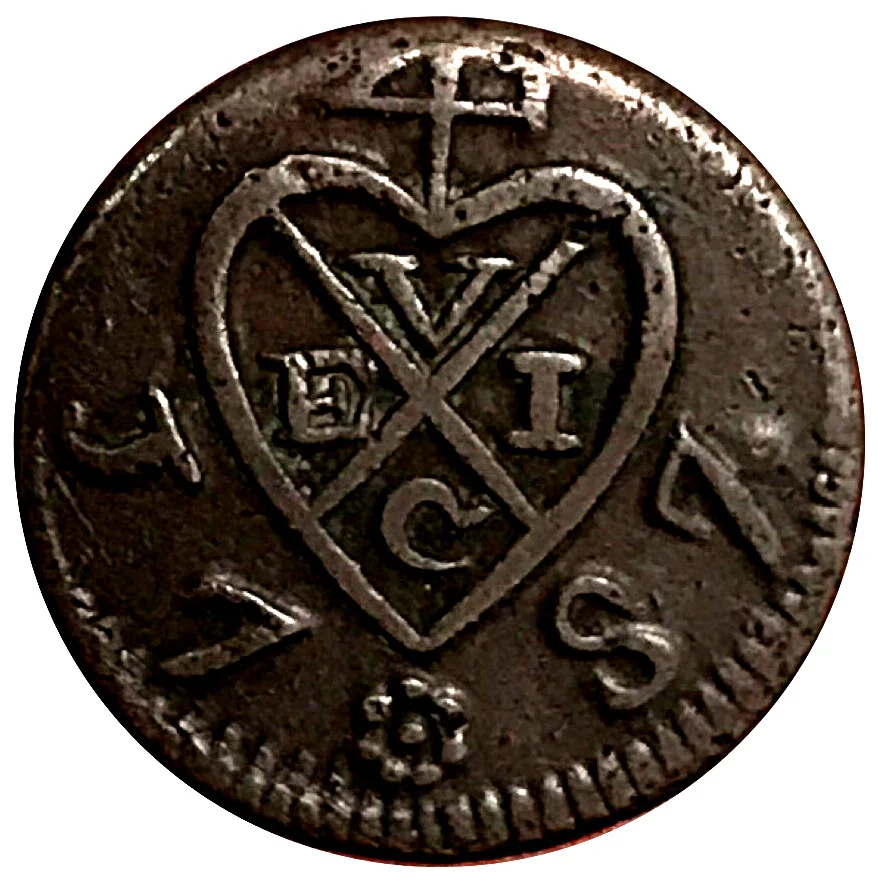
Obverse
Description:
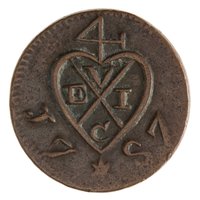
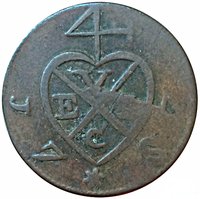
United East India Company 4-mark. Dotted rosette date. Toothed border.
Inscription:
VEIC
1787
1787
Script: Latin
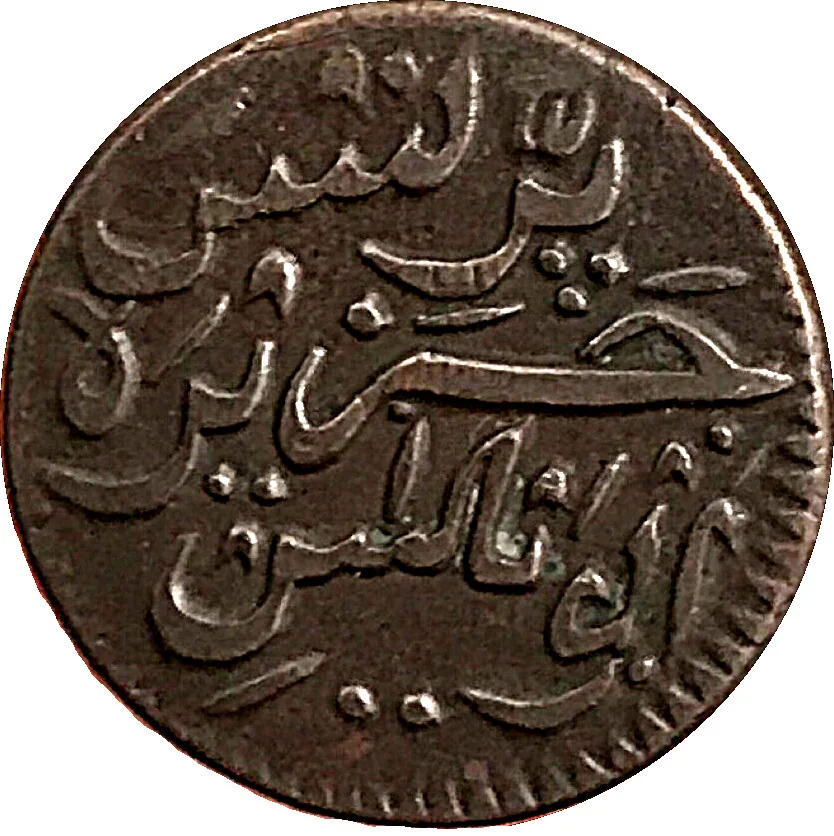
Reverse
Edge
Plain
Mintings
| Year | Mint Mark | Mintage | Quality | Collection |
|---|---|---|---|---|
| 1787 | — | — |
Historical background
In 1787, Penang was in its infancy as a British possession, having been formally ceded to the East India Company by the Sultan of Kedah just two years prior. Captain Francis Light, as Superintendent, was tasked with establishing a free port to compete with Dutch monopolies in the region. Consequently, the island became a bustling hub of maritime trade, attracting a diverse population of Malay, Chinese, Indian, and Arab merchants. This commercial boom immediately created a complex currency situation, as no single, standardized monetary system was in place.
The currency environment was a chaotic bazaar of global coinage. Spanish silver dollars (often called "pieces of eight") were the dominant trade currency, valued for their consistent silver content. Alongside these, a multitude of other coins circulated, including Dutch guilders, Indian rupees, Portuguese cob, and various Chinese copper cash. The British East India Company attempted to impose order by setting official exchange rates for these currencies, but their value fluctuated constantly based on weight, wear, and the arrival of merchant ships. Barter trade also remained prevalent, with commodities like opium, tin, and rice often serving as de facto currency in transactions.
This monetary confusion posed a significant challenge to Penang's administration and growing merchant community. Disputes over exchange rates and the authenticity of coins were common, hindering smooth commerce and tax collection. Recognizing this, Light and the Company began laying the groundwork for a more formal system. They encouraged the use of the Spanish dollar as a benchmark and started planning for the eventual issuance of local token coinage, setting the stage for the Straits Settlements currency that would emerge in the following decades. Thus, 1787 was a year defined by monetary improvisation, reflecting Penang's rapid transition from a quiet island to a turbulent and thriving international port.
The currency environment was a chaotic bazaar of global coinage. Spanish silver dollars (often called "pieces of eight") were the dominant trade currency, valued for their consistent silver content. Alongside these, a multitude of other coins circulated, including Dutch guilders, Indian rupees, Portuguese cob, and various Chinese copper cash. The British East India Company attempted to impose order by setting official exchange rates for these currencies, but their value fluctuated constantly based on weight, wear, and the arrival of merchant ships. Barter trade also remained prevalent, with commodities like opium, tin, and rice often serving as de facto currency in transactions.
This monetary confusion posed a significant challenge to Penang's administration and growing merchant community. Disputes over exchange rates and the authenticity of coins were common, hindering smooth commerce and tax collection. Recognizing this, Light and the Company began laying the groundwork for a more formal system. They encouraged the use of the Spanish dollar as a benchmark and started planning for the eventual issuance of local token coinage, setting the stage for the Straits Settlements currency that would emerge in the following decades. Thus, 1787 was a year defined by monetary improvisation, reflecting Penang's rapid transition from a quiet island to a turbulent and thriving international port.
💎 Extremely Rare