

4 skilling – Denmark
Add to wishlist
Denmark
Context
References
KM: #
Numista: #211450
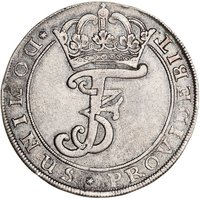
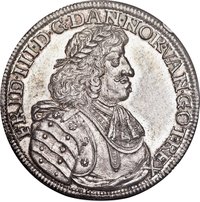
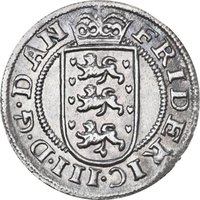
Obverse
Description:
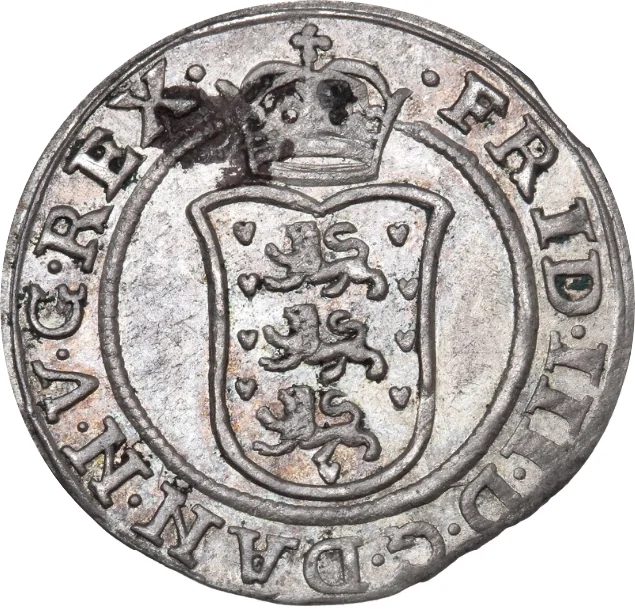
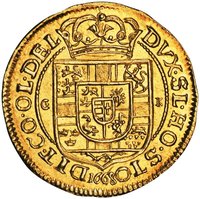
Shield with Denmark's arms within a circle, broken above by a crown. Legend on the outer rim.
Inscription:
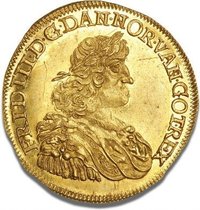
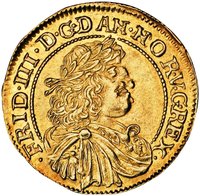
· FRID · III · D · G · DAN · N · V · G · REX ·
Script: Latin
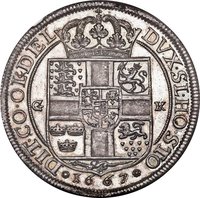
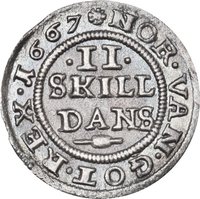
Reverse
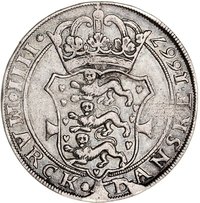
Description:
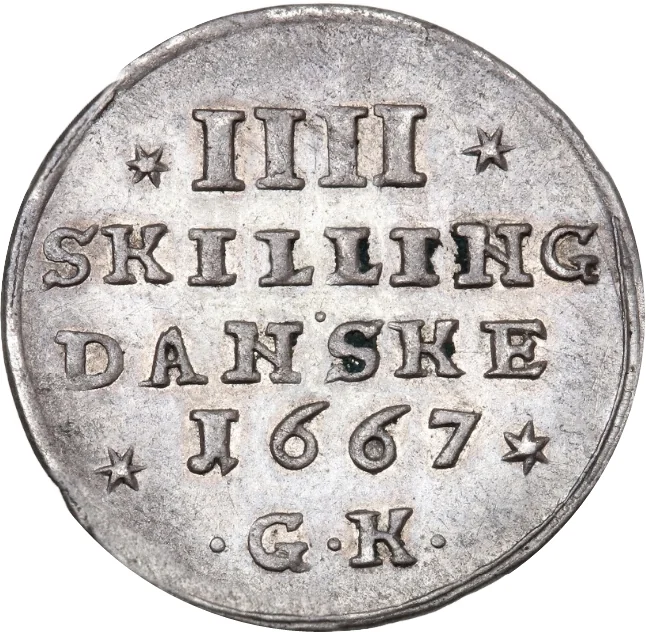
Value and date stacked.
Mintmark below.
Mintmark below.
Inscription:
* IIII *
SKILLING
DANSKE
* 1667 *
· G · K ·
SKILLING
DANSKE
* 1667 *
· G · K ·
Script: Latin
Edge
Mints
| Name | Mark |
|---|---|
| Copenhagen | GK |
Historical background
In 1667, Denmark operated under a bimetallic monetary system, centered on the rigsdaler (rix-dollar) as the primary unit of account. This system, formalized by King Christian IV's ordinance of 1625, established a fixed legal ratio between silver and gold coins. However, like all of Europe in the 17th century, Denmark faced chronic problems with currency instability. The official minted coins, containing their full weight in precious metal, were often hoarded or exported, while worn, clipped, and foreign coins of inferior quality circulated domestically. This led to a persistent shortage of "good money" for daily commerce and state finances.
The situation was exacerbated by the financial strain of recent wars, particularly the devastating Second Northern War (1655-1660) against Sweden. To pay for these conflicts, the Danish monarchy had repeatedly resorted to debasement—reducing the silver content in coins while maintaining their face value. This practice, alongside the influx of inferior foreign coins, eroded public trust in the currency and caused inflation. By 1667, the state treasury was deeply in debt, and the disparity between the official mint standard and the actual circulating medium created significant economic friction and uncertainty for merchants.
Recognizing the need for reform, the absolute monarch King Frederick III and his government were actively working toward a solution. In the years leading up to 1667, they had begun centralizing control over the mints and gathering expert assessments. This culminated in the major Currency Reforms of 1671-1672, which were likely in their planning stages in 1667. These reforms successfully introduced a new, stable silver rigsdaler and established a national bank, laying the foundation for a more unified and reliable monetary system in the decades to follow.
The situation was exacerbated by the financial strain of recent wars, particularly the devastating Second Northern War (1655-1660) against Sweden. To pay for these conflicts, the Danish monarchy had repeatedly resorted to debasement—reducing the silver content in coins while maintaining their face value. This practice, alongside the influx of inferior foreign coins, eroded public trust in the currency and caused inflation. By 1667, the state treasury was deeply in debt, and the disparity between the official mint standard and the actual circulating medium created significant economic friction and uncertainty for merchants.
Recognizing the need for reform, the absolute monarch King Frederick III and his government were actively working toward a solution. In the years leading up to 1667, they had begun centralizing control over the mints and gathering expert assessments. This culminated in the major Currency Reforms of 1671-1672, which were likely in their planning stages in 1667. These reforms successfully introduced a new, stable silver rigsdaler and established a national bank, laying the foundation for a more unified and reliable monetary system in the decades to follow.
Series: 1667 Denmark circulation coins
💎 Extremely Rare