

1 Rupee – Mughal Empire
India
Context
Year: 1628
Country: India 
Issuer: Mughal Empire
Ruler: Shah Jahan
Currency:
(1540—1842)
Demonetized: Yes
Material
References
KM: #Click to copy to clipboard222.7
Numista: #210849
Value
Bullion value: $32.86
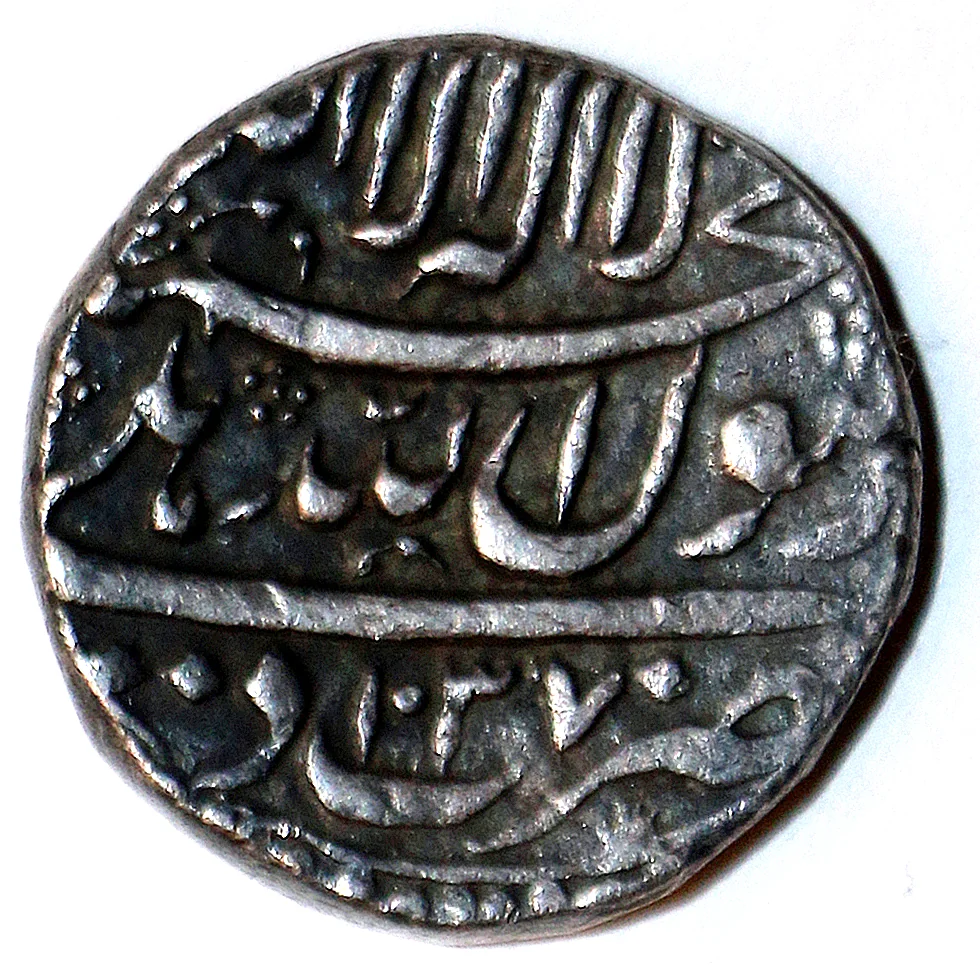
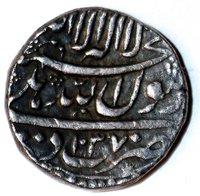
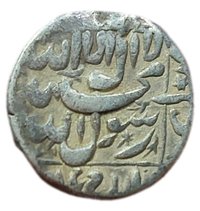
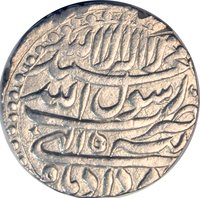
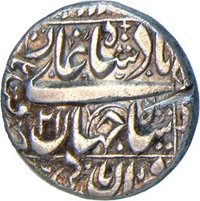
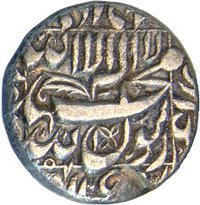
Obverse
Description:
Carved words.
Inscription:
Kalima shahada
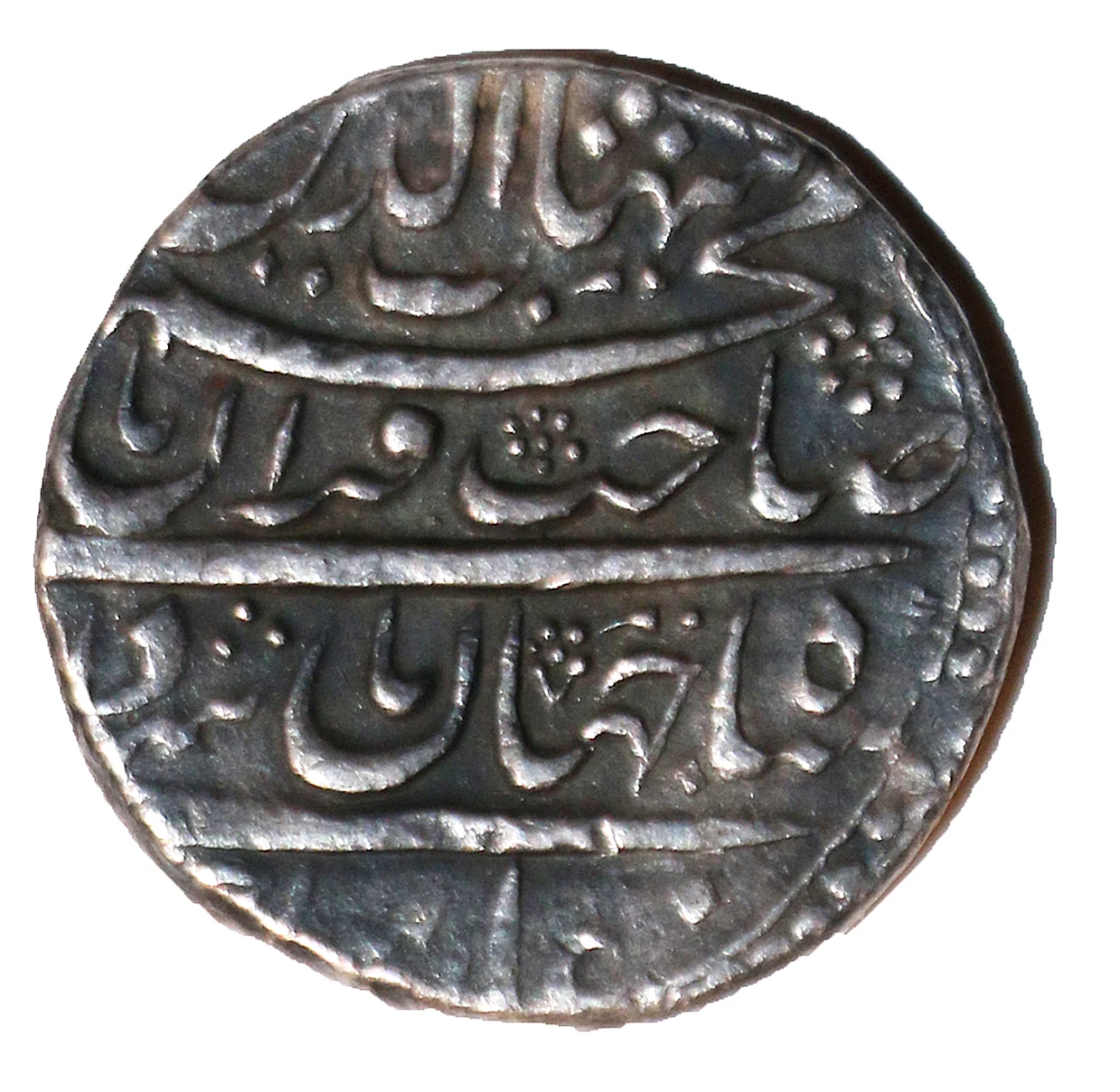
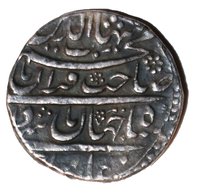
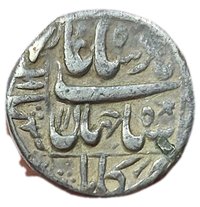
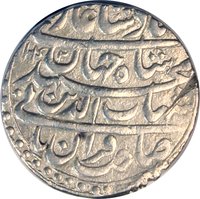
Reverse
Description:
Carved words.
Inscription:
Sahib-e-qiran-i sani shahjahan badshah ghazi
Edge
Plain
Mints
| Name | Mark |
|---|---|
| Delhi | — |
Mintings
| Year | Mint Mark | Mintage | Quality | Collection |
|---|---|---|---|---|
| 1628 | — | — |
Historical background
In 1628, the Mughal Empire's currency system was a sophisticated and highly regulated bimetallic standard, underpinning one of the world's largest and most prosperous economies. The system was centrally controlled from the imperial mints (sikkas), with the silver rupee as the primary unit of account and medium for large transactions, and the gold mohur used for high-value trade, hoarding, and ceremonial purposes. Copper dams served as the ubiquitous fractional currency for daily marketplace exchanges. The integrity of the coinage was paramount; each coin bore the name of the mint, the regnal year, and intricate calligraphy, often including the emperor's name and pious inscriptions, which acted as a guarantee of purity and weight.
This monetary stability was a direct legacy of the reforms instituted by Emperor Akbar (r. 1556–1605) and maintained by his successors, Jahangir and now Shah Jahan, who ascended the throne in 1628. Akbar had standardized the weight and purity of the coins across the empire, establishing a reliable exchange rate between the three metals. Jahangir, known for his numismatic experimentation, had introduced ornate zodiac coins and portrait rupees, but the core system remained unchanged. The widespread acceptance of these coins facilitated efficient revenue collection (jagirdari system), long-distance trade, and a complex credit market, integrating diverse regional economies from Kabul to Dhaka.
However, the year 1628 itself fell in a period of transition and potential strain. Shah Jahan’s accession followed a brief war of succession, which typically caused short-term fiscal stress and possible hoarding. Furthermore, the empire's expanding trade with European companies and the influx of New World silver, primarily via the Americas and through trade at Surat, were beginning to have a profound impact. This influx increased the money supply, contributing to a gradual "price revolution" and inflation over the 17th century, though its full effects were still coalescing in 1628. Thus, the currency situation was one of robust institutional strength, momentarily tested by political succession but facing the longer-term pressures of global economic forces.
This monetary stability was a direct legacy of the reforms instituted by Emperor Akbar (r. 1556–1605) and maintained by his successors, Jahangir and now Shah Jahan, who ascended the throne in 1628. Akbar had standardized the weight and purity of the coins across the empire, establishing a reliable exchange rate between the three metals. Jahangir, known for his numismatic experimentation, had introduced ornate zodiac coins and portrait rupees, but the core system remained unchanged. The widespread acceptance of these coins facilitated efficient revenue collection (jagirdari system), long-distance trade, and a complex credit market, integrating diverse regional economies from Kabul to Dhaka.
However, the year 1628 itself fell in a period of transition and potential strain. Shah Jahan’s accession followed a brief war of succession, which typically caused short-term fiscal stress and possible hoarding. Furthermore, the empire's expanding trade with European companies and the influx of New World silver, primarily via the Americas and through trade at Surat, were beginning to have a profound impact. This influx increased the money supply, contributing to a gradual "price revolution" and inflation over the 17th century, though its full effects were still coalescing in 1628. Thus, the currency situation was one of robust institutional strength, momentarily tested by political succession but facing the longer-term pressures of global economic forces.

✨ Legendary