

1 mark – Denmark
Add to wishlist
Denmark
Context
Material
References
KM: #
Numista: #206815
Value
Bullion value: $9.35
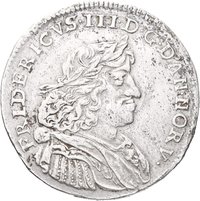
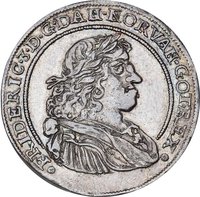
Obverse
Description:
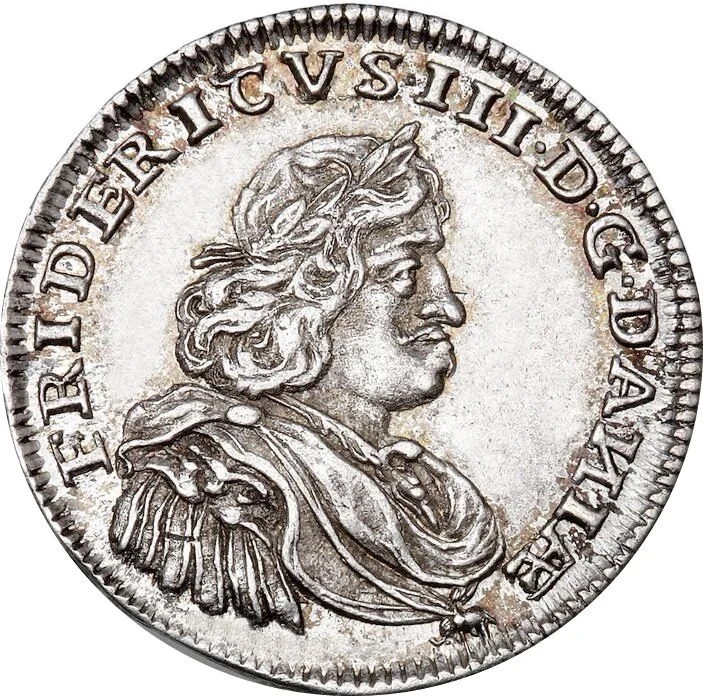
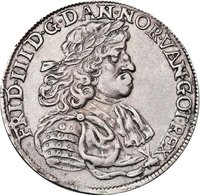
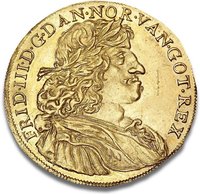
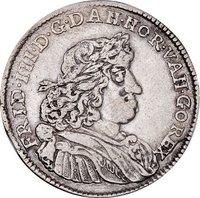
Bust of Frederik III in armor with lion-head shoulder, drapery, and possibly the Order of the Elephant. Legend around the rim.
Inscription:
FRIDERICUS · III · D·G · DAИIÆ
Script: Latin
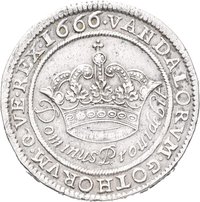
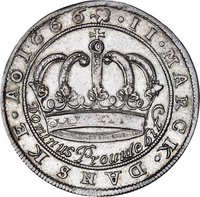
Reverse
Description:
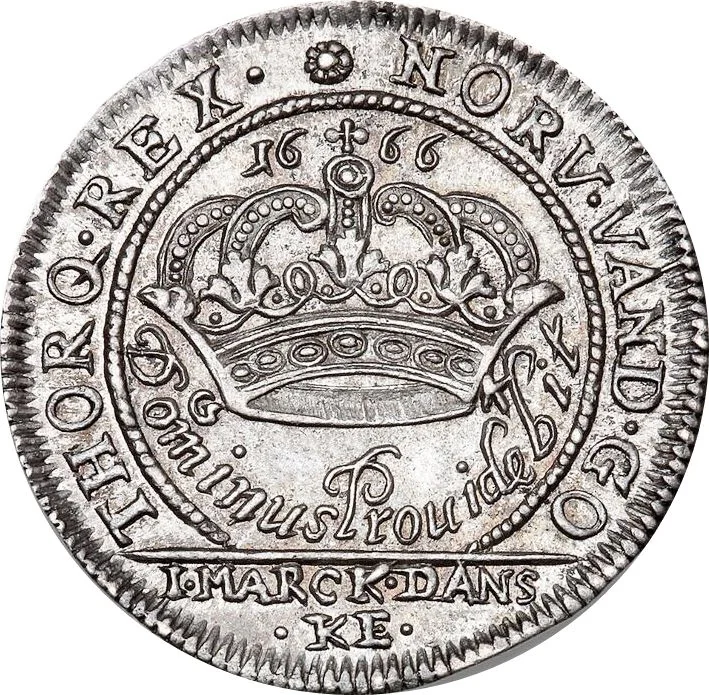
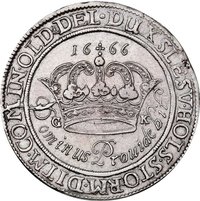
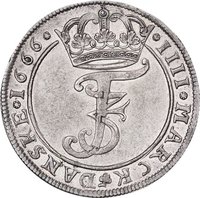
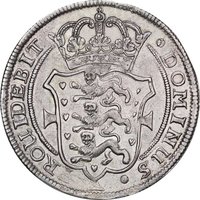
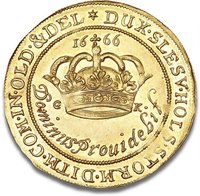
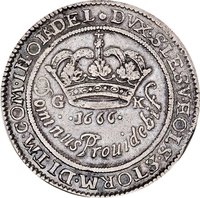
Central crown within a rope circle, cut by a line below. Crown divides the date and the "GK" initials. King's motto in italics inside circle below crown. Lettering surrounds the circle; value in exergue.
Inscription:
* NORV · VAND · GO | THOR Q · REX ·
.......................................
16 | 66
G | K
Dominus Prouidebit
_____________________
I·MARCK·DANS
· KE ·
.......................................
16 | 66
G | K
Dominus Prouidebit
_____________________
I·MARCK·DANS
· KE ·
Script: Latin
Edge
Mints
| Name | Mark |
|---|---|
| Copenhagen | — |
Mintings
| Year | Mint Mark | Mintage | Quality | Collection |
|---|---|---|---|---|
| 1666 | — | — |
Historical background
In 1666, Denmark operated under a bimetallic monetary system, centered on the silver rigsdaler and the gold ducat. The primary unit was the krone (crown), divided into marks and skilling, but the rigsdaler was the key coin for large transactions and state finance. This system was inherently unstable due to the fluctuating market values of gold and silver, which often caused one metal to be undervalued at the mint, leading to its export or hoarding. Furthermore, decades of war, particularly the devastating conflicts with Sweden, had placed immense strain on the treasury, leading to repeated debasements of the coinage to fund military campaigns. By the 1660s, the currency was in a state of confusion, with coins of varying intrinsic values in circulation, undermining both domestic trade and international commerce.
The situation demanded reform, and it was under the absolute monarchy of King Frederik III that decisive action was taken. The pivotal year was 1665, with the introduction of the Kongeloven (King’s Law) cementing absolute power, providing the political foundation for economic restructuring. In 1666, the state implemented a significant monetary reform aimed at standardizing the coinage. A new kurant rigsdaler was introduced, intended to be a stable, full-valued silver coin for accounting and large-scale trade, while smaller subsidiary coins (marks and skilling) were issued for daily use. This reform sought to restore public confidence by fixing the relationship between the various denominations and halting the practice of arbitrary debasement.
However, the long-term success of the 1666 measures was limited. While they provided temporary stability and clearer standards, the fundamental pressures of state finance persisted. The costs of maintaining a standing army and the ambitions of the absolute monarchy continued to strain the economy. Subsequent administrations, notably under Christian V, would face similar challenges, leading to further adjustments and eventual devaluations. Thus, 1666 represents a critical point of attempted stabilization within a longer, turbulent period of Danish monetary history, where central authority sought to impose order on a complex and fragile system.
The situation demanded reform, and it was under the absolute monarchy of King Frederik III that decisive action was taken. The pivotal year was 1665, with the introduction of the Kongeloven (King’s Law) cementing absolute power, providing the political foundation for economic restructuring. In 1666, the state implemented a significant monetary reform aimed at standardizing the coinage. A new kurant rigsdaler was introduced, intended to be a stable, full-valued silver coin for accounting and large-scale trade, while smaller subsidiary coins (marks and skilling) were issued for daily use. This reform sought to restore public confidence by fixing the relationship between the various denominations and halting the practice of arbitrary debasement.
However, the long-term success of the 1666 measures was limited. While they provided temporary stability and clearer standards, the fundamental pressures of state finance persisted. The costs of maintaining a standing army and the ambitions of the absolute monarchy continued to strain the economy. Subsequent administrations, notably under Christian V, would face similar challenges, leading to further adjustments and eventual devaluations. Thus, 1666 represents a critical point of attempted stabilization within a longer, turbulent period of Danish monetary history, where central authority sought to impose order on a complex and fragile system.
Series: 1666 Denmark circulation coins
✨ Legendary