

1 Mun – Joseon
Context
Material
Diameter: 25 mm
Shape: Round with a square hole
Composition: Brass
Magnetic: No
Alignment: Medal alignment
flip
References
KM: #Click to copy to clipboard31
Numista: #20506
Obverse
Description:
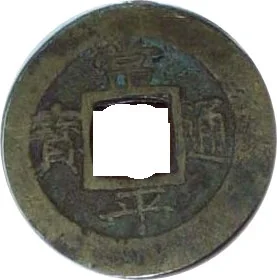
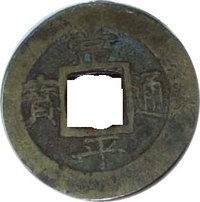
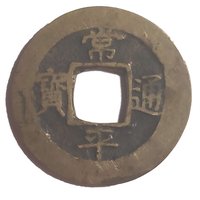
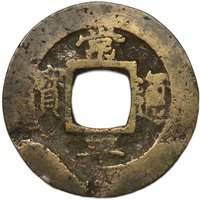
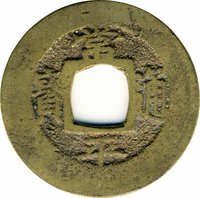
常平通寶 (Sang pyong Tong bo) - Yi Dynasty Korean currency.
Inscription:
常
寶 通
平
寶 通
平
Scripts: Chinese (traditional, regular script)
Reverse
Description:
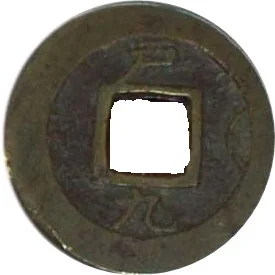
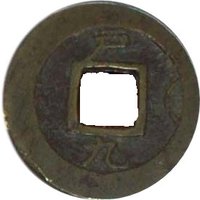
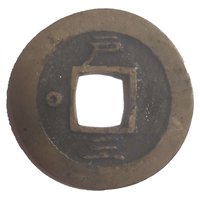
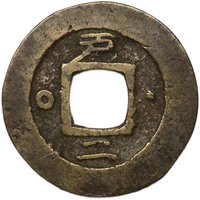
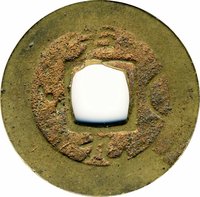
Mint mark top, serial bottom. *户: Treasury.
Inscription:
户
(
九
(
九
Scripts: Chinese (traditional, regular script)
Edge
Mints
| Name | Mark |
|---|---|
| Treasury Department | 户 |
Mintings
| Year | Mint Mark | Mintage | Quality | Collection |
|---|---|---|---|---|
| — | 户 | — |
Historical background
In 1778, the currency system of the Joseon Dynasty was in a state of profound strain, caught between a rigid ideological framework and pressing economic realities. The state officially upheld a "copper standard," where yeopjeon (brass coins) minted with the inscription Sangpyeong Tongbo ("Ever-Constant Circulating Treasure") were the primary coinage. However, the supply of these coins was chronically insufficient for a growing commercial economy, leading to severe deflationary pressures and a reliance on cumbersome commodity money like rice and cloth for everyday transactions. This scarcity was exacerbated by hoarding and the outflow of coins to China in trade, creating a chronic shortage of liquid currency that stifled commerce.
The root of the crisis lay in the government's inability to control the coin's intrinsic value. The market price of copper, from which the coins were made, often exceeded the face value of the coins themselves. This created a powerful incentive for people to melt down coins for their raw material, a practice that further reduced the money in circulation. King Yeongjo (r. 1724–1776), who had died just two years prior in 1776, had spent decades attempting monetary reforms, including issuing coins with higher copper content and combating counterfeit yeopjeon, but these measures provided only temporary relief.
Consequently, by 1778, the young King Jeongjo (r. 1776–1800) inherited a dysfunctional monetary system. The official currency was scarce and unstable, while various private and regional alternatives circulated unevenly. This environment hindered tax collection, disrupted markets, and created widespread economic uncertainty. Jeongjo recognized that currency reform was essential for stabilizing the state's finances and strengthening royal authority, setting the stage for his own ambitious, though later only partially successful, reforms in the coming decades, including the introduction of new coinage in the 1790s.
The root of the crisis lay in the government's inability to control the coin's intrinsic value. The market price of copper, from which the coins were made, often exceeded the face value of the coins themselves. This created a powerful incentive for people to melt down coins for their raw material, a practice that further reduced the money in circulation. King Yeongjo (r. 1724–1776), who had died just two years prior in 1776, had spent decades attempting monetary reforms, including issuing coins with higher copper content and combating counterfeit yeopjeon, but these measures provided only temporary relief.
Consequently, by 1778, the young King Jeongjo (r. 1776–1800) inherited a dysfunctional monetary system. The official currency was scarce and unstable, while various private and regional alternatives circulated unevenly. This environment hindered tax collection, disrupted markets, and created widespread economic uncertainty. Jeongjo recognized that currency reform was essential for stabilizing the state's finances and strengthening royal authority, setting the stage for his own ambitious, though later only partially successful, reforms in the coming decades, including the introduction of new coinage in the 1790s.
Series: 1778 Joseon circulation coins
💎 Extremely Rare