

2 mark – Denmark
Add to wishlist
Denmark
Context
Material
References
KM: #
Numista: #202111
Value
Bullion value: $16.60
Obverse
Description:
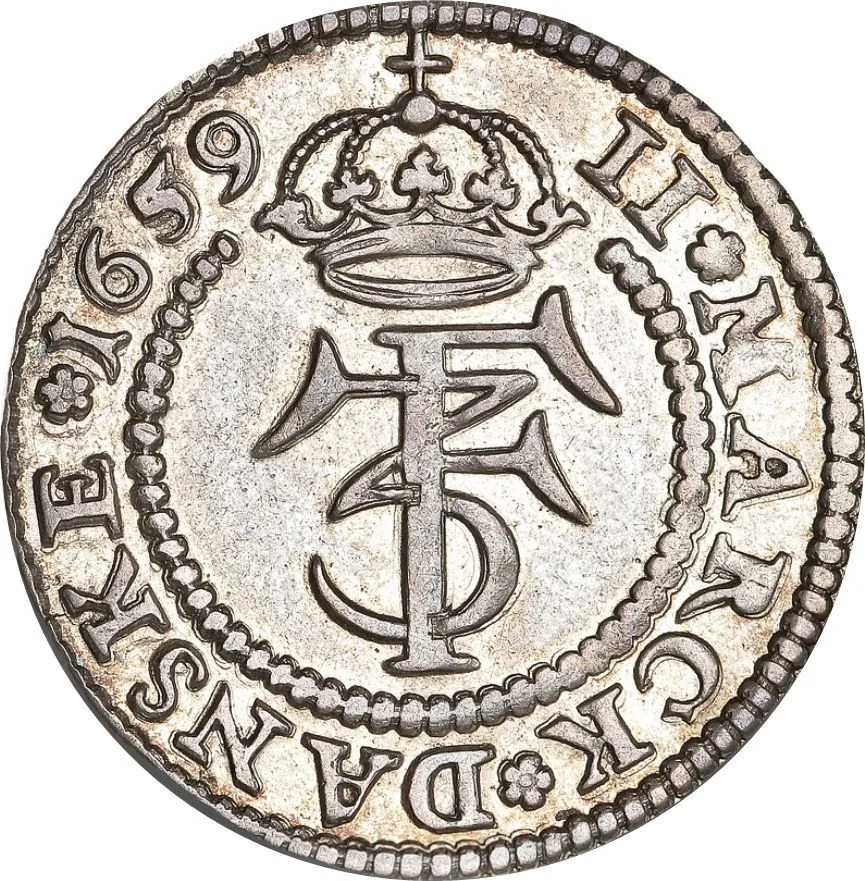
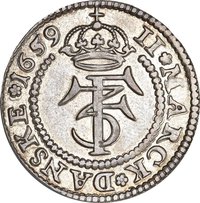
King's crowned monogram within beaded circle, value and date in outer legend.
Inscription:
II * MARCK * DANSKE * 1659
Script: Latin
Reverse
Description:
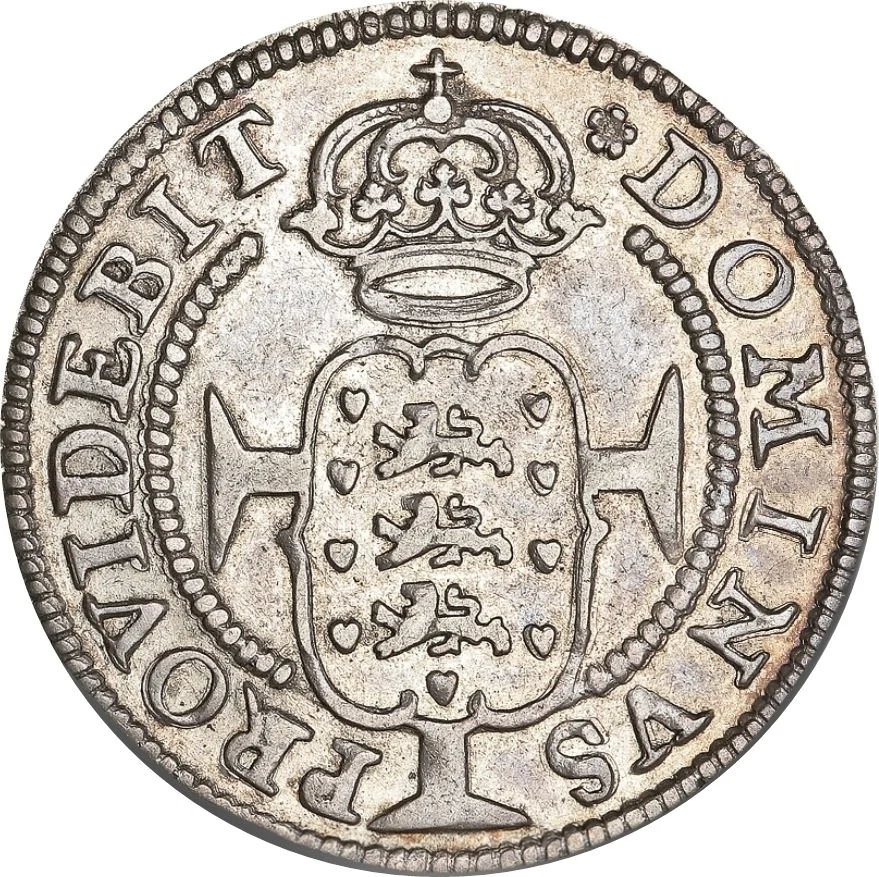
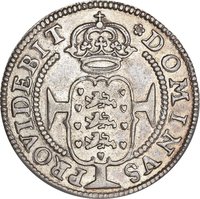
A crowned, fancy shield bearing Denmark's arms within a beaded circle, overlaying a cross with short triangular arms. The King's motto encircles the design.
Inscription:
* DOMINUS | PROVIDEBIT
Script: Latin
Edge
Mints
| Name | Mark |
|---|---|
| Copenhagen | — |
Mintings
| Year | Mint Mark | Mintage | Quality | Collection |
|---|---|---|---|---|
| 1658 | — | — | ||
| 1659 | — | — | ||
| 1660 | — | — | ||
| 1661 | — | — |
Historical background
In 1658, Denmark’s currency system was in a state of profound crisis, deeply entangled with the geopolitical catastrophe of the Second Northern War (1655–1660). The year began with the catastrophic Treaty of Roskilde in February, where Denmark-Norway, defeated by Sweden, ceded the rich, revenue-generating provinces of Skåne, Halland, and Blekinge. This loss stripped the Danish crown of a significant portion of its wealth and tax base, creating an acute fiscal emergency. King Frederik III and his government faced the immense costs of maintaining defenses, funding a failed war, and paying ransoms, all while state income had dramatically collapsed.
To address this desperate shortage of silver, the primary monetary metal, the government resorted to aggressive currency debasement. The mint in Copenhagen was ordered to drastically reduce the silver content in coins like the skilling and mark, while officially maintaining their face value. This practice, essentially creating more coins from less precious metal, led to rapid inflation and a severe loss of public trust. Older, purer coins were hoarded or melted down, following Gresham’s Law (“bad money drives out good”), which further destabilized daily commerce and made it difficult for the state to finance its obligations.
The situation was compounded by a complex and archaic monetary system where multiple units of account (rigsdaler, mark, and skilling) coexisted with a physical circulation of coins of varying intrinsic worth. This chaos eroded both domestic economic stability and Denmark’s international credit. The financial desperation of 1658 became a direct catalyst for the political revolution the following year, as Frederik III leveraged the crisis and the ongoing war to abolish the elective monarchy and establish absolute, hereditary rule in 1660, partly to centralize control over the fractured fiscal and monetary system.
To address this desperate shortage of silver, the primary monetary metal, the government resorted to aggressive currency debasement. The mint in Copenhagen was ordered to drastically reduce the silver content in coins like the skilling and mark, while officially maintaining their face value. This practice, essentially creating more coins from less precious metal, led to rapid inflation and a severe loss of public trust. Older, purer coins were hoarded or melted down, following Gresham’s Law (“bad money drives out good”), which further destabilized daily commerce and made it difficult for the state to finance its obligations.
The situation was compounded by a complex and archaic monetary system where multiple units of account (rigsdaler, mark, and skilling) coexisted with a physical circulation of coins of varying intrinsic worth. This chaos eroded both domestic economic stability and Denmark’s international credit. The financial desperation of 1658 became a direct catalyst for the political revolution the following year, as Frederik III leveraged the crisis and the ongoing war to abolish the elective monarchy and establish absolute, hereditary rule in 1660, partly to centralize control over the fractured fiscal and monetary system.
✨ Legendary