

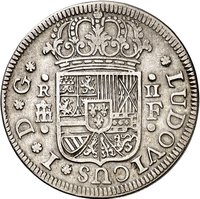
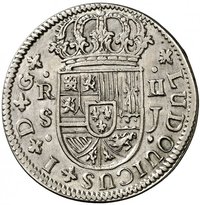
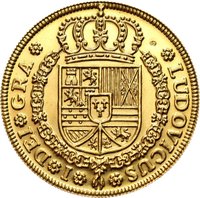
Obverse
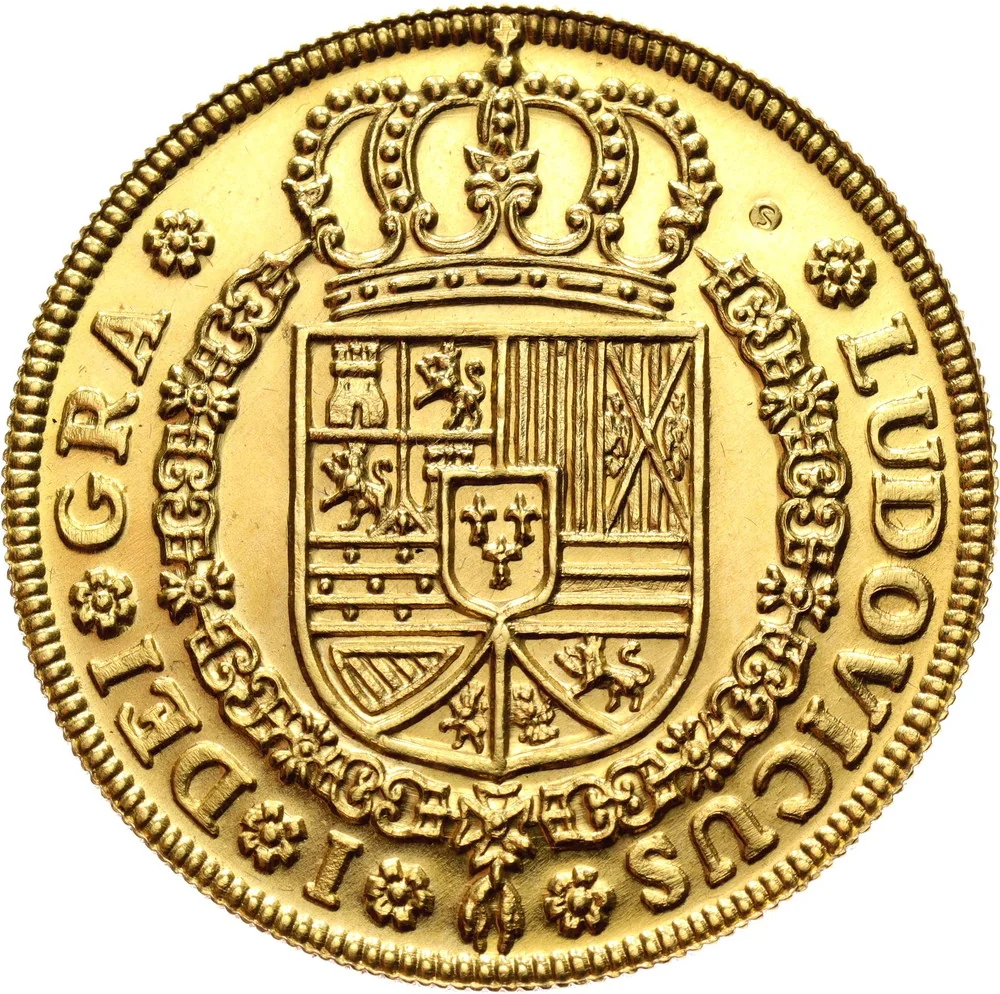
Description:
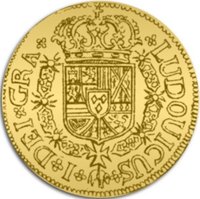
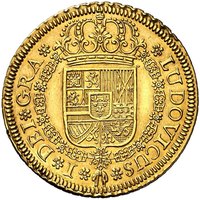
Crowned Spanish coat of arms with the Golden Fleece.
Inscription:
✿ LUDOVICUS ✿ ✿ I ✿ DEI ✿ GRA ✿
Script: Latin
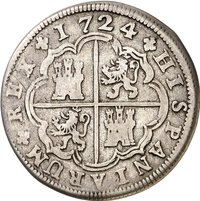
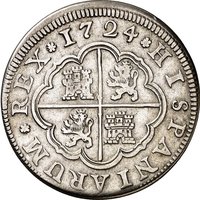
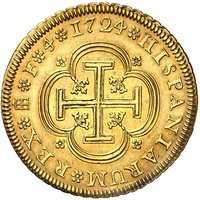
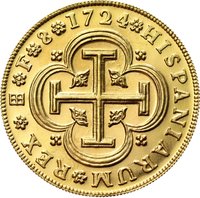
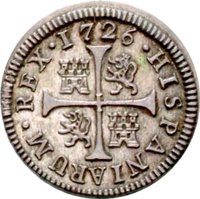
Reverse
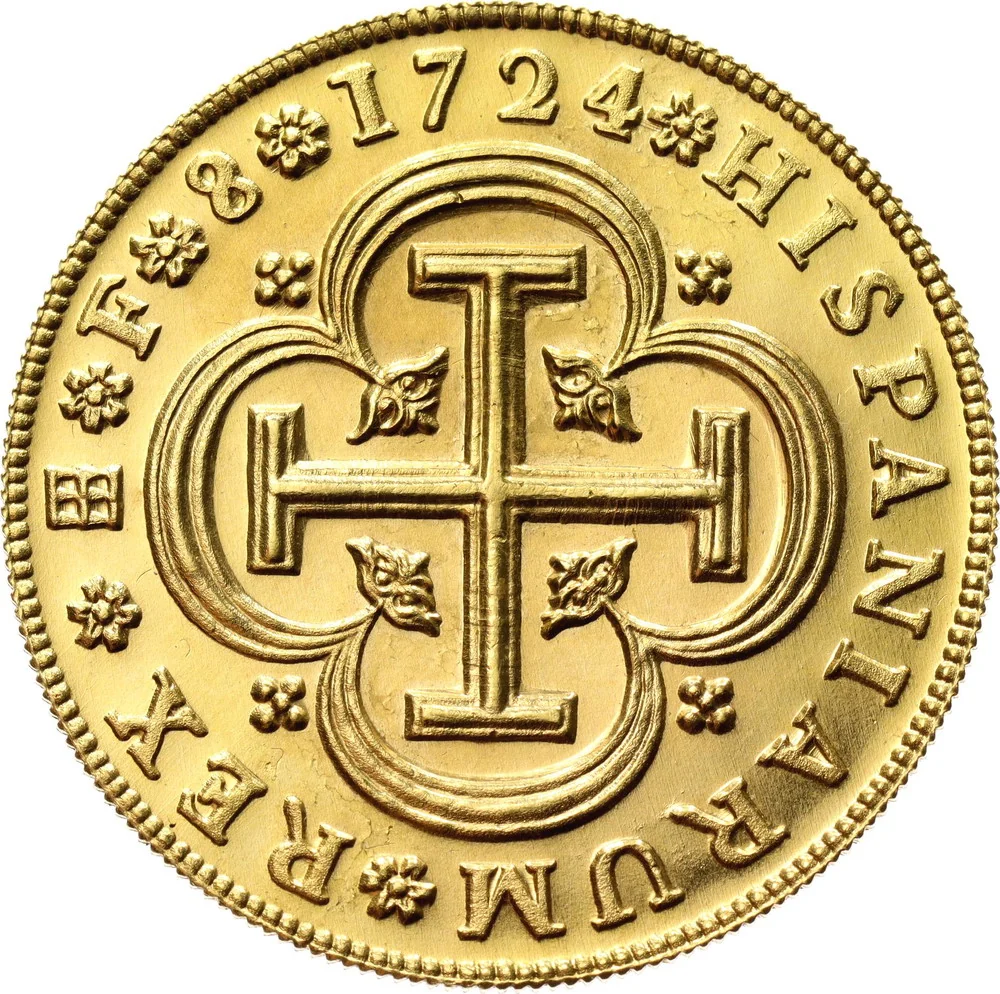
Description:
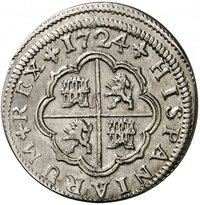
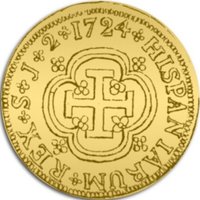
Cross within quatrefoil.
Inscription:
✿ F ✿ 8 ✿ 1724 ✿ HISPANIARUM ✿ REX ✿
Script: Latin
Edge
Milled
Categories
| Symbols> Coat of Arms |
| Symbol> Cross |
Mints
| Name | Mark |
|---|---|
| Royal Mint of Segovia | — |
Mintings
| Year | Mint Mark | Mintage | Quality | Collection |
|---|---|---|---|---|
| 1724 | F | — |
Historical background
In 1724, Spain's currency system was a complex and troubled reflection of the wider Habsburg economic legacy. The primary unit was the silver real, with eight reales making a peso or "piece of eight," a coin famous in global trade. However, the century-long practice of monarchs debasing the coinage to finance endless wars had created a chaotic monetary environment. The realm circulated a confusing mix of older, high-silver coins and newer, adulterated ones, alongside a vast quantity of low-value vellón coinage (copper or heavily debased silver) used for everyday transactions. This led to a system where coins had both a face value and a higher, fluctuating market value based on their metal content, causing widespread confusion and economic distortion.
The situation was directly managed by the Royal Treasury and various mints across the empire, but the fundamental policy was one of short-term crisis management. King Philip V, the first Bourbon monarch, had been engaged in the costly War of the Spanish Succession until 1714 and was focused on consolidating political power. While his later reforms would lay groundwork for recovery, in 1724—a year of peculiar political drama when he briefly abdicated to his son Louis I, only to reclaim the throne after Louis's death—monetary reform was not a immediate priority. The state's finances were strained, and the temptation to further debase coinage to raise funds remained a persistent threat to monetary stability.
Consequently, the currency situation in 1724 was one of entrenched instability. The poor quality and lack of trust in the vellón coinage hampered domestic commerce, while the dual-value system for silver coins discouraged honest trade. This monetary confusion acted as a drag on the Spanish economy, complicating tax collection and hindering internal markets. It underscored the urgent need for the comprehensive Bourbon reforms that would later in the century, under rulers like Ferdinand VI and Charles III, attempt to unify and stabilize the Spanish monetary system, though the problem would persist for decades.
The situation was directly managed by the Royal Treasury and various mints across the empire, but the fundamental policy was one of short-term crisis management. King Philip V, the first Bourbon monarch, had been engaged in the costly War of the Spanish Succession until 1714 and was focused on consolidating political power. While his later reforms would lay groundwork for recovery, in 1724—a year of peculiar political drama when he briefly abdicated to his son Louis I, only to reclaim the throne after Louis's death—monetary reform was not a immediate priority. The state's finances were strained, and the temptation to further debase coinage to raise funds remained a persistent threat to monetary stability.
Consequently, the currency situation in 1724 was one of entrenched instability. The poor quality and lack of trust in the vellón coinage hampered domestic commerce, while the dual-value system for silver coins discouraged honest trade. This monetary confusion acted as a drag on the Spanish economy, complicating tax collection and hindering internal markets. It underscored the urgent need for the comprehensive Bourbon reforms that would later in the century, under rulers like Ferdinand VI and Charles III, attempt to unify and stabilize the Spanish monetary system, though the problem would persist for decades.
Series: 1724 Spain circulation coins
✨ Legendary