

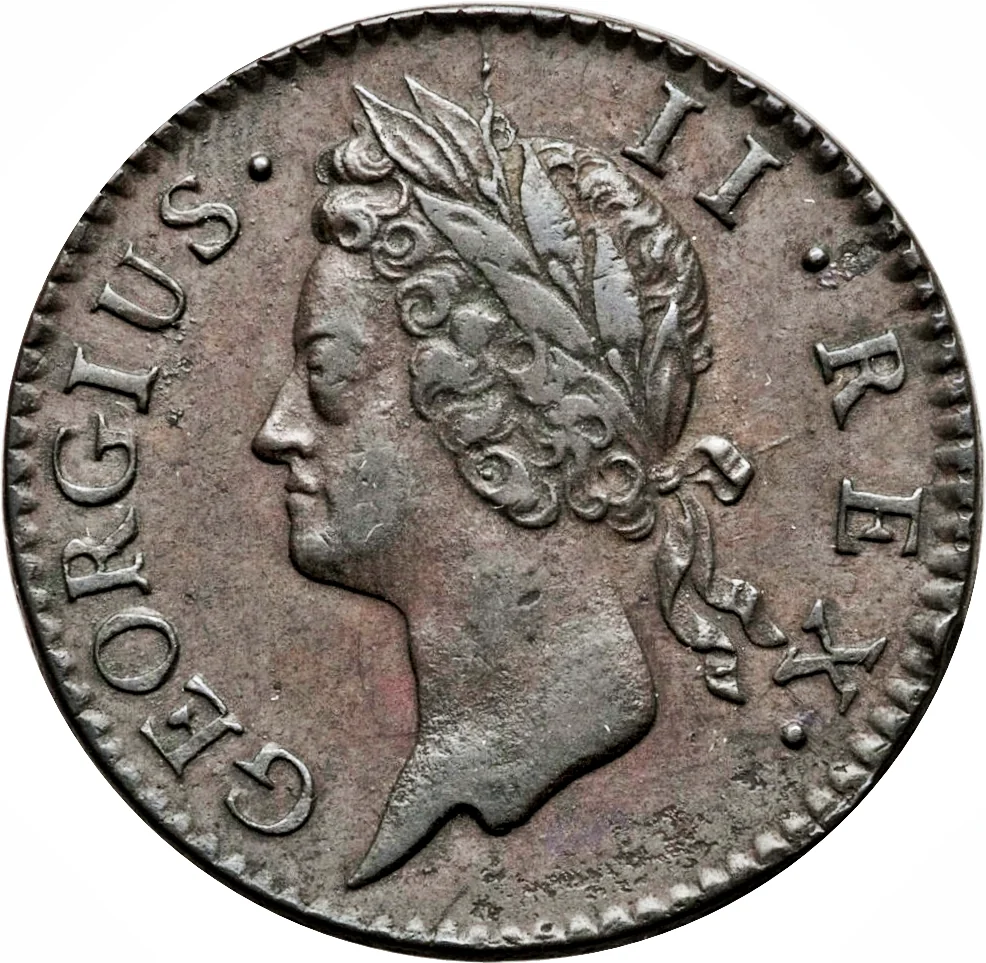
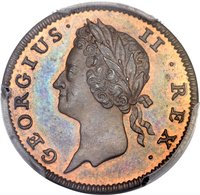
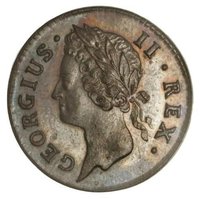
Obverse
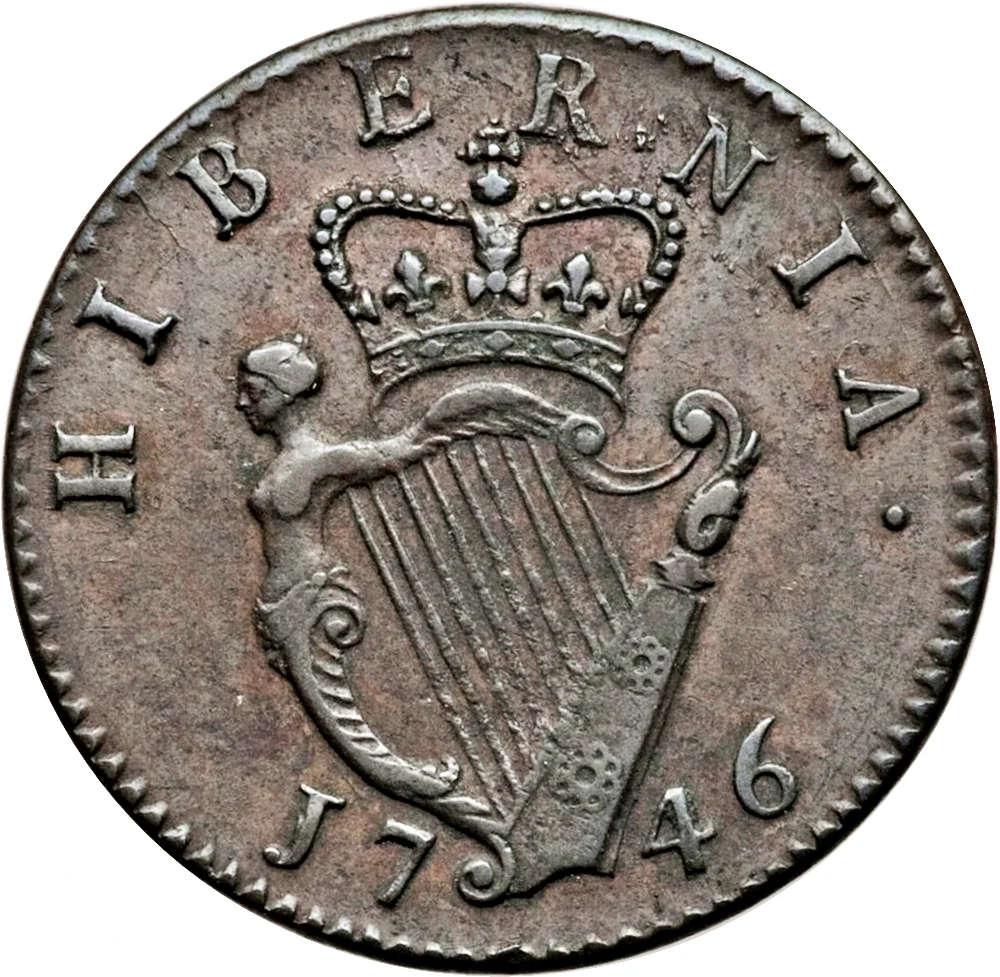
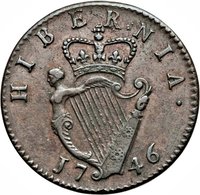
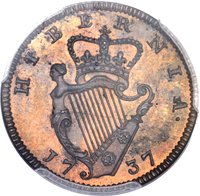
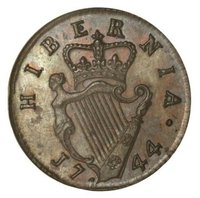
Reverse
Edge
Plain
Mintings
| Year | Mint Mark | Mintage | Quality | Collection |
|---|---|---|---|---|
| 1741 | — | — | ||
| 1742 | — | — | ||
| 1743 | — | — | ||
| 1744 | — | — | ||
| 1746 | — | — | ||
| 1747 | — | — | ||
| 1748 | — | — | ||
| 1749 | — | — | ||
| 1750 | — | — | ||
| 1751 | — | — | ||
| 1752 | — | — | ||
| 1753 | — | — | ||
| 1755 | — | — |
Historical background
In 1741, Ireland operated under a complex and strained currency system, a legacy of colonial economic control by Britain. The official circulating medium was primarily silver and copper coin, but severe shortages were chronic. England deliberately restricted the minting of Irish coinage to maintain economic subordination, leading to a reliance on worn foreign coins, particularly Spanish dollars (pieces of eight) and Portuguese moidores, which circulated at rates set by proclamation. This scarcity of reliable specie crippled everyday transactions and commercial activity, creating a fragile monetary environment.
The situation was exacerbated by the proliferation of private tokens issued by local merchants, towns, and even grand juries to facilitate trade in the absence of official coin. While these tokens filled a critical gap, their value was unreliable and localized, leading to confusion and hindering broader commerce. Furthermore, a significant portion of the economy functioned on credit and book debt, which was vulnerable to crisis. This precarious system existed within a broader context of restrictive English trade laws, like the Woolens Act, which stifled Irish exports and drained gold and silver to pay for imports, perpetuating the currency drain.
The year 1741 itself, known as Bliain an Áir (the Year of Slaughter), saw these monetary weaknesses magnified by catastrophic famine. With food prices skyrocketing and widespread starvation, the already insufficient currency system failed utterly for the poor. Economic activity contracted, and what little coin existed hoarded, exposing the dire human consequences of a monetary policy designed for colonial extraction rather than domestic stability. The crisis of 1741 underscored how Ireland's currency problems were not merely a financial inconvenience but a symptom of its vulnerable position within the British Empire, contributing to deep-seated economic grievances.
The situation was exacerbated by the proliferation of private tokens issued by local merchants, towns, and even grand juries to facilitate trade in the absence of official coin. While these tokens filled a critical gap, their value was unreliable and localized, leading to confusion and hindering broader commerce. Furthermore, a significant portion of the economy functioned on credit and book debt, which was vulnerable to crisis. This precarious system existed within a broader context of restrictive English trade laws, like the Woolens Act, which stifled Irish exports and drained gold and silver to pay for imports, perpetuating the currency drain.
The year 1741 itself, known as Bliain an Áir (the Year of Slaughter), saw these monetary weaknesses magnified by catastrophic famine. With food prices skyrocketing and widespread starvation, the already insufficient currency system failed utterly for the poor. Economic activity contracted, and what little coin existed hoarded, exposing the dire human consequences of a monetary policy designed for colonial extraction rather than domestic stability. The crisis of 1741 underscored how Ireland's currency problems were not merely a financial inconvenience but a symptom of its vulnerable position within the British Empire, contributing to deep-seated economic grievances.
🌱 Fairly Common