

1 Liard – Spanish Netherlands
Netherlands
Context
Years: 1680–1700
Country: Netherlands 
Issuer: Spanish Netherlands
Ruler: Charles II
Currency:
(1506—1713)
Demonetized: Yes
Material
Diameter: 25 mm
Weight: 3.84 g
Shape: Irregular round
Composition: Copper
Magnetic: No
Alignment: Coin alignment
flip
References
KM: #Click to copy to clipboard81
Numista: #19971
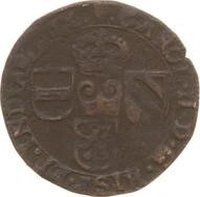
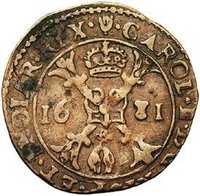
Obverse
Description:
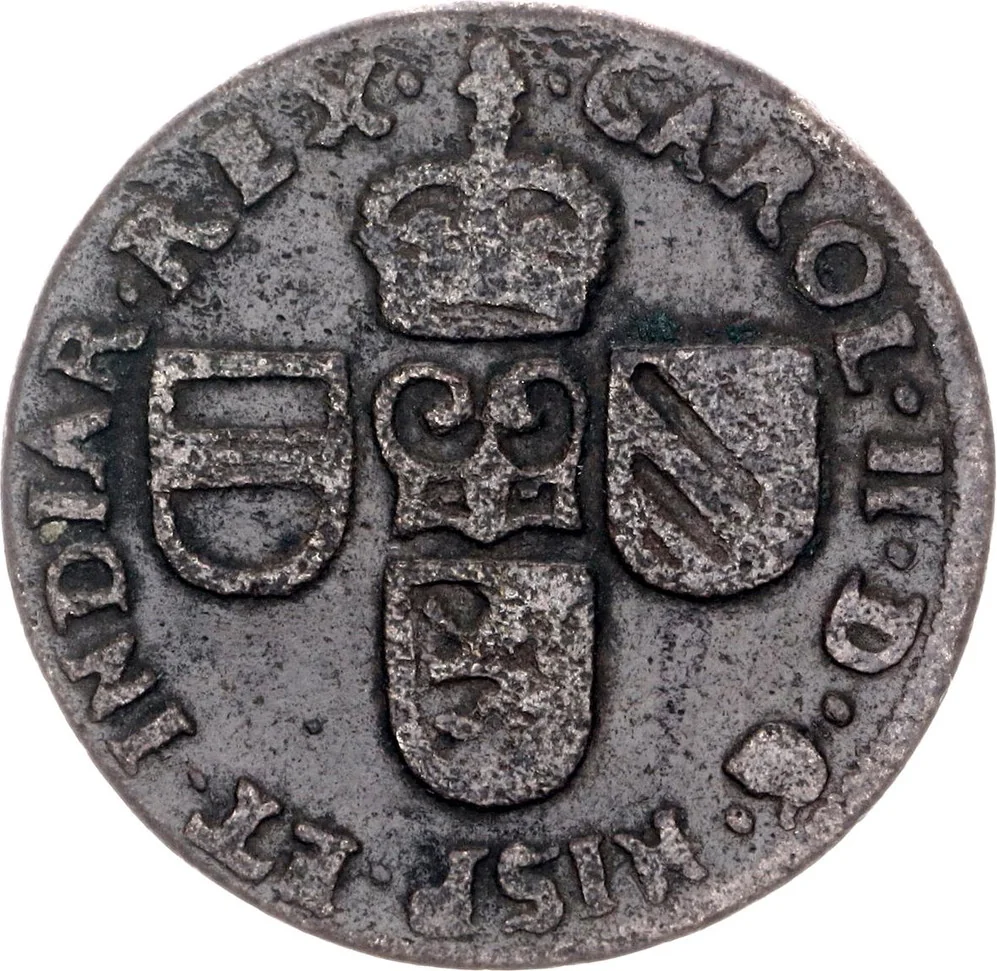
Firesteel crowned by three coats of arms: Austria, Burgundy, and Brabant.
Inscription:
CAROL · II · D ·G · HISP · ET · INDIAR · REX
Script: Latin
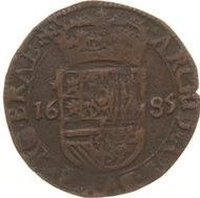
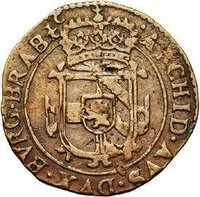
Reverse
Description:
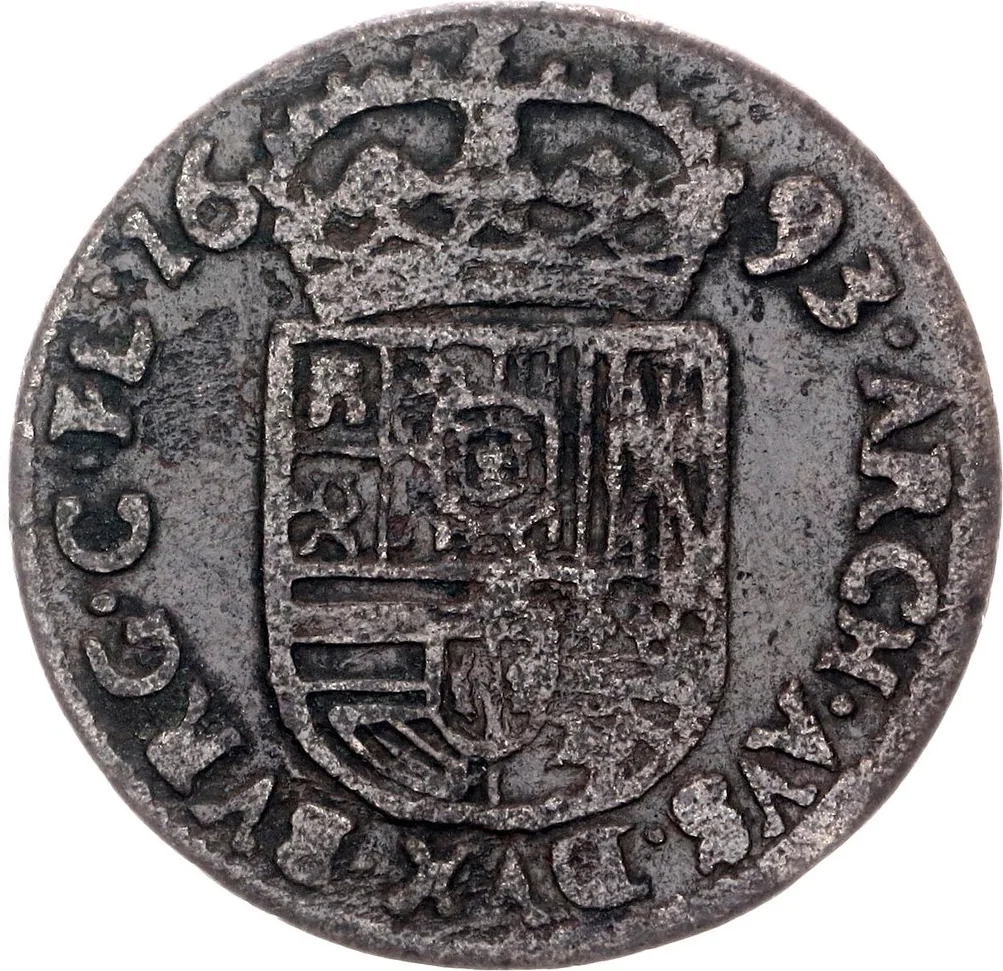
Coat of arms crowned with symbols of Flanders, Brabant, and Burgundy.
Inscription:
· ARCH · AVS · DVX · BVRG · C · FL 16 92
Script: Latin
Edge
Plain
Categories
| Symbols> Coat of Arms |
Mints
| Name | Mark |
|---|---|
| Bruges | ⚜ |
Mintings
| Year | Mint Mark | Mintage | Quality | Collection |
|---|---|---|---|---|
| 1680 | — | — | ||
| 1681 | — | — | ||
| 1685 | — | — | ||
| 1686 | — | — | ||
| 1691 | — | — | ||
| 1692 | — | — | ||
| 1693 | — | — | ||
| 1694 | — | — | ||
| 1695 | — | — | ||
| 1696 | — | — | ||
| 1698 | — | — | ||
| 1699 | — | — | ||
| 1700 | — | — |
Historical background
By 1680, the currency situation in the Spanish Netherlands was one of profound disorder and debasement, a legacy of decades of warfare and fiscal desperation. The region, a strategic battleground in the Franco-Dutch War (1672-1678), saw its economy strained by military demands. To finance these endless conflicts, the authorities repeatedly engaged in monetary manipulations: they officially raised the nominal value of existing coins (crying up) or issued new, lighter coins with the same face value as older, heavier ones. This practice, intended as a short-term fiscal fix, flooded the circulation with coins of varying intrinsic worth from different provinces and foreign nations, creating a chaotic and unreliable monetary environment.
The core of the problem was the severe discrepancy between the intrinsic value (the actual metal content) and the extrinsic value (the officially mandated face value) of coins. Gresham's Law took hold, where "bad money drives out good." Older, full-weight silver coins like the Patagon were hoarded, melted down, or exported, while the newer, debased coins remained in circulation. This led to widespread confusion in commerce, as merchants and the public struggled to assess real values, and price inflation became a persistent issue. The lack of a uniform, trusted currency hampered trade and investment at a time when the region's economic rivals, like the Dutch Republic, enjoyed stable monetary systems.
Recognizing the crisis, the government in Brussels under Governor-General Marqués de Grana attempted a major reform in 1680. This involved a sweeping recall and recoinage aimed at unifying the currency and restoring its metallic standard. The plan was to withdraw all the debased and foreign coins and replace them with new, full-weight pieces. However, this ambitious reform was only partially successful. The process was costly and disruptive, and it could not instantly erase deep-seated public distrust. While it provided a temporary stabilization, the underlying fiscal pressures of the Spanish crown meant that the currency system remained vulnerable to future manipulations well into the 18th century.
The core of the problem was the severe discrepancy between the intrinsic value (the actual metal content) and the extrinsic value (the officially mandated face value) of coins. Gresham's Law took hold, where "bad money drives out good." Older, full-weight silver coins like the Patagon were hoarded, melted down, or exported, while the newer, debased coins remained in circulation. This led to widespread confusion in commerce, as merchants and the public struggled to assess real values, and price inflation became a persistent issue. The lack of a uniform, trusted currency hampered trade and investment at a time when the region's economic rivals, like the Dutch Republic, enjoyed stable monetary systems.
Recognizing the crisis, the government in Brussels under Governor-General Marqués de Grana attempted a major reform in 1680. This involved a sweeping recall and recoinage aimed at unifying the currency and restoring its metallic standard. The plan was to withdraw all the debased and foreign coins and replace them with new, full-weight pieces. However, this ambitious reform was only partially successful. The process was costly and disruptive, and it could not instantly erase deep-seated public distrust. While it provided a temporary stabilization, the underlying fiscal pressures of the Spanish crown meant that the currency system remained vulnerable to future manipulations well into the 18th century.
🌟 Limited