

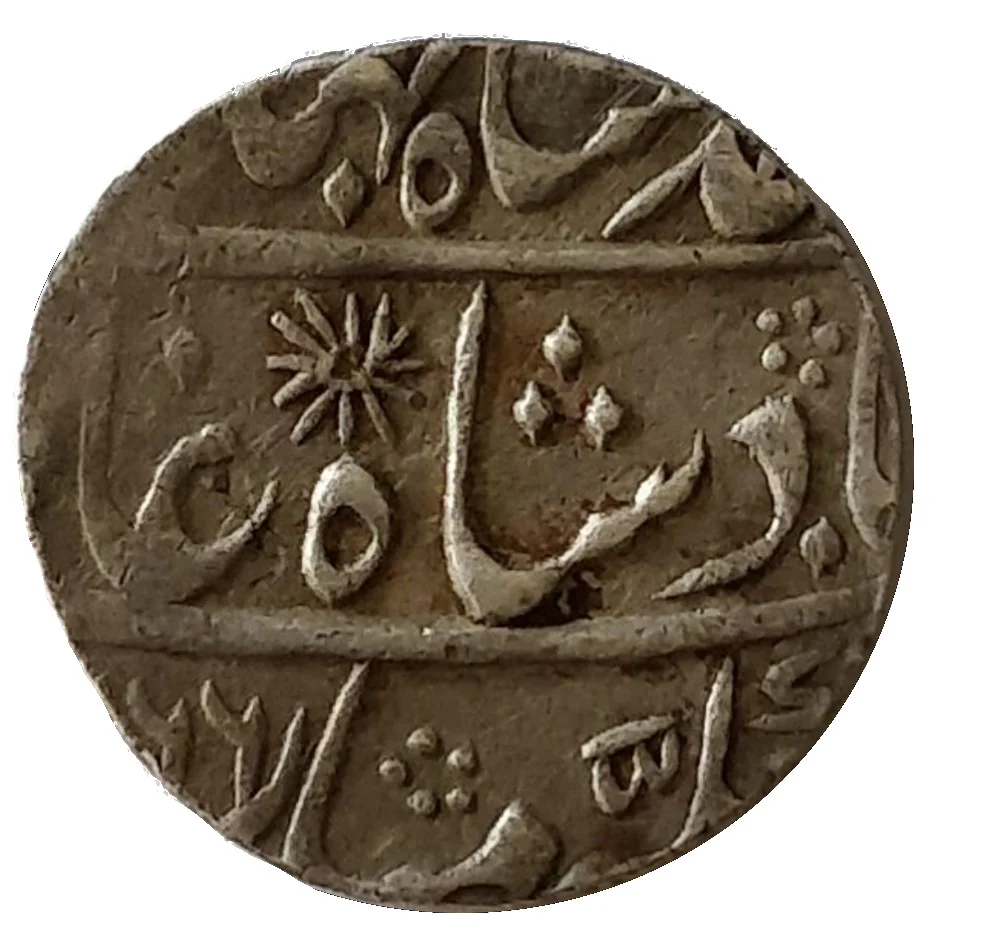
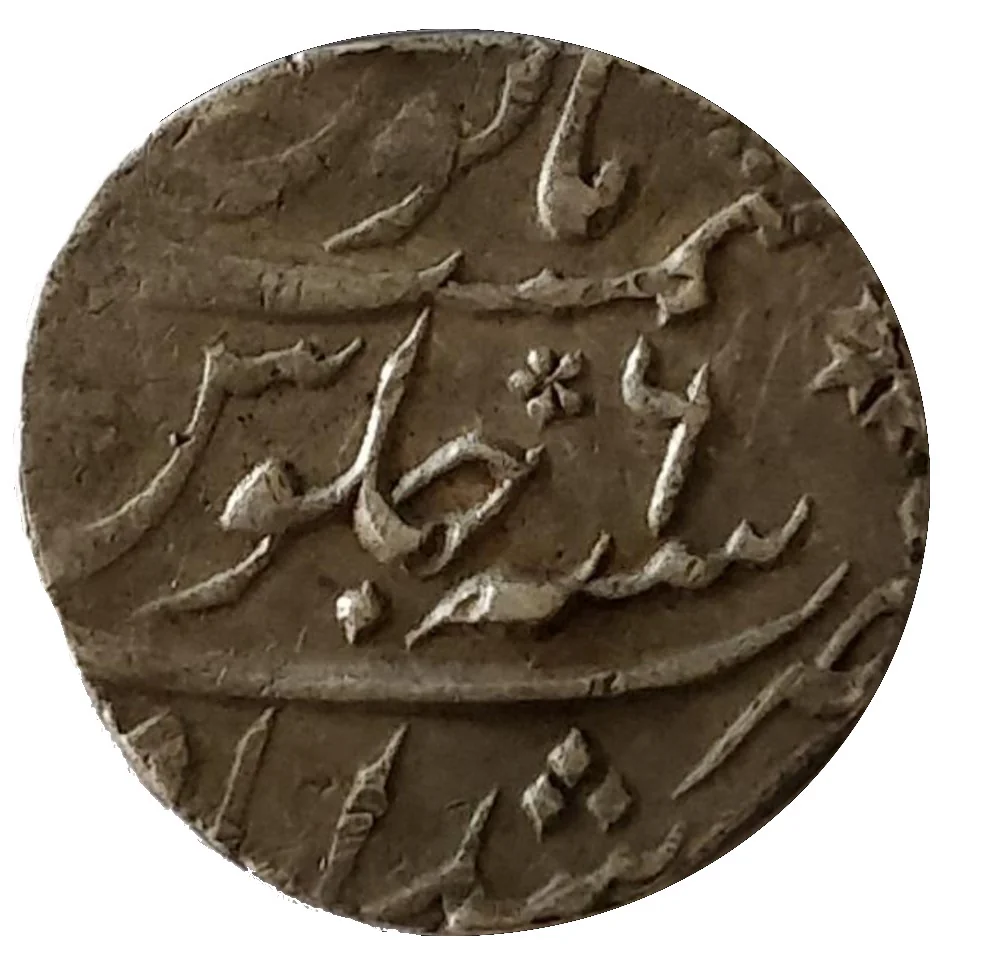
1 rupee – Mughal Empire
Add to wishlist
India
Context
Years: 1749–1754
Country: India
Issuer: Mughal Empire
Ruler: Ahmad Shah Bahadur
Currency:
(1540—1842)
Demonetized: Yes
Material
References
KM: #
Numista: #199364
Value
Bullion value: $27.74
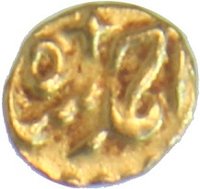
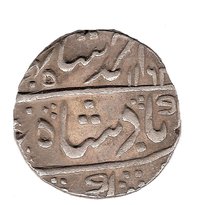
Obverse
Description:
X66
Inscription:
٦٦
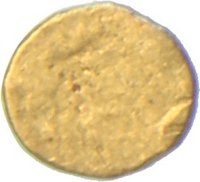
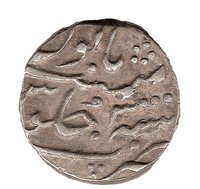
Reverse
Description:
6.
Inscription:
٦
Edge
Plain
Mintings
| Year | Mint Mark | Mintage | Quality | Collection |
|---|---|---|---|---|
| 1749 | — | — | ||
| 1750 | — | — | ||
| 1751 | — | — | ||
| 1752 | — | — | ||
| 1753 | — | — | ||
| 1754 | — | — |
Historical background
By 1749, the Mughal Empire's currency system, once a pillar of its centralized authority and economic integration, was under severe strain and fragmentation. The standard silver rupee, bearing the emperor's name, remained the theoretical unit of account, but its actual authority had dramatically waned. Decades of imperial decline, following Nader Shah's catastrophic invasion and sack of Delhi in 1739, had drained the central treasury of bullion and shattered political cohesion. The result was a proliferation of provincial and local mints, as powerful successor states like Bengal, Awadh, and Hyderabad began issuing their own rupees, often of varying weight and purity, effectively creating competing currency zones.
This period saw the rise of the Sicca rupee in Bengal, the Sunat rupee in Awadh, and other regional variants, each competing with the older imperial Delhi rupee. While these coins often imitated Mughal designs to retain public trust, their issuance was a direct assertion of financial independence from Delhi. Furthermore, the chronic shortage of silver, exacerbated by Nader Shah's plunder and declining foreign trade, led to increased minting of gold mohurs and copper dams, causing fluctuations in their exchange rates against the silver rupee and creating complex, localized monetary environments.
Consequently, by 1749, there was no single "Mughal currency" in practice. Merchants and bankers had to navigate a confusing landscape of coins, relying heavily on money changers (sarrafs) to assay purity and determine exchange rates. The system functioned through a patchwork of credit instruments (like hundis) and local conventions, but the loss of a uniform, imperial currency mirrored the empire's own disintegration into regional powers, marking the end of the unified monetary space that had once facilitated trade across the subcontinent.
This period saw the rise of the Sicca rupee in Bengal, the Sunat rupee in Awadh, and other regional variants, each competing with the older imperial Delhi rupee. While these coins often imitated Mughal designs to retain public trust, their issuance was a direct assertion of financial independence from Delhi. Furthermore, the chronic shortage of silver, exacerbated by Nader Shah's plunder and declining foreign trade, led to increased minting of gold mohurs and copper dams, causing fluctuations in their exchange rates against the silver rupee and creating complex, localized monetary environments.
Consequently, by 1749, there was no single "Mughal currency" in practice. Merchants and bankers had to navigate a confusing landscape of coins, relying heavily on money changers (sarrafs) to assay purity and determine exchange rates. The system functioned through a patchwork of credit instruments (like hundis) and local conventions, but the loss of a uniform, imperial currency mirrored the empire's own disintegration into regional powers, marking the end of the unified monetary space that had once facilitated trade across the subcontinent.
✨ Legendary