

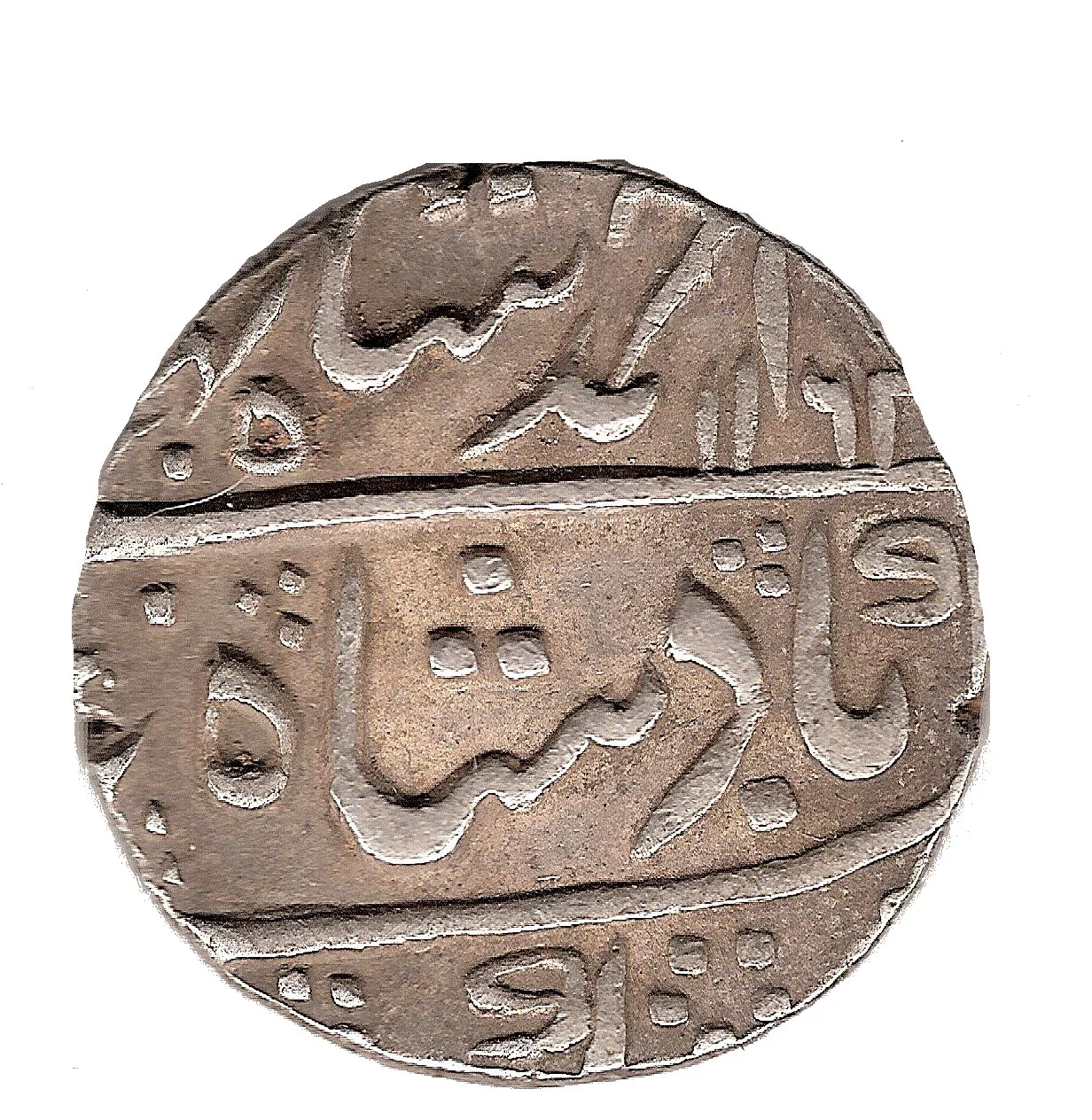
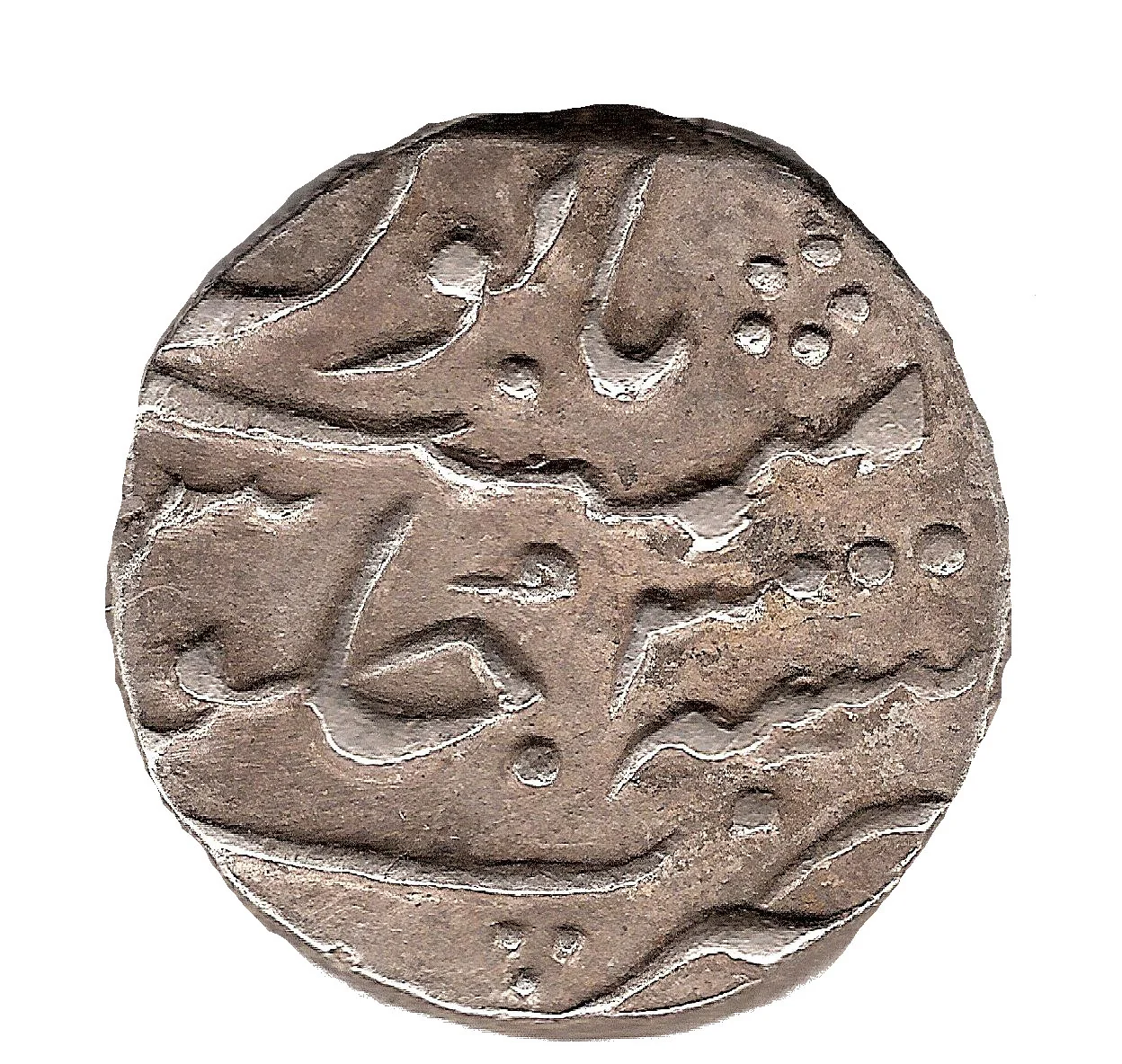
1 rupee – Mughal Empire
Add to wishlist
India
Context
Years: 1750–1751
Country: India
Issuer: Mughal Empire
Ruler: Ahmad Shah Bahadur
Currency:
(1540—1842)
Demonetized: Yes
Material
References
KM: #
Numista: #52305
Value
Bullion value: $27.60
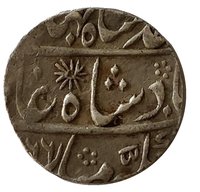
Obverse
Description:
Khambayat workshop
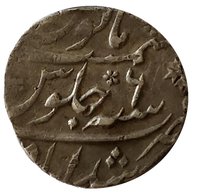
Reverse
Edge
Mintings
| Year | Mint Mark | Mintage | Quality | Collection |
|---|---|---|---|---|
| — | — | — | ||
| 1750 | — | — | ||
| 1751 | — | — |
Historical background
By 1750, the Mughal Empire's currency system, once a pillar of its administrative and economic strength, was under severe strain. The empire still nominally issued the silver rupee and the gold mohur, with their weight and purity historically standardized across the subcontinent. However, the political fragmentation following Emperor Aurangzeb's death in 1707 meant that provincial governors and emerging regional powers like the Marathas, Nawabs of Bengal, and Awadh began striking their own coins. While often mimicking Mughal designs out of tradition, these issues created a complex monetary landscape with varying standards, undermining the imperial currency's universal acceptability.
This period saw a critical shortage of silver, the lifeblood of the rupee. Decades of warfare and the need to pay armies had drained imperial treasuries. More significantly, a large portion of New World silver, which once flowed into India via European trade for textiles and spices, was now being diverted. Much was used to finance European wars, and some was absorbed by other global markets. Concurrently, the East India Company and other European traders were beginning to introduce foreign silver coins, like Spanish dollars, into the economic bloodstream, further complicating the currency scene.
Consequently, the monetary system became increasingly localized and unreliable. The widespread practice of "currency bending"—clipping metal from coin edges—debased circulating rupees, leading to distrust and transaction disputes. In many regions, revenue collection and trade reverted to heavier reliance on copper dam coins for local use or even barter. Thus, by 1750, the disintegration of a unified imperial currency mirrored the empire's political decay, creating a fractured financial environment that the British East India Company would later exploit and eventually replace with a standardized colonial system.
This period saw a critical shortage of silver, the lifeblood of the rupee. Decades of warfare and the need to pay armies had drained imperial treasuries. More significantly, a large portion of New World silver, which once flowed into India via European trade for textiles and spices, was now being diverted. Much was used to finance European wars, and some was absorbed by other global markets. Concurrently, the East India Company and other European traders were beginning to introduce foreign silver coins, like Spanish dollars, into the economic bloodstream, further complicating the currency scene.
Consequently, the monetary system became increasingly localized and unreliable. The widespread practice of "currency bending"—clipping metal from coin edges—debased circulating rupees, leading to distrust and transaction disputes. In many regions, revenue collection and trade reverted to heavier reliance on copper dam coins for local use or even barter. Thus, by 1750, the disintegration of a unified imperial currency mirrored the empire's political decay, creating a fractured financial environment that the British East India Company would later exploit and eventually replace with a standardized colonial system.
✨ Legendary