Logo Title
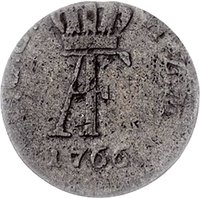
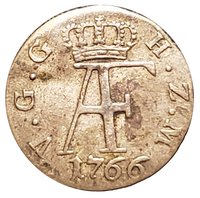
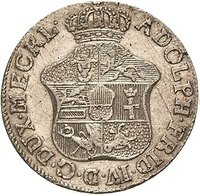
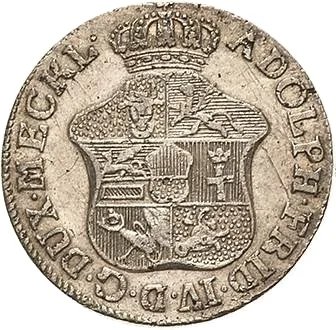
obverse
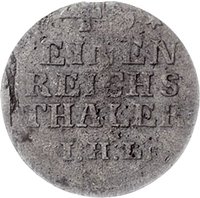
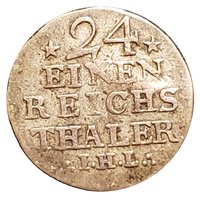
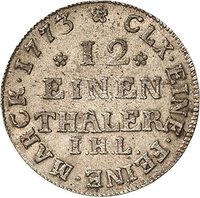
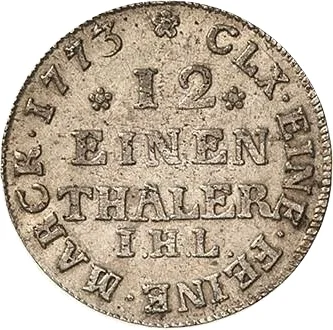
reverse
Leipziger Münzhandlung und Auktion Manfred Höhn
Context
Years: 1766–1773
Country: Germany Country flag
Currency:
(1701—1872)
Demonetized: Yes
Total mintage: 75,465
Material
Weight: 3.34 g
Shape: Round
Composition: Billon (43.7% Silver)
References
KM: #Click to copy to clipboard65
Numista: #198735

Obverse

Description:
Crowned coat of arms.
Script: Latin

Reverse

Description:
Central inscription in four lines, surrounded by legend.
Script: Latin

Edge

Mints

NameMark
Strelitz

Mintings

YearMint MarkMintageQualityCollection
176668,000
17682,293
17735,172

Historical background

In 1766, the currency situation in the Duchy of Mecklenburg-Strelitz was complex and challenging, typical of the fragmented Holy Roman Empire. The duchy did not possess a strong, independent minting tradition and its monetary system was deeply influenced by the wider regional circulation. The most commonly used coins in daily transactions were not necessarily those struck in Strelitz itself, but rather the widely accepted currencies of neighboring powers, particularly the Reichsthaler from the Brunswick-Lüneburg mints (notably from Hanover) and various forms of Gute Groschen. This reliance on external coinage created a dependence on the monetary policies of larger states.

The local economy, primarily agrarian and with limited trade, suffered from a chronic shortage of small change (Kleingeld), which crippled everyday market transactions for the peasantry and artisans. This scarcity was exacerbated by the practice of "good money" (full-weight, high-silver coins) being hoarded or flowing out of the duchy to pay for imports, while "bad money" (debased coinage) from elsewhere tended to circulate within it. Duke Adolf Friedrich IV, who assumed rule in 1752, faced constant pressure from the Estates (Landstände) to address these monetary instability issues, which fueled inflation and social discontent.

While 1766 was not a year of major monetary reform, the currency situation was a persistent administrative headache. The ducal government's limited fiscal authority was caught between the need to facilitate commerce and the inability to control the influx and outflow of diverse coinages. Any attempts at regulation or minting were constrained by the duchy's modest resources and its obligations within the imperial monetary framework. Thus, the monetary landscape remained a patchwork of foreign and domestic coins of fluctuating value, a condition that would persist until the broader upheavals of the Napoleonic era forced systemic change.

Series: 1766 Duchy of Mecklenburg-Strelitz circulation coins

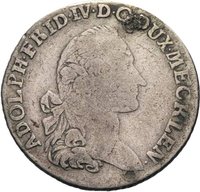
1⁄48 Thaler obverse
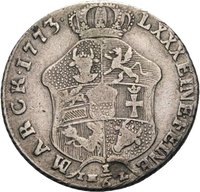
1⁄48 Thaler reverse
1⁄48 Thaler
1766
1⁄24 Thaler obverse
1⁄24 Thaler reverse
1⁄24 Thaler
1766
1⁄12 Thaler obverse
1⁄12 Thaler reverse
1⁄12 Thaler
1766-1773
Legendary