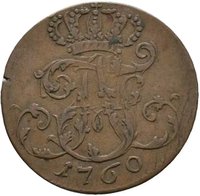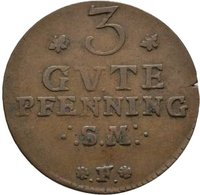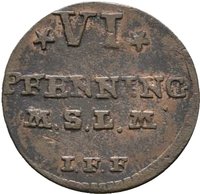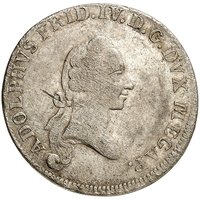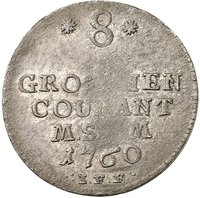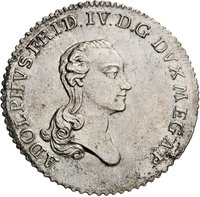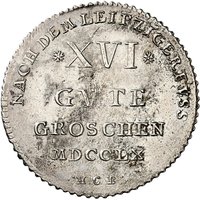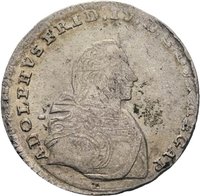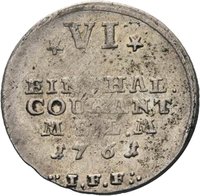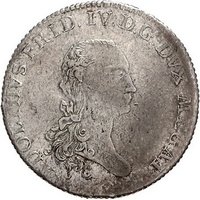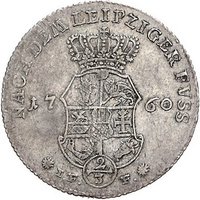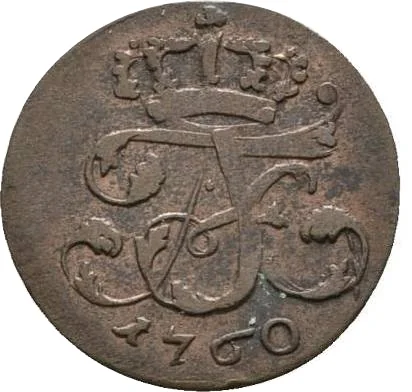
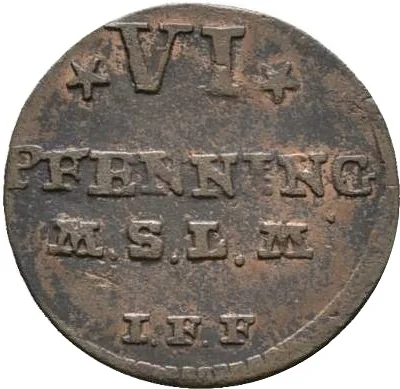
In 1760, the currency situation in the Duchy of Mecklenburg-Strelitz was complex and challenging, deeply entangled within the wider monetary chaos of the Holy Roman Empire. The duchy, like its neighbours, operated within a fragmented system where numerous states issued their own coins, leading to a proliferation of circulating currencies. The primary accounting unit was the Mecklenburg
Thaler, but in practice, a mix of regional
Thalers, foreign coins (like Prussian and Saxon issues), and smaller denominations like
Schillinge and
Pfennige were used daily. This created constant difficulties in trade and valuation, as the intrinsic silver content and exchange rates between these coins fluctuated.
The period was further strained by the ongoing Seven Years' War (1756-1763), which had severe economic repercussions across Northern Germany. While Mecklenburg-Strelitz was not a primary battlefield, it was affected by wartime fiscal pressures, including the circulation of debased coins from warring parties and the need to finance military contingents for the Imperial army. Rulers often resorted to manipulating coinage to raise revenue, a practice known as
Kipper- und Wipperzeit, though the major wave of this had occurred a century earlier. In 1760, the risk was an inflationary devaluation of circulating small change, which hurt the local economy and the peasantry most dependent on stable wages and prices.
Consequently, Duke Adolf Friedrich IV’s administration faced the difficult task of maintaining a stable monetary standard amidst empire-wide instability. The duchy lacked the economic power to unilaterally impose a strong, exclusive currency and was therefore at the mercy of regional monetary currents. The situation demanded careful management of the minting of subsidiary coins and the regulation of foreign currency, aiming to protect the duchy's credit and facilitate essential commerce, all while navigating the severe economic dislocations of a continental war.