In 1717, the currency situation in the Duchy of Mecklenburg-Strelitz was one of profound complexity and instability, typical of the fragmented Holy Roman Empire. The duchy did not have a strong, exclusive currency of its own but operated within a chaotic monetary landscape flooded with a multitude of foreign coins. These included not only coins from other German states like Brandenburg-Prussia and Saxony but also older, debased regional issues and large quantities of "Kipper und Wipper" era coinage from earlier in the century, all circulating simultaneously with varying and fluctuating values. This proliferation made trade cumbersome and fostered widespread confusion and distrust.
The root of this disorder lay in the sovereign right of princes to mint coins, a privilege often abused for short-term fiscal gain. Previous debasements, particularly during the financial crises of the Thirty Years' War and the early 17th-century "Kipper und Wipper" inflation, had severely degraded the quality and silver content of coins nominally issued under Mecklenburg-Strelitz's authority. By 1717, the public had little confidence in the face value of coins, and transactions often required careful weighing and assaying of individual pieces. This environment hindered economic development and facilitated fraud, placing merchants and the general populace at a constant disadvantage.
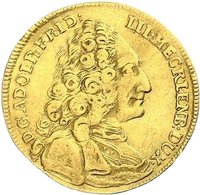
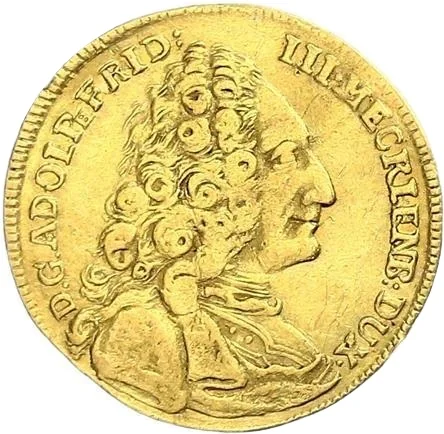
Consequently, the year 1717 fell within a period of attempted stabilization. Duke Adolf Friedrich III, recognizing the economic damage, was likely engaged in efforts to negotiate or implement monetary conventions with neighboring territories, particularly the other Mecklenburg duchy of Schwerin. The goal was to establish fixed exchange rates and standards for the myriad coins in circulation, a necessary step toward creating a more reliable monetary system. However, any progress was slow and partial, meaning that in 1717, the daily reality remained one of monetary confusion, a legacy of past fiscal mismanagement that the small, resource-poor duchy struggled to overcome.