

¼ Abbasi – Ganja Khanate
Context
Material
Diameter: 14 mm
Weight: 1.15 g
Silver weight: 1.15 g
Shape: Irregular round
Composition: Silver
Magnetic: No
References
KM: #Click to copy to clipboard24
Numista: #197731
Value
Bullion value: $3.27
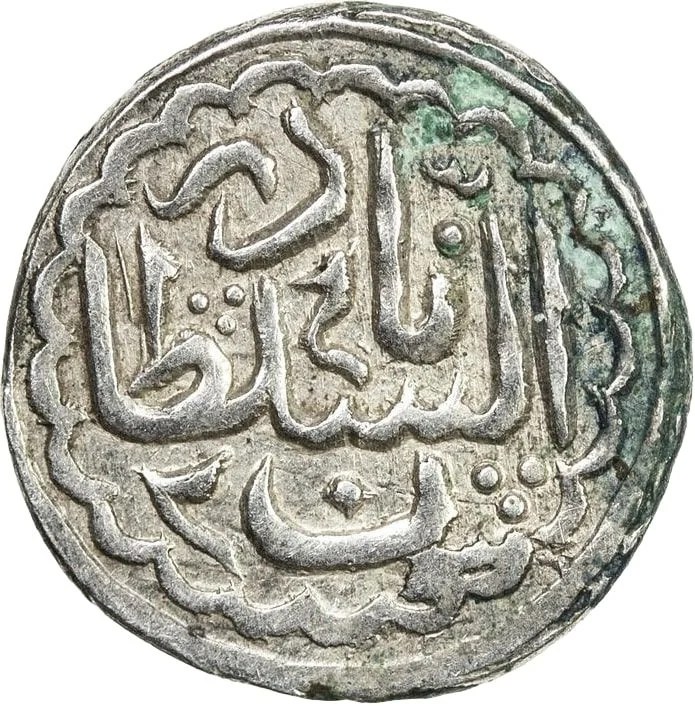
Obverse
Description:
Arabic legend in dotted border, centered on empty field.
Inscription:
السلطان نادر
Script: Arabic
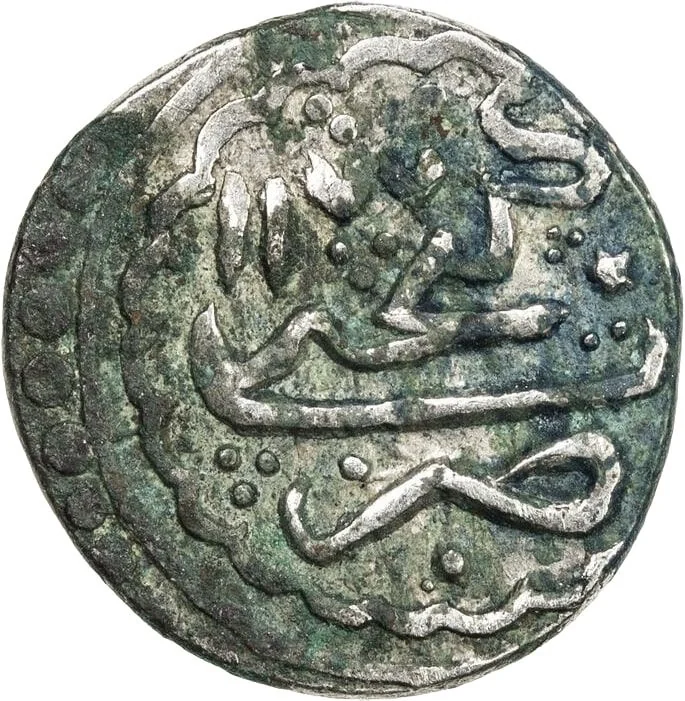
Reverse
Description:
Arabic legend and date in dotted border, surrounded by blank space.
Inscription:
۱۱۷۷::
ضرب گنجه
ضرب گنجه
Script: Arabic
Edge
Plain
Mints
| Name | Mark |
|---|---|
| Ganja | — |
Mintings
| Year | Mint Mark | Mintage | Quality | Collection |
|---|---|---|---|---|
| — | — | — | ||
| 1764 | — | — | ||
| 1765 | — | — | ||
| 1768 | — | — |
Historical background
In 1755, the Ganja Khanate, a semi-autonomous principality under nominal Persian suzerainty in the South Caucasus, operated within a complex and fragmented monetary environment. The khanate itself did not mint its own coins, leaving its economy dependent on a circulation of foreign and regional currencies. The primary medium of exchange was the Persian silver abbasi, alongside its fractional units like the shahi and bisti. These coins were essential for larger transactions and trade with the Persian Empire, to which Ganja still owed political and tributary allegiance.
Alongside Persian coinage, the monetary landscape was crowded with currencies reflecting the region's position as a commercial crossroads. Russian silver rubles and Dutch levendaalders (often called "lion dollars") entered via trade routes from the north and west, while Ottoman piastres (kuruş) flowed from the west due to ongoing regional rivalries. Furthermore, the remnants of older Safavid and even Mughal coins could still be found in circulation. This multiplicity created a constant need for money changers (sarraf) in the bazaars of Ganja city, who assessed coins not only by type but by weight, wear, and suspected purity.
This fragmented system posed significant challenges for the khanate's internal administration and economy. The lack of a sovereign currency limited the khans' ability to control fiscal policy or easily extract seigniorage revenue. Exchange rate fluctuations and the variable quality of coins also introduced instability into both local trade and the collection of taxes, which often had to be calculated in specific coin types. Consequently, the monetary situation of 1755 mirrored the khanate's broader political reality: a strategically located but vulnerable entity, caught between empires and reliant on the economic currents of its powerful neighbors.
Alongside Persian coinage, the monetary landscape was crowded with currencies reflecting the region's position as a commercial crossroads. Russian silver rubles and Dutch levendaalders (often called "lion dollars") entered via trade routes from the north and west, while Ottoman piastres (kuruş) flowed from the west due to ongoing regional rivalries. Furthermore, the remnants of older Safavid and even Mughal coins could still be found in circulation. This multiplicity created a constant need for money changers (sarraf) in the bazaars of Ganja city, who assessed coins not only by type but by weight, wear, and suspected purity.
This fragmented system posed significant challenges for the khanate's internal administration and economy. The lack of a sovereign currency limited the khans' ability to control fiscal policy or easily extract seigniorage revenue. Exchange rate fluctuations and the variable quality of coins also introduced instability into both local trade and the collection of taxes, which often had to be calculated in specific coin types. Consequently, the monetary situation of 1755 mirrored the khanate's broader political reality: a strategically located but vulnerable entity, caught between empires and reliant on the economic currents of its powerful neighbors.

✨ Legendary