

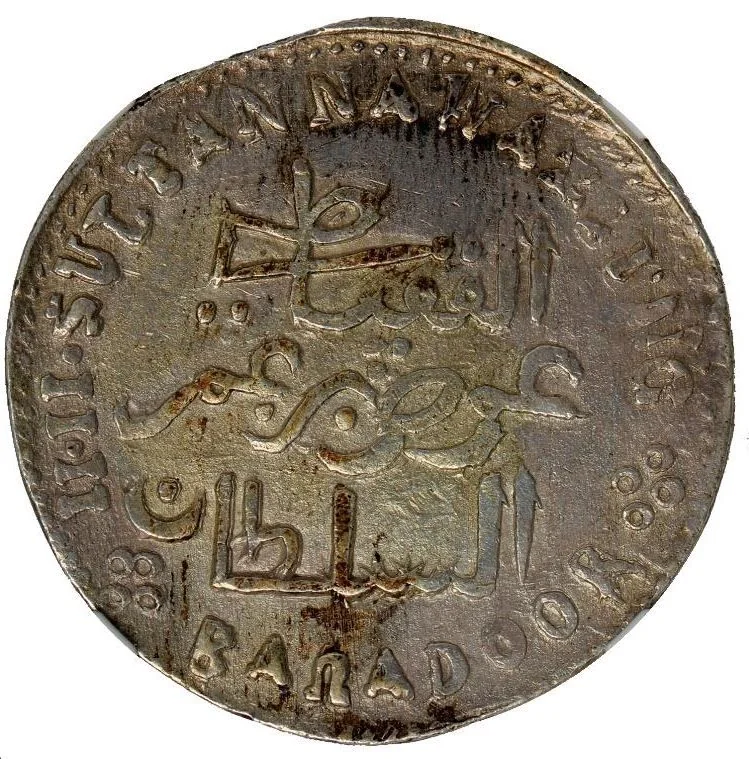
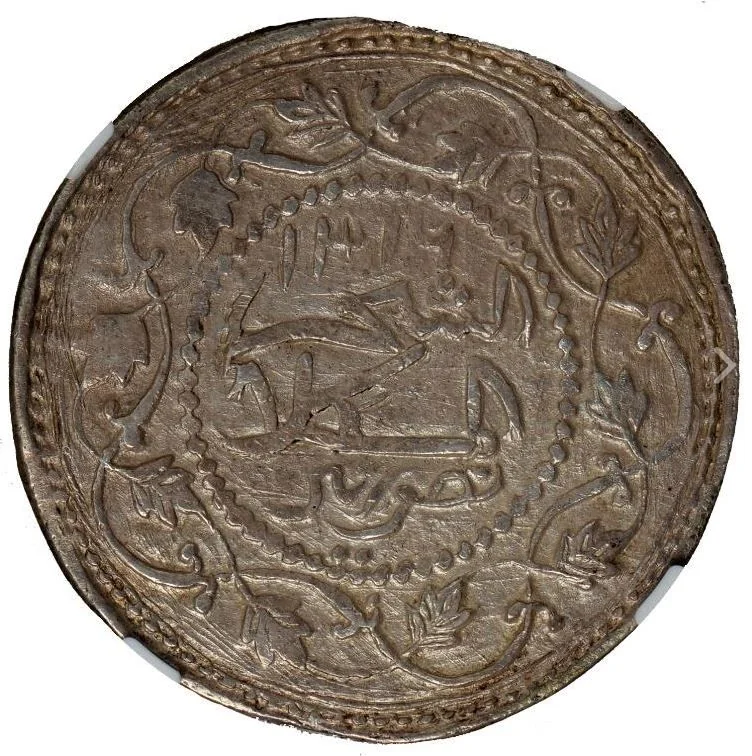
½ riyal – Qu'aiti Sultanate
Add to wishlist
Yemen
Context
Year: 1899
Islamic (Hijri) Year:: 1316
Country: Yemen
Issuer: Qu'aiti Sultanate
Currency:
Demonetized: Yes
References
KM: #
Numista: #123071
Obverse
Reverse
Edge
Mintings
| Year | Mint Mark | Mintage | Quality | Collection |
|---|---|---|---|---|
| 1899 | — | — |
Historical background
In 1899, the Qu'aiti Sultanate in Hadhramaut (part of present-day eastern Yemen) operated within a complex and fragmented monetary environment, typical of the South Arabian coast. The region lacked a unified, state-issued currency. Instead, circulation was dominated by a variety of foreign silver coins, reflecting the Sultanate’s position on key Indian Ocean trade routes. The most important of these was the Maria Theresa thaler (MT$), a large Austrian silver coin minted with the fixed date of 1780, which served as the principal trade currency throughout the Red Sea and Arabian Peninsula. Alongside it, British Indian rupees and Ottoman coins were also common, their values fluctuating based on weight, silver content, and local demand.
This multi-currency system created practical challenges for day-to-day transactions. The high-value thaler was often too large for minor purchases, leading to the physical cutting of coins into halves and quarters (known as "pieces of eight") to make change. The absence of a central minting authority meant the Sultanate had little control over its money supply, which was subject to the influx of coins via merchants, migrants, and regional powers. Economic life was further complicated by the use of the annas and pice subdivisions from the Indian monetary system in some contexts, while other small transactions might be conducted in barter or in low-value copper coins.
Politically, the currency situation mirrored the Qu'aiti Sultanate’s delicate position in 1899. While internally autonomous under Sultan Awadh bin Omar Al Qu’aiti, the state had recently signed a treaty of protection with the British in 1888, placing it within the sphere of the Aden Protectorate. British political influence was growing, yet it did not yet extend to imposing a standardized currency. The monetary landscape thus remained a localized, market-driven system, awaiting the greater economic integration and imperial reforms that would come in the early 20th century with the wider circulation of the Indian rupee and, later, the East African shilling in Aden.
This multi-currency system created practical challenges for day-to-day transactions. The high-value thaler was often too large for minor purchases, leading to the physical cutting of coins into halves and quarters (known as "pieces of eight") to make change. The absence of a central minting authority meant the Sultanate had little control over its money supply, which was subject to the influx of coins via merchants, migrants, and regional powers. Economic life was further complicated by the use of the annas and pice subdivisions from the Indian monetary system in some contexts, while other small transactions might be conducted in barter or in low-value copper coins.
Politically, the currency situation mirrored the Qu'aiti Sultanate’s delicate position in 1899. While internally autonomous under Sultan Awadh bin Omar Al Qu’aiti, the state had recently signed a treaty of protection with the British in 1888, placing it within the sphere of the Aden Protectorate. British political influence was growing, yet it did not yet extend to imposing a standardized currency. The monetary landscape thus remained a localized, market-driven system, awaiting the greater economic integration and imperial reforms that would come in the early 20th century with the wider circulation of the Indian rupee and, later, the East African shilling in Aden.

✨ Legendary