

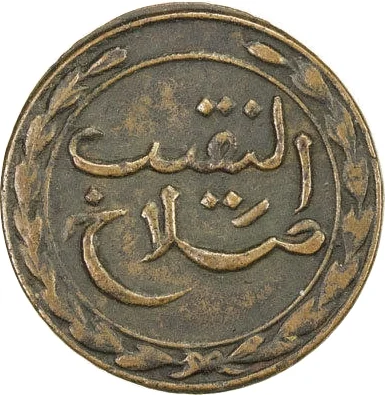
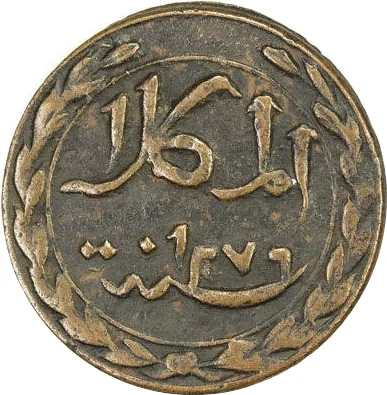
½ khumsi – Mukalla
Add to wishlist
Yemen
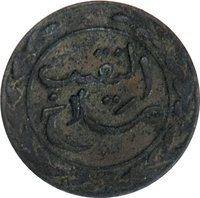
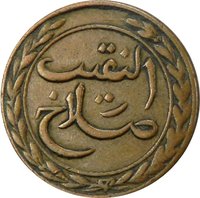
Obverse
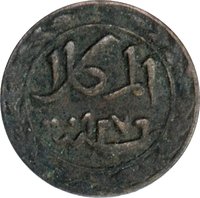
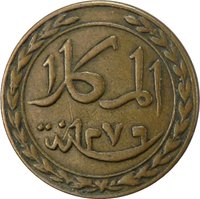
Reverse
Edge
Mints
| Name | Mark |
|---|---|
| al-Mukalla | — |
Mintings
| Year | Mint Mark | Mintage | Quality | Collection |
|---|---|---|---|---|
| 1860 | — | — |
Historical background
In 1860, Mukalla was the principal port of the Qu'aiti Sultanate in the Hadhramaut region of southern Arabia. Its currency situation was a complex reflection of its position in Indian Ocean trade networks, distant from the direct control of the Ottoman Empire. The most important circulating coin was the Maria Theresa thaler (MT$), a large silver coin minted in Austria but used as a universal trade currency across the Red Sea, East Africa, and the Arabian Peninsula. Its consistent silver content and recognizable design made it the preferred unit for large transactions, maritime trade, and as a store of wealth.
Alongside the thaler, a variety of other coins circulated, creating a multi-currency environment. Indian rupees, particularly those minted in Bombay, were common due to the significant commercial and migratory links between Hadhramaut and the Indian subcontinent. Smaller transactions relied on a fragmented system of low-value copper and silver coins, including Ottoman piastres and local imitations of smaller Yemeni coins. The value of these coins relative to each other was not fixed but fluctuated based on their metallic content and local demand, requiring money changers (sarrafs) to be a central feature of the commercial landscape.
This monetary heterogeneity was a direct result of Mukalla’s role as a trade hub, where goods from India, East Africa, and the interior of Arabia were exchanged. There was no unified, state-issued paper currency, and the Qu'aiti authority, while growing, did not yet operate a central mint. Consequently, the market's confidence in the intrinsic value of silver and copper, rather than government fiat, dictated the currency system. This pragmatic, trade-driven arrangement facilitated commerce but also left the local economy exposed to shifts in global bullion flows and the variable quality of imported coinage.
Alongside the thaler, a variety of other coins circulated, creating a multi-currency environment. Indian rupees, particularly those minted in Bombay, were common due to the significant commercial and migratory links between Hadhramaut and the Indian subcontinent. Smaller transactions relied on a fragmented system of low-value copper and silver coins, including Ottoman piastres and local imitations of smaller Yemeni coins. The value of these coins relative to each other was not fixed but fluctuated based on their metallic content and local demand, requiring money changers (sarrafs) to be a central feature of the commercial landscape.
This monetary heterogeneity was a direct result of Mukalla’s role as a trade hub, where goods from India, East Africa, and the interior of Arabia were exchanged. There was no unified, state-issued paper currency, and the Qu'aiti authority, while growing, did not yet operate a central mint. Consequently, the market's confidence in the intrinsic value of silver and copper, rather than government fiat, dictated the currency system. This pragmatic, trade-driven arrangement facilitated commerce but also left the local economy exposed to shifts in global bullion flows and the variable quality of imported coinage.
✨ Legendary