

30 khumsi – Tarim
Add to wishlist
Yemen
Context
Material
Weight: 7.65 g
Silver Weight:: 6.89 g
Shape: Round
Composition: 90% Silver
Standard: Silver quarter ounce
Magnetic: No
Technique: Milled
References
KM: #
Numista: #123056
Value
Bullion value: $17.25
Edge
Categories
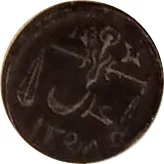
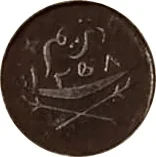
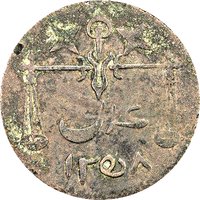
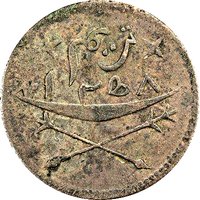
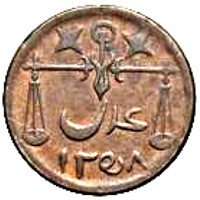
| Symbol> Scale |
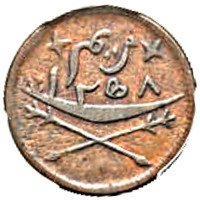
| Object> Cold weapons |
Mintings
| Year | Mint Mark | Mintage | Quality | Collection |
|---|---|---|---|---|
| 1842 | — | — |
Historical background
In 1842, the Tarim Basin, a vast and arid region in Central Asia, was under the nominal control of the Qing Dynasty of China, administered as part of Xinjiang. However, Qing authority was tenuous and fragmented, particularly following a period of internal rebellions and the recent exile of the Kokandi commander Jahangir Khoja. The monetary landscape reflected this political instability, characterized by a chaotic coexistence of multiple currencies without a unified, trusted standard. The primary circulating coin was the pul, a small, hand-stamped copper coin of varying purity and weight, produced locally in cities like Kashgar, Yarkand, and Khotan under the authority of local begs (officials).
Alongside the debased pul coinage, the region saw significant circulation of foreign silver, most notably the Mexican silver dollar (Carolus peso), which entered via trade routes from Russia and British India. This coin, along with other silver yambus (ingots or sycees), served as the medium for large-scale and cross-border trade. Furthermore, the influence of the neighboring Khanate of Kokand was profound, as its tangas and other coins also circulated widely, especially in the western Tarim, underscoring the basin's economic integration with Central Asia rather than with distant Beijing.
This multi-currency system created a complex and inefficient economy. Exchange rates between pul, silver yambus, and foreign coins fluctuated wildly, often manipulated by money changers (sarraf) and local officials, leading to price instability and hardship for common people. The lack of a strong central minting authority meant chronic shortages of reliable small change, hindering daily transactions. Thus, the currency situation in 1842 Tarim was a direct symptom of weak political control, leaving the local economy dependent on a fragile and exploitative bimetallic system vulnerable to manipulation and external shocks.
Alongside the debased pul coinage, the region saw significant circulation of foreign silver, most notably the Mexican silver dollar (Carolus peso), which entered via trade routes from Russia and British India. This coin, along with other silver yambus (ingots or sycees), served as the medium for large-scale and cross-border trade. Furthermore, the influence of the neighboring Khanate of Kokand was profound, as its tangas and other coins also circulated widely, especially in the western Tarim, underscoring the basin's economic integration with Central Asia rather than with distant Beijing.
This multi-currency system created a complex and inefficient economy. Exchange rates between pul, silver yambus, and foreign coins fluctuated wildly, often manipulated by money changers (sarraf) and local officials, leading to price instability and hardship for common people. The lack of a strong central minting authority meant chronic shortages of reliable small change, hindering daily transactions. Thus, the currency situation in 1842 Tarim was a direct symptom of weak political control, leaving the local economy dependent on a fragile and exploitative bimetallic system vulnerable to manipulation and external shocks.
✨ Legendary