

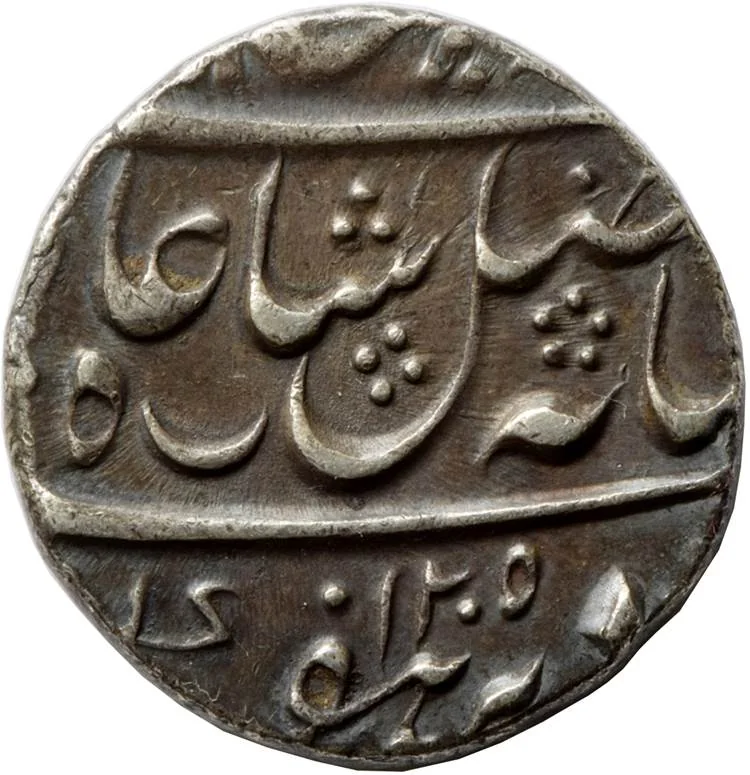
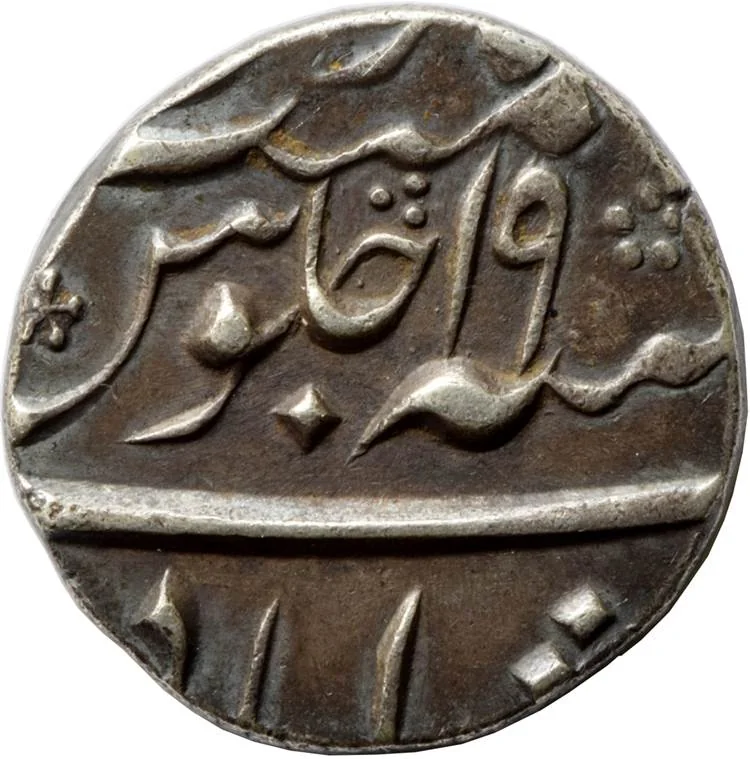
1 Rupee – Bengal Presidency
India
Context
Years: 1791–1793
Country: India 
Issuer: Bengal Presidency
Issuing organization: Bank of Bengal
Currency:
(1765—1835)
Demonetized: Yes
Material
References
KM: #Click to copy to clipboard86
Numista: #108938
Value
Bullion value: $32.81
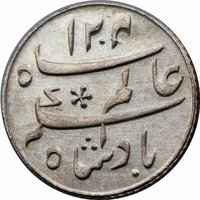
Obverse
Description:
Sikka zad bar haft kishwar: Saya fazl Ilah, Hami ud-din Muhammad Shah Alam Badshah.
Inscription:
شاه عالم بادشاه
حامي دين محمد
ساى فضل لله
سكة زد بر حفت كشور
حامي دين محمد
ساى فضل لله
سكة زد بر حفت كشور
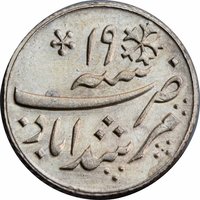
Reverse
Description:
Zarb Murshidabad, 19th regnal year.
Inscription:
١٩
Edge
Plain
Mints
| Name | Mark |
|---|---|
| Kolkata / Calcutta / Murshidabad | — |
Mintings
| Year | Mint Mark | Mintage | Quality | Collection |
|---|---|---|---|---|
| — | — | — |
Historical background
In 1791, the Bengal Presidency's currency system was in a state of profound transition and confusion, still grappling with the legacy of Mughal rule and the disruptive policies of the early East India Company. The monetary landscape was a complex patchwork of circulating coins, both domestic and foreign. The primary unit was the silver rupee, but its value and purity were inconsistent, coexisting with a plethora of gold mohurs, copper paise, and even heavily debased Arcot rupees from the south. This lack of standardization created a chaotic environment for trade and revenue collection, as merchants and zamindars had to constantly negotiate exchange rates and assess the intrinsic metal value of each coin.
The root of the instability lay in the Company's own actions. Following the acquisition of the diwani (revenue rights) in 1765, the Company had closed the Mughal mints in Murshidabad and Calcutta in 1773–74, aiming to centralize control. However, this failed to establish a monopoly, as older, worn, and counterfeit coins remained in circulation, while new, high-quality Company-minted rupees were often hoarded or melted down for bullion. Furthermore, a chronic shortage of small-denomination copper coins for everyday transactions crippled the local bazaar economy, leading to widespread use of makeshift tokens and promissory notes.
Recognizing the crisis, the Governor-General, Lord Cornwallis, was actively pushing for reform in 1791. His administration was in the final stages of preparing a major currency overhaul, which would be enacted the following year. The planned reforms of 1792 aimed to introduce a uniform, bimetallic system based on a newly minted Calcutta silver rupee (the Sicca Rupee) with a fixed weight and purity, and a regulated gold mohur. This move was designed to stabilize the economy, simplify revenue administration, and solidify Company sovereignty by literally stamping its authority onto the currency of the realm. Thus, 1791 stands as the tense prelude to a decisive, if not entirely successful, monetary reconstitution.
The root of the instability lay in the Company's own actions. Following the acquisition of the diwani (revenue rights) in 1765, the Company had closed the Mughal mints in Murshidabad and Calcutta in 1773–74, aiming to centralize control. However, this failed to establish a monopoly, as older, worn, and counterfeit coins remained in circulation, while new, high-quality Company-minted rupees were often hoarded or melted down for bullion. Furthermore, a chronic shortage of small-denomination copper coins for everyday transactions crippled the local bazaar economy, leading to widespread use of makeshift tokens and promissory notes.
Recognizing the crisis, the Governor-General, Lord Cornwallis, was actively pushing for reform in 1791. His administration was in the final stages of preparing a major currency overhaul, which would be enacted the following year. The planned reforms of 1792 aimed to introduce a uniform, bimetallic system based on a newly minted Calcutta silver rupee (the Sicca Rupee) with a fixed weight and purity, and a regulated gold mohur. This move was designed to stabilize the economy, simplify revenue administration, and solidify Company sovereignty by literally stamping its authority onto the currency of the realm. Thus, 1791 stands as the tense prelude to a decisive, if not entirely successful, monetary reconstitution.
✨ Legendary