

¼ Rupee – Bengal Presidency
India
Context
Years: 1790–1793
Islamic (Hijri) Year: 1204
Country: India 
Issuer: Bengal Presidency
Currency:
(1765—1835)
Demonetized: Yes
Material
References
KM: #Click to copy to clipboard96
Numista: #31775
Value
Bullion value: $7.67
Obverse
Description:
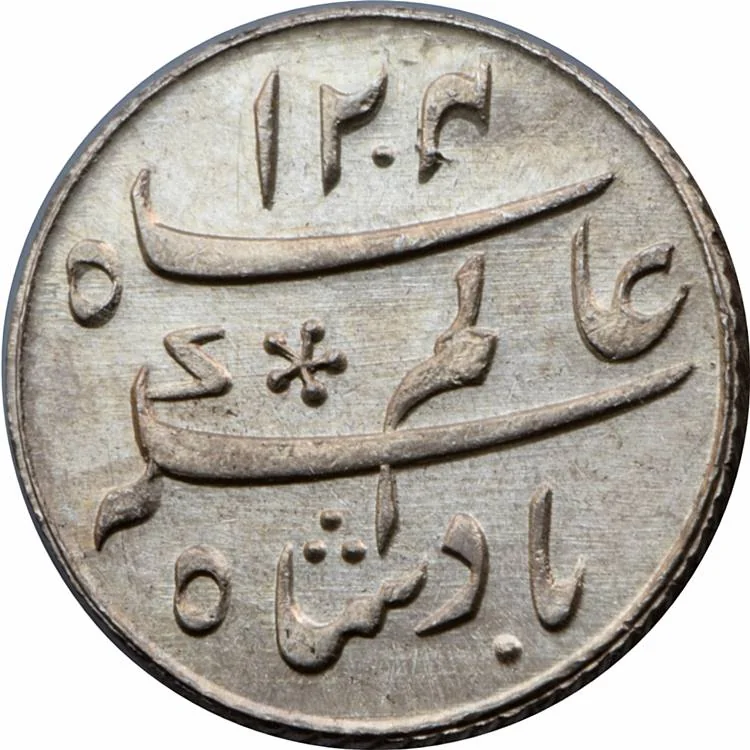
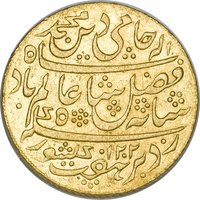
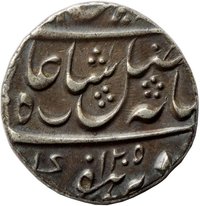
Shah Alam, Emperor, coin dated 1204 AH.
Inscription:
١٢٠۴
شاه
عالم
سكه
بادشاه
شاه
عالم
سكه
بادشاه
Reverse
Description:
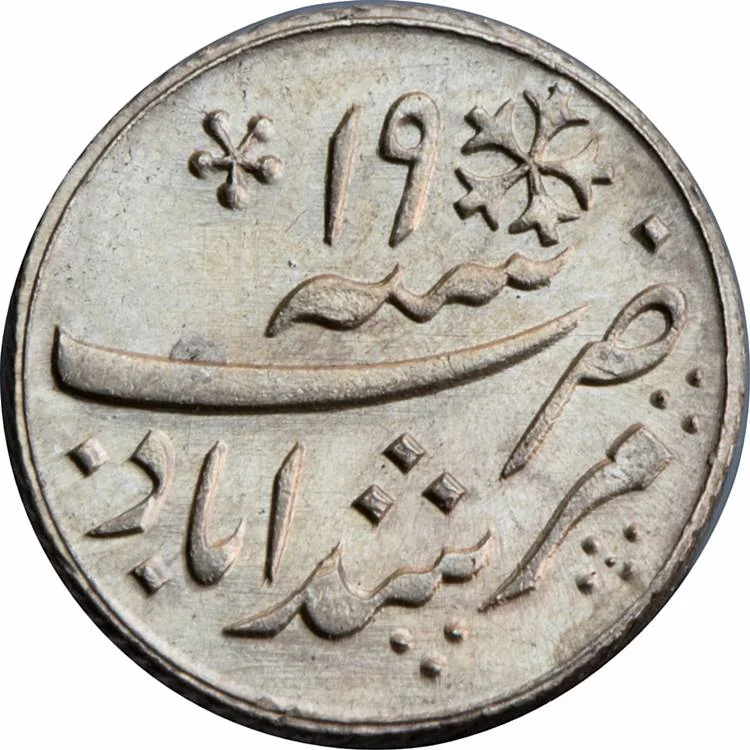
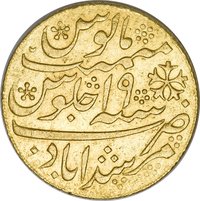
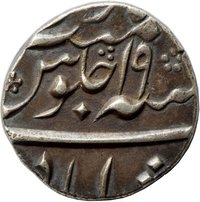
Zarb Murshidabad, 19th century.
Inscription:
١٩
سنه
ضرب
مرشداباد
سنه
ضرب
مرشداباد
Edge
Oblique Milled (grained right) ////
Mints
| Name | Mark |
|---|---|
| Azimabad | — |
| Jahangirnagar | — |
| Kolkata / Calcutta / Murshidabad | — |
| Murshidabad | — |
Mintings
| Year | Mint Mark | Mintage | Quality | Collection |
|---|---|---|---|---|
| 1790 | — | — | Proof | |
| 1793 | — | — |
Historical background
In 1790, the Bengal Presidency under the East India Company operated within a complex and often chaotic multi-currency system. The official unit of account was the Company sicca rupee, a newly minted silver coin with a higher silver content than older, circulating rupees. However, this existed alongside a plethora of other coins: older Mughal and regional rupees (like the sunat), gold mohurs, and a vast quantity of debased and counterfeit coins. This proliferation created significant confusion in trade and revenue collection, as the value of each coin type fluctuated based on its weight, purity, and age.
The core of the monetary problem was the Company's struggle to establish its currency as the sole standard. While the Calcutta Mint issued sicca rupees, their circulation was largely confined to Bengal proper. In distant districts, older currencies remained dominant, forcing complex and often arbitrary conversion calculations. Furthermore, a practice known as "batta" – a discount or premium charged for converting one type of rupee into another – was rampant, exploited by money-changers (shroffs) and causing losses to the government and uncertainty in commerce.
This unstable situation was a direct impediment to the Company's fiscal ambitions. Efficient revenue extraction from land tax and other duties required a uniform medium of exchange. Consequently, the period around 1790 was one of transition and attempted reform. Lord Cornwallis's administration, beginning in 1786, had identified currency reform as critical for stabilizing the economy. The stage was being set for more decisive action, which would culminate in the major recoinage and standardization efforts of 1793, aiming to replace the chaotic multiplicity with a single, Company-controlled silver rupee.
The core of the monetary problem was the Company's struggle to establish its currency as the sole standard. While the Calcutta Mint issued sicca rupees, their circulation was largely confined to Bengal proper. In distant districts, older currencies remained dominant, forcing complex and often arbitrary conversion calculations. Furthermore, a practice known as "batta" – a discount or premium charged for converting one type of rupee into another – was rampant, exploited by money-changers (shroffs) and causing losses to the government and uncertainty in commerce.
This unstable situation was a direct impediment to the Company's fiscal ambitions. Efficient revenue extraction from land tax and other duties required a uniform medium of exchange. Consequently, the period around 1790 was one of transition and attempted reform. Lord Cornwallis's administration, beginning in 1786, had identified currency reform as critical for stabilizing the economy. The stage was being set for more decisive action, which would culminate in the major recoinage and standardization efforts of 1793, aiming to replace the chaotic multiplicity with a single, Company-controlled silver rupee.
⭐ Rare