

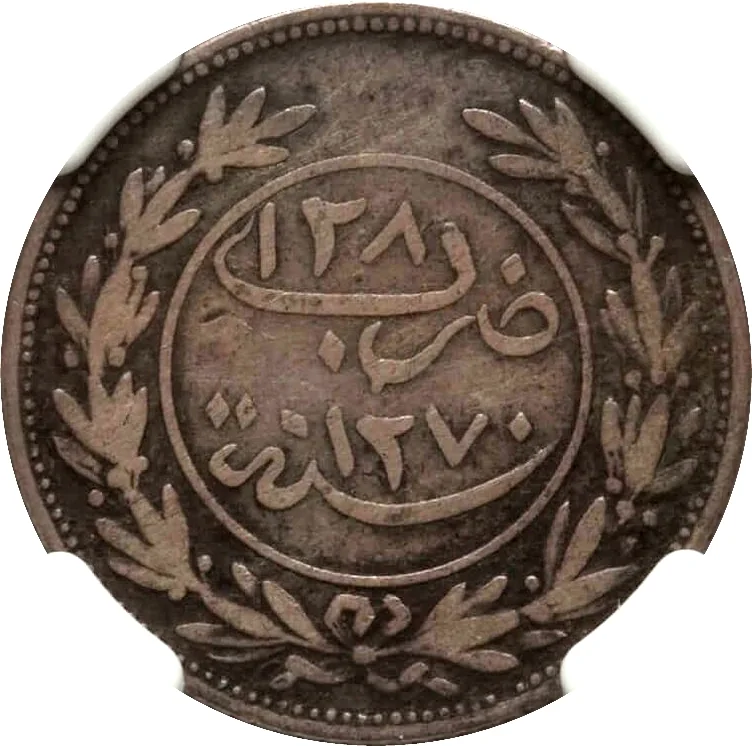
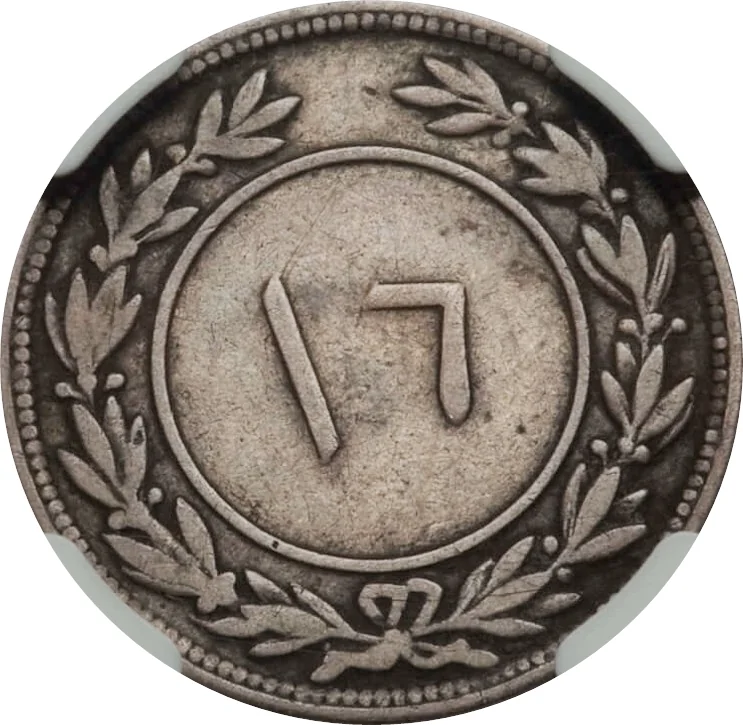
16 Khumsi – Kathiri Sultanate
Yemen
Context
Year: 1854
Islamic (Hijri) Year: 1270
Country: Yemen 
Issuer: Kathiri Sultanate
Currency:
Demonetized: Yes
Material
References
KM: #Click to copy to clipboard212
Numista: #123053
Value
Bullion value: $8.73
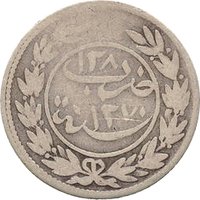
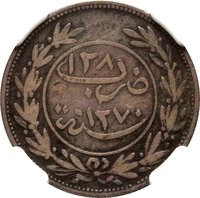
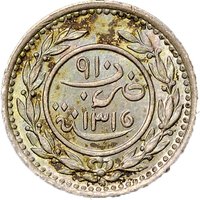
Obverse
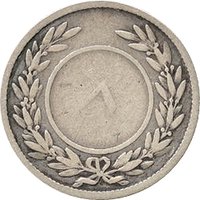
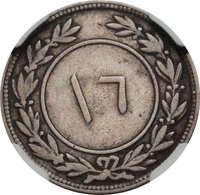
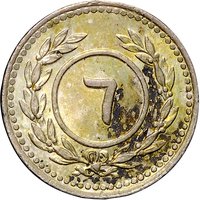
Reverse
Edge
Mintings
| Year | Mint Mark | Mintage | Quality | Collection |
|---|---|---|---|---|
| 1854 | — | — |
Historical background
In 1854, the Kathiri Sultanate in Hadhramaut (modern-day eastern Yemen) operated within a complex and fragmented monetary environment, typical of the South Arabian coast. The state itself did not mint its own coinage, leaving the economy reliant on a diverse circulation of foreign silver coins. The most important of these was the Maria Theresa thaler (MT$), a large Austrian silver coin prized throughout the Red Sea and Indian Ocean regions for its consistent weight and high silver content. It served as the de facto standard for larger transactions and long-distance trade.
Alongside the thaler, a variety of other coins circulated, including older Ottoman and Yemeni imadi riyals, Spanish dollars, and Indian rupees. This created a system where exchange rates fluctuated based on the precise weight, fineness, and physical condition of individual coins, requiring money changers (sayrafis) to play a central role in commerce. The internal economy also relied heavily on smaller denomination coins like copper fulus for everyday market purchases, and transactions in kind remained common, especially in rural areas.
This monetary heterogeneity reflected Kathiri's position within broader economic networks. Its prosperity was tied to the diaspora trade, with wealthy merchant families based in Southeast Asia and India remitting wealth back to Hadhramaut, much of it in silver specie. Furthermore, the Sultanate's vague tributary relationship with the Ottoman Empire, which claimed suzerainty but exerted little direct control, meant there was no overarching authority to impose a unified currency. Thus, the monetary situation in 1854 was one of practical adaptation, defined by foreign silver, local brokerage, and the demands of a trade-oriented economy.
Alongside the thaler, a variety of other coins circulated, including older Ottoman and Yemeni imadi riyals, Spanish dollars, and Indian rupees. This created a system where exchange rates fluctuated based on the precise weight, fineness, and physical condition of individual coins, requiring money changers (sayrafis) to play a central role in commerce. The internal economy also relied heavily on smaller denomination coins like copper fulus for everyday market purchases, and transactions in kind remained common, especially in rural areas.
This monetary heterogeneity reflected Kathiri's position within broader economic networks. Its prosperity was tied to the diaspora trade, with wealthy merchant families based in Southeast Asia and India remitting wealth back to Hadhramaut, much of it in silver specie. Furthermore, the Sultanate's vague tributary relationship with the Ottoman Empire, which claimed suzerainty but exerted little direct control, meant there was no overarching authority to impose a unified currency. Thus, the monetary situation in 1854 was one of practical adaptation, defined by foreign silver, local brokerage, and the demands of a trade-oriented economy.
✨ Legendary