Logo Title
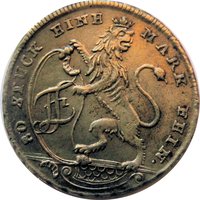
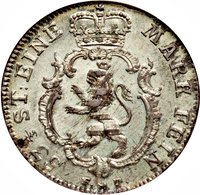
obverse
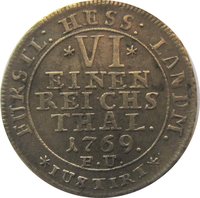
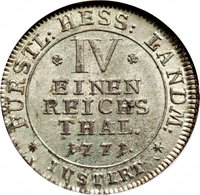
reverse
Purzelgnom
Context
Years: 1768–1771
Currency:
Demonetized: Yes
Material
Diameter: 27 mm
Weight: 5 g
Silver weight: 5.00 g
Thickness: 1 mm
Shape: Round
Composition: Silver
Magnetic: No
Alignment: Medal alignment
Obverse
OBVERSE ↑
flip
Reverse
REVERSE ↑
References
KM: #Click to copy to clipboard490
Numista: #108003
Value
Bullion value: $14.02

Obverse

Description:
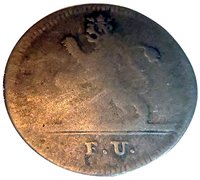
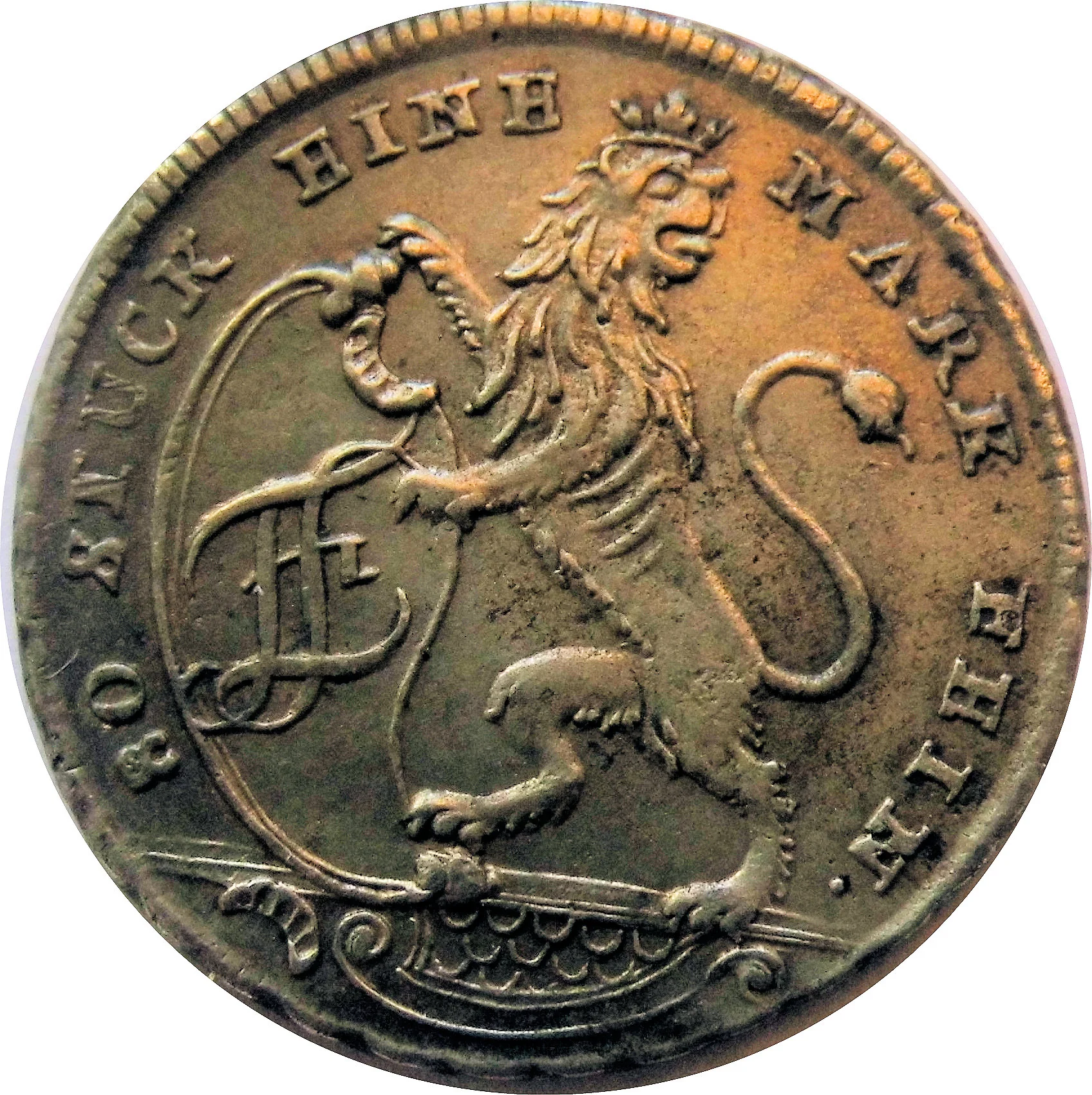
Rampant lion clutching a monogrammed shield.
Inscription:
80 STUCK EINE MARK FEIN.
Script: Latin

Reverse

Description:
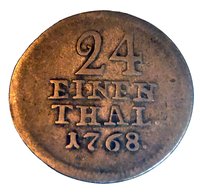
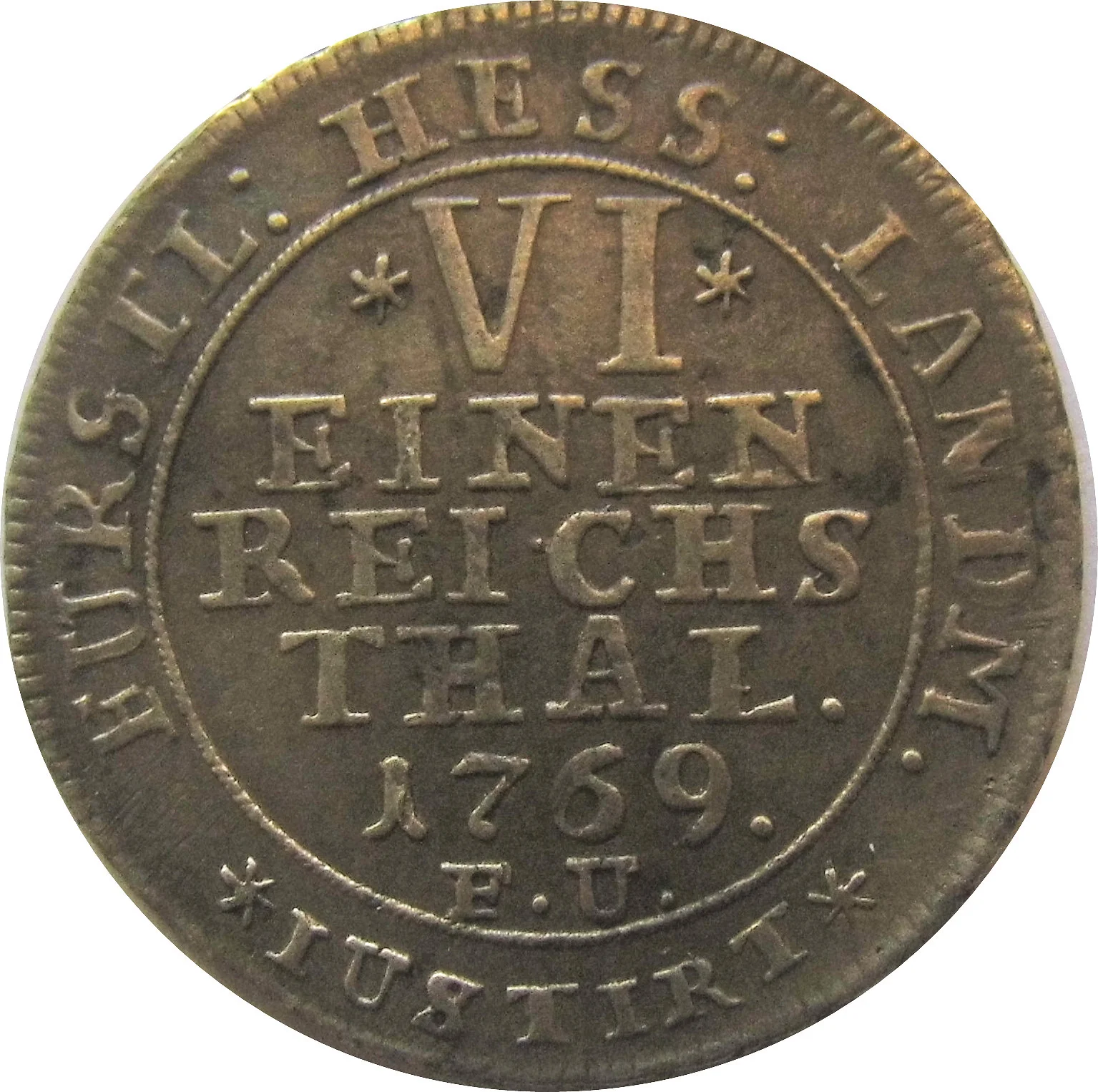
Central inscription with date, denomination, and mintmarks, encircled by a legend.
Inscription:
FURSTL : HESS : LANDM .

* IUSTIRT *

*VI*

EINEN

REICHS

THAL.

1769.

F.U.
Script: Latin

Edge

Mints

NameMark
Kassel

Mintings

YearMint MarkMintageQualityCollection
1768
1769
1771

Historical background

In 1768, the currency situation in the Landgraviate of Hesse-Cassel was one of relative stability and strength, a notable achievement in the fragmented and often chaotic monetary landscape of the Holy Roman Empire. This stability was largely the legacy of Landgrave William VIII (ruled 1751-1760), who had aggressively accumulated a vast war chest by hiring out his formidable army as mercenaries, most famously to his uncle, Great Britain, during the Seven Years' War. The resulting influx of British subsidy payments in solid silver thalers provided a robust metallic base for the landgraviate's currency, allowing it to avoid the severe debasement plaguing many neighboring territories.

The cornerstone of the monetary system was the Reichsthaler (Imperial Thaler), a large silver coin whose value was tied to the Konventionsfuß (Convention Standard) adopted by several German states in 1753. This standard set a fixed silver content, making the Hesse-Cassel thaler a trusted and widely accepted trade coin. Domestically, this thaler was subdivided into 32 Albuss or 24 Gute Groschen, creating a complex but functional system for everyday transactions. The landgraviate's own mint in Kassel actively produced these coins, ensuring a reliable supply.

However, this internal strength existed within a challenging external context. The year 1768 fell during the reign of the less financially astute Landgrave Frederick II, whose lavish spending would later strain the treasury. Furthermore, the territory still contended with the circulation of numerous foreign coins from neighboring states, each with fluctuating values, requiring constant official ordinances to fix exchange rates. Thus, while Hesse-Cassel enjoyed a period of monetary credibility and reserve strength in 1768, it required careful management to maintain its advantageous position amidst the empire's persistent monetary disorder.

Series: 1768 Landgraviate of Hesse-Cassel circulation coins

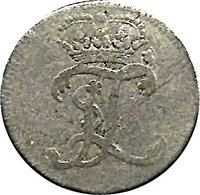
1 Albus obverse
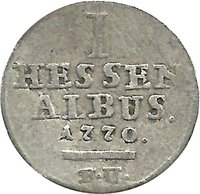
1 Albus reverse
1 Albus
1768-1777
⅙ Thaler obverse
⅙ Thaler reverse
⅙ Thaler
1768-1771
¼ Reichsthaler obverse
¼ Reichsthaler reverse
¼ Reichsthaler
1768-1772
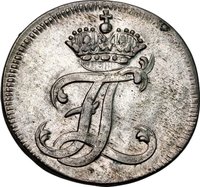
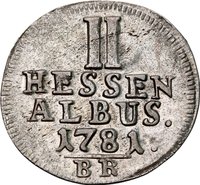
2 Albus obverse
2 Albus reverse
2 Albus
1768-1783
1⁄24 Thaler obverse
1⁄24 Thaler reverse
1⁄24 Thaler
1768-1780
Legendary