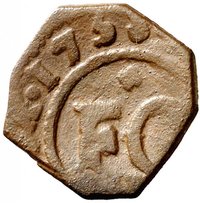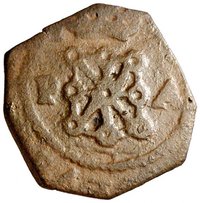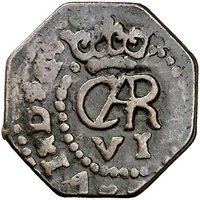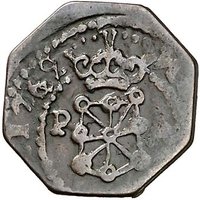
In 1759, the Kingdom of Navarre, while politically integrated into the Spanish Crown through the personal union of the Catholic Monarchs, retained its distinct fiscal and monetary privileges (
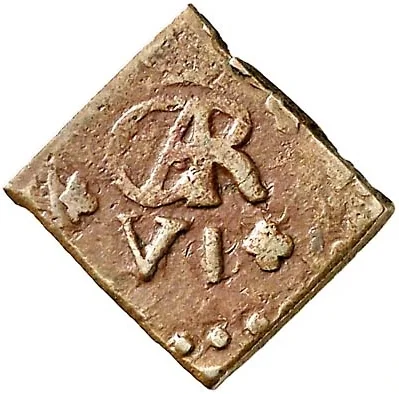
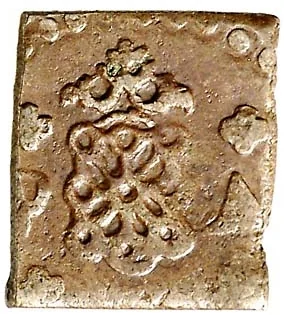
fueros). This unique status meant that, unlike most of Spain, Navarre minted its own coinage. The primary mint was located in Pamplona, producing distinctive silver
reales and copper
cornados that bore the king's effigy and the Navarrese coat of arms. These coins were legal tender within the kingdom's borders and circulated alongside Spanish national coinage, creating a dual-currency environment that reflected Navarre's cherished autonomy.
The monetary system in Navarre was intrinsically linked to its complex relationship with Madrid. The kingdom collected its own taxes and managed its treasury, but it also paid an agreed annual sum (
el donativo) to the royal coffers in Madrid. The stability of Navarrese currency in 1759 was therefore heavily influenced by the broader economic policies of King Ferdinand VI (and, from August of that year, his successor Charles III). Spain's involvement in the Seven Years' War placed financial strain on the empire, leading to pressures that could devalue coinage. However, Navarre's insulated fiscal administration provided a buffer, often allowing it to maintain a more stable currency than the sometimes-debased coinage issued by the central Spanish mints.
Economically, the currency facilitated both local agriculture and cross-border trade with France, a constant feature of Navarrese life. The Pyrenean border was porous, and French coinage, particularly the
louis d'or and
écu, commonly circulated in the northern regions. This necessitated constant exchange and valuation, making money changers and merchants key economic figures. Thus, in 1759, the currency situation in Navarre was one of controlled duality: a symbol of historic self-government under the
fueros, yet increasingly sensitive to the imperial demands and economic currents of the wider Spanish monarchy.