

6 Skilling – Denmark
Denmark
Context

Material
References
KM: #Click to copy to clipboard110
Numista: #107718
Value
Bullion value: $4.01
Obverse
Description:
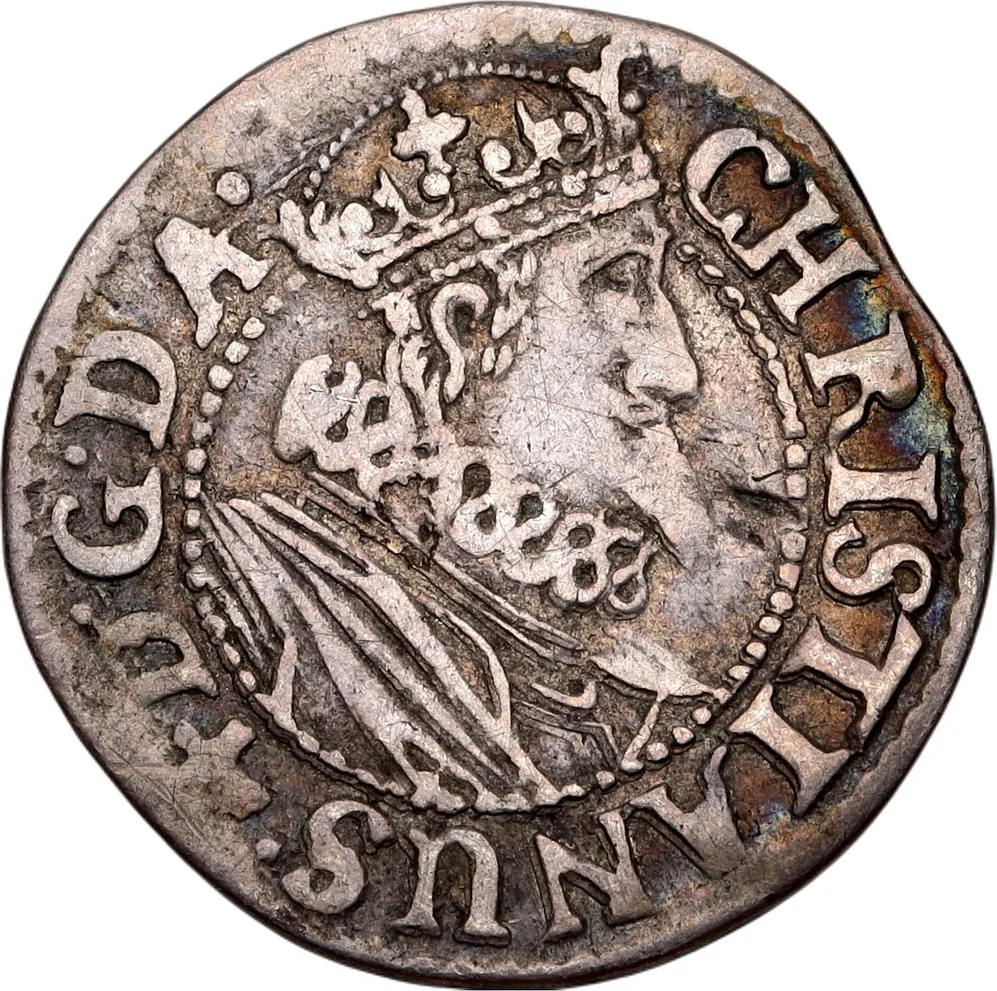
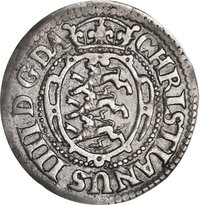
Bust of Christian IV within beaded circle, legend outside.
Inscription:
CHRISTIANUS · 4 · D · G · DA ·
Script: Latin
Reverse
Description:
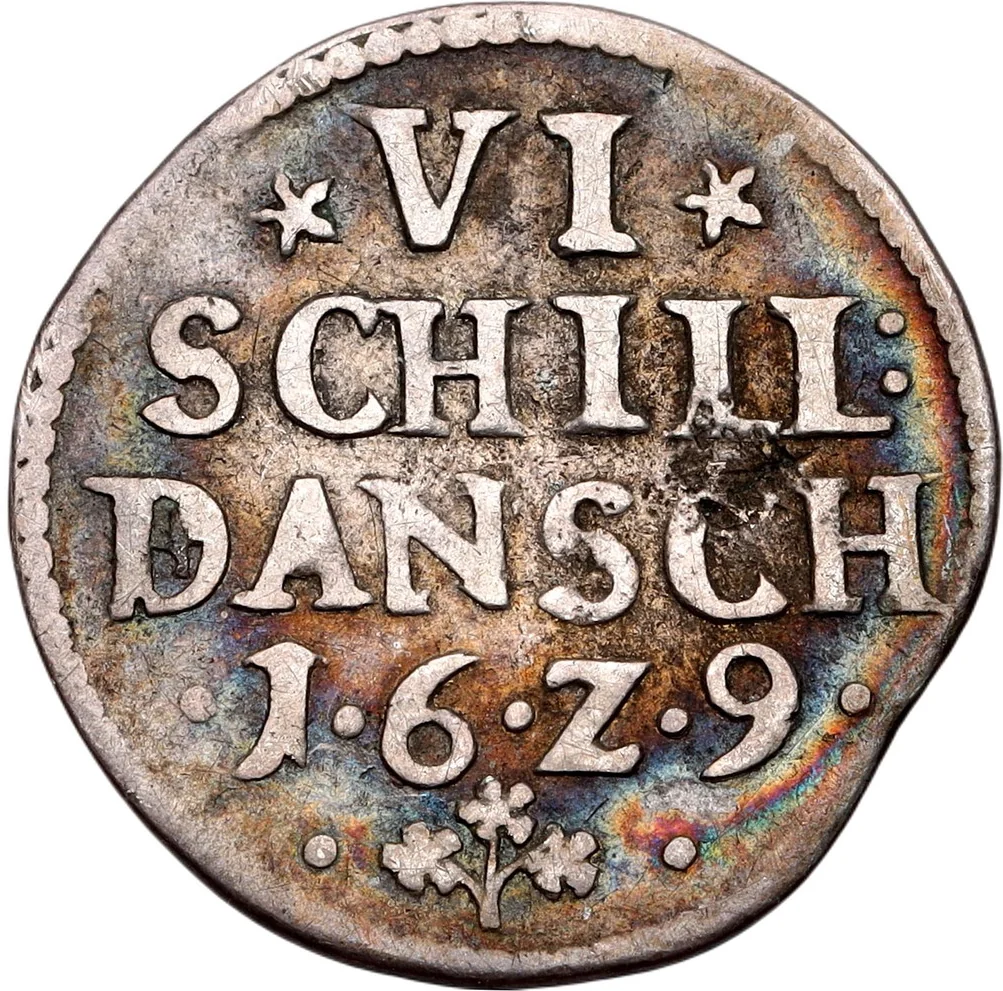
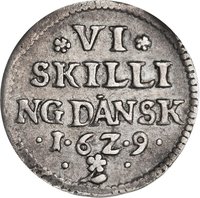
Value above.
Date and mintmark below.
Date and mintmark below.
Inscription:
* VI *
SCHILL
DANSCH
.1.6.2.9.
SCHILL
DANSCH
.1.6.2.9.
Script: Latin
Edge
Mints
| Name | Mark |
|---|---|
| Copenhagen | RD |
Historical background
In 1628, Denmark was in the midst of the "Kipper- und Wipperzeit," a severe monetary crisis that had swept across Central and Northern Europe. Triggered by the immense financial strain of the Thirty Years' War (1618-1648), the crisis was characterized by the deliberate debasement of coinage. State mints, alongside numerous illegal operations, were melting down high-value coins and re-minting them with reduced precious metal content, while keeping their face value the same. This practice, intended to generate quick profit for war financing, flooded the kingdom with unstable, low-quality currency.
The consequences for the Danish economy were dire. Trust in the coinage collapsed, leading to rampant inflation as merchants and the public demanded higher amounts of the debased coins for goods and services. A chaotic system of valuation emerged, where older, purer coins were hoarded and disappeared from circulation (Gresham's Law in action), while the new, "bad" money drove out the "good." This eroded savings, disrupted trade, and caused significant hardship for the common population, who saw their purchasing power evaporate.
King Christian IV's government struggled to control the situation. Despite issuing repeated ordinances that attempted to fix exchange rates and condemn the debasement, these measures were largely ineffective. The crisis was deeply intertwined with the costs of the king’s ambitious military interventions in the war, particularly the failed campaign in Germany. The monetary instability of 1628 thus reflected not only a European-wide phenomenon but also the specific fiscal pressures of a Danish monarchy overextending itself in a costly continental conflict, undermining the kingdom's economic foundation.
The consequences for the Danish economy were dire. Trust in the coinage collapsed, leading to rampant inflation as merchants and the public demanded higher amounts of the debased coins for goods and services. A chaotic system of valuation emerged, where older, purer coins were hoarded and disappeared from circulation (Gresham's Law in action), while the new, "bad" money drove out the "good." This eroded savings, disrupted trade, and caused significant hardship for the common population, who saw their purchasing power evaporate.
King Christian IV's government struggled to control the situation. Despite issuing repeated ordinances that attempted to fix exchange rates and condemn the debasement, these measures were largely ineffective. The crisis was deeply intertwined with the costs of the king’s ambitious military interventions in the war, particularly the failed campaign in Germany. The monetary instability of 1628 thus reflected not only a European-wide phenomenon but also the specific fiscal pressures of a Danish monarchy overextending itself in a costly continental conflict, undermining the kingdom's economic foundation.
💎 Extremely Rare