

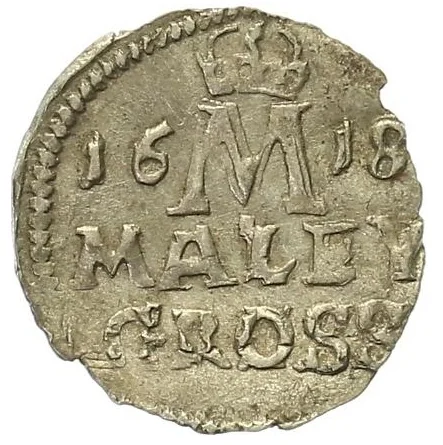
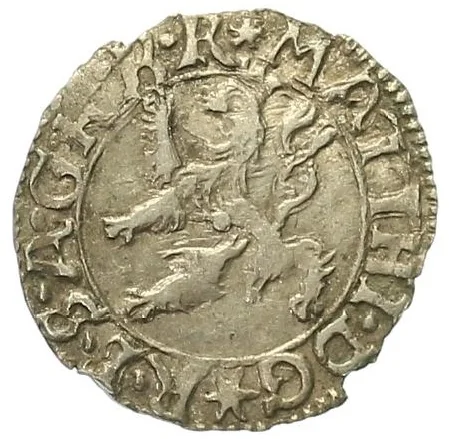
½ Groschen – Kingdom of Bohemia
Context
Years: 1613–1619
Country: Bohemia
Issuer: Kingdom of Bohemia
Ruler: Matthias II
Currency:
(1520—1754)
Demonetized: Yes
References
KM: #Click to copy to clipboard153
Numista: #107514
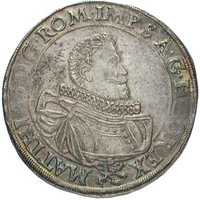
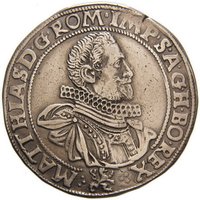
Obverse
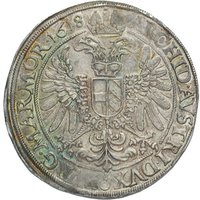
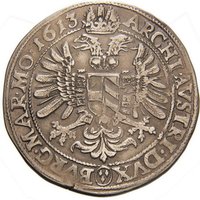
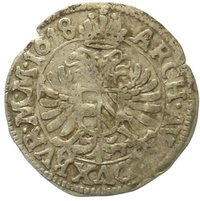
Reverse
Description:
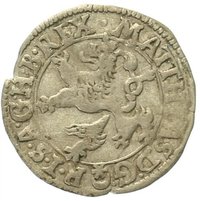
Bohemian lion crowned in circle. Circular legend, star below.
Inscription:
MATTHI D G * R I S A G H B R
Script: Latin
Edge
Plain
Mints
| Name | Mark |
|---|---|
| Kuttenberg | — |
Mintings
| Year | Mint Mark | Mintage | Quality | Collection |
|---|---|---|---|---|
| 1613 | ee | — | ||
| 1615 | ee | — | ||
| 1617 | ee | — | ||
| 1618 | ee | — | ||
| 1619 | ee | — |
Historical background
In 1613, the Kingdom of Bohemia, a crown land of the Habsburg Monarchy, was grappling with a severe and complex monetary crisis. The root cause was the proliferation of debased coinage, particularly small denáry (pennies) and krejcar (kreuzers), which were minted with ever-decreasing silver content. This "coinage deterioration" was driven both by the Habsburg central mint seeking profit to fund state debts and by unauthorized mints operated by powerful estates, flooding the market with inferior money. The result was Gresham's Law in action: "good" full-weight coins were hoarded or exported, while "bad" debased coins dominated everyday transactions, eroding public trust and causing price inflation.
The situation was exacerbated by Bohemia's position within a fragmented monetary system. While the Habsburgs attempted to impose central monetary ordinances, the kingdom's estates fiercely defended their traditional rights, including control over local minting. Furthermore, Bohemia was economically linked to neighboring German states, which also engaged in competitive devaluation, making effective monetary reform nearly impossible without regional cooperation. The economic turmoil created social tension, as wages for commoners failed to keep pace with rising prices for basic goods, and creditors suffered losses when repaid in degraded currency.
This monetary instability existed within a volatile political and religious context. The Bohemian estates, largely Protestant and protective of their privileges, were in increasing conflict with the Catholic Habsburg monarch, Matthias (though the defiantly Protestant Frederick V would soon be elected King). The currency crisis thus became intertwined with the broader struggle for political control. Attempts at reform, like the Münzordnung of 1611, had proven ineffective, leaving the economy in a precarious state on the eve of the 1618 Defenestration of Prague—an event that would trigger the Thirty Years' War and further devastate Bohemia's financial system.
The situation was exacerbated by Bohemia's position within a fragmented monetary system. While the Habsburgs attempted to impose central monetary ordinances, the kingdom's estates fiercely defended their traditional rights, including control over local minting. Furthermore, Bohemia was economically linked to neighboring German states, which also engaged in competitive devaluation, making effective monetary reform nearly impossible without regional cooperation. The economic turmoil created social tension, as wages for commoners failed to keep pace with rising prices for basic goods, and creditors suffered losses when repaid in degraded currency.
This monetary instability existed within a volatile political and religious context. The Bohemian estates, largely Protestant and protective of their privileges, were in increasing conflict with the Catholic Habsburg monarch, Matthias (though the defiantly Protestant Frederick V would soon be elected King). The currency crisis thus became intertwined with the broader struggle for political control. Attempts at reform, like the Münzordnung of 1611, had proven ineffective, leaving the economy in a precarious state on the eve of the 1618 Defenestration of Prague—an event that would trigger the Thirty Years' War and further devastate Bohemia's financial system.
✨ Legendary