

1 Denier – Hungary
Hungary
Context
Years: 1760–1763
Issuer: Hungary 
Ruler: Maria Theresa
Currency:
(1754—1857)
Demonetized: Yes
Total mintage: 1,192,300
Material
References
KM: #Click to copy to clipboard375
Numista: #196316
Obverse
Description:
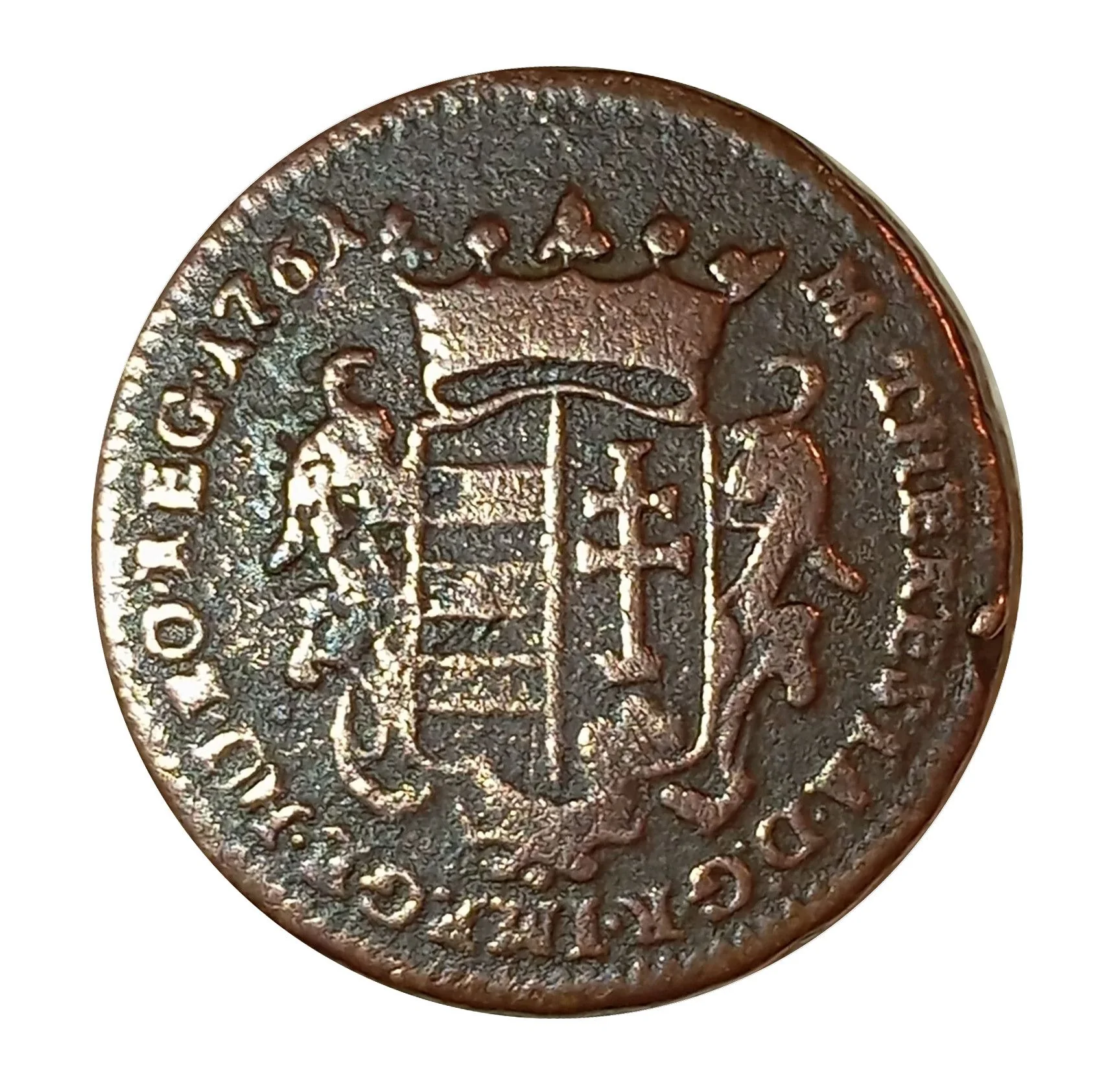
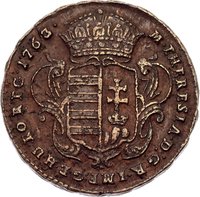
Hungarian shield in cartouche with open crown.
Inscription:
M · THERESIA · D : G · R · IMP · GE · HU · BO · REG · 1763 ·
Script: Latin
Reverse
Edge
Mintings
| Year | Mint Mark | Mintage | Quality | Collection |
|---|---|---|---|---|
| 1760 | — | 1,089,000 | ||
| 1761 | — | 97,000 | ||
| 1763 | — | 6,300 |
Historical background
In 1760, Hungary operated within the complex monetary system of the Habsburg Monarchy, which was characterized by chronic instability and a persistent shortage of sound currency. The official currency was based on the Conventionsthaler (or Konventionsthaler), a large silver coin introduced in 1754, which was valued at 2 Gulden (or forints). However, the actual circulating medium was a chaotic mix of older, debased silver coins, copper coins of low value (kreuzers), and a plethora of foreign currencies from neighboring states like the Ottoman Empire and Poland. This fragmentation made large-scale commerce and state finance cumbersome, as constant exchange and valuation were required.
The root of Hungary's monetary troubles lay in the Habsburgs' frequent wars, particularly the Seven Years' War (1756-1763), which was ongoing in 1760. To finance massive military expenditures, the state resorted to debasement—reducing the precious metal content in coins—and increased the minting of low-value copper coins. This led to severe inflation, a disconnect between the official and market value of coins, and widespread economic uncertainty. The silver Conventionsthaler became a unit of account for large transactions and state contracts, but everyday life for most Hungarians was conducted in a depreciating flood of copper and unstable subsidiary coins.
Furthermore, Hungary's economy was still predominantly agrarian and manorial, which limited the need for a sophisticated, unified currency in rural areas where barter and payment in kind were common. The monetary chaos primarily affected trade, urban centers, and state administration. While there were calls for reform, the pressing demands of war took precedence. Consequently, in 1760, Hungary lacked a stable, uniform national currency, existing instead within a strained imperial system struggling with the fiscal pressures of conflict, setting the stage for later attempts at monetary standardization under Maria Theresa and Joseph II.
The root of Hungary's monetary troubles lay in the Habsburgs' frequent wars, particularly the Seven Years' War (1756-1763), which was ongoing in 1760. To finance massive military expenditures, the state resorted to debasement—reducing the precious metal content in coins—and increased the minting of low-value copper coins. This led to severe inflation, a disconnect between the official and market value of coins, and widespread economic uncertainty. The silver Conventionsthaler became a unit of account for large transactions and state contracts, but everyday life for most Hungarians was conducted in a depreciating flood of copper and unstable subsidiary coins.
Furthermore, Hungary's economy was still predominantly agrarian and manorial, which limited the need for a sophisticated, unified currency in rural areas where barter and payment in kind were common. The monetary chaos primarily affected trade, urban centers, and state administration. While there were calls for reform, the pressing demands of war took precedence. Consequently, in 1760, Hungary lacked a stable, uniform national currency, existing instead within a strained imperial system struggling with the fiscal pressures of conflict, setting the stage for later attempts at monetary standardization under Maria Theresa and Joseph II.
⭐ Somewhat Rare