

1 Ducat – Hungary
Hungary

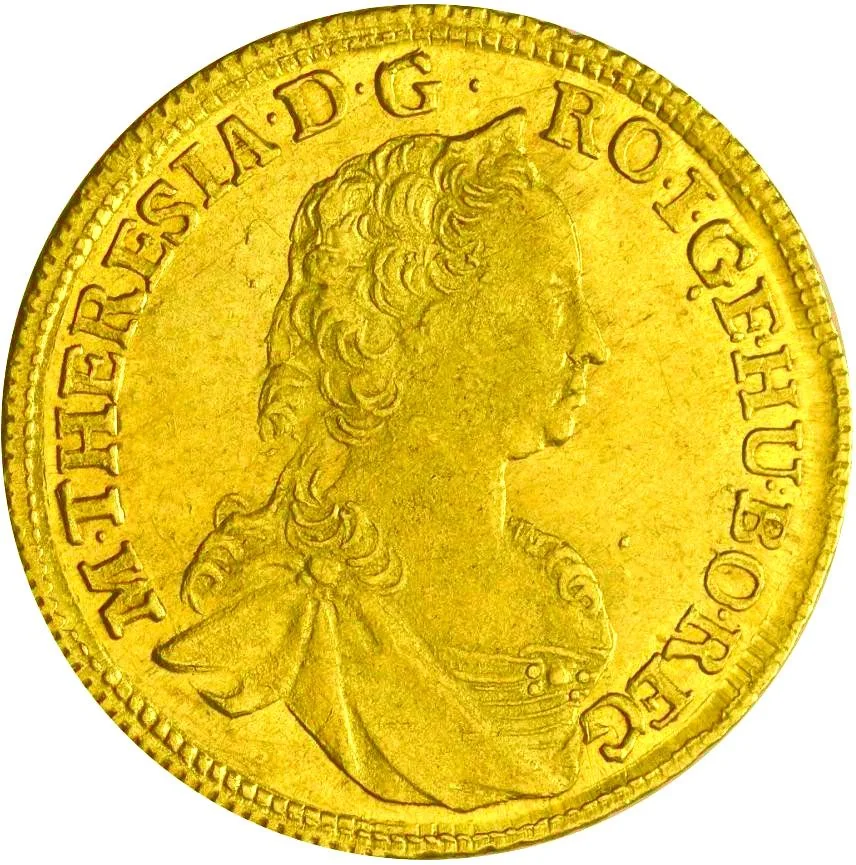
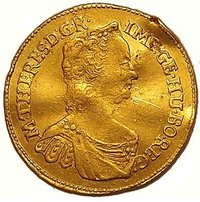
Obverse
Description:
Mid-aged king facing right, text begins lower left.
Inscription:
M · THERES · D · G · RO · I · GE · HU · BO · REG ·
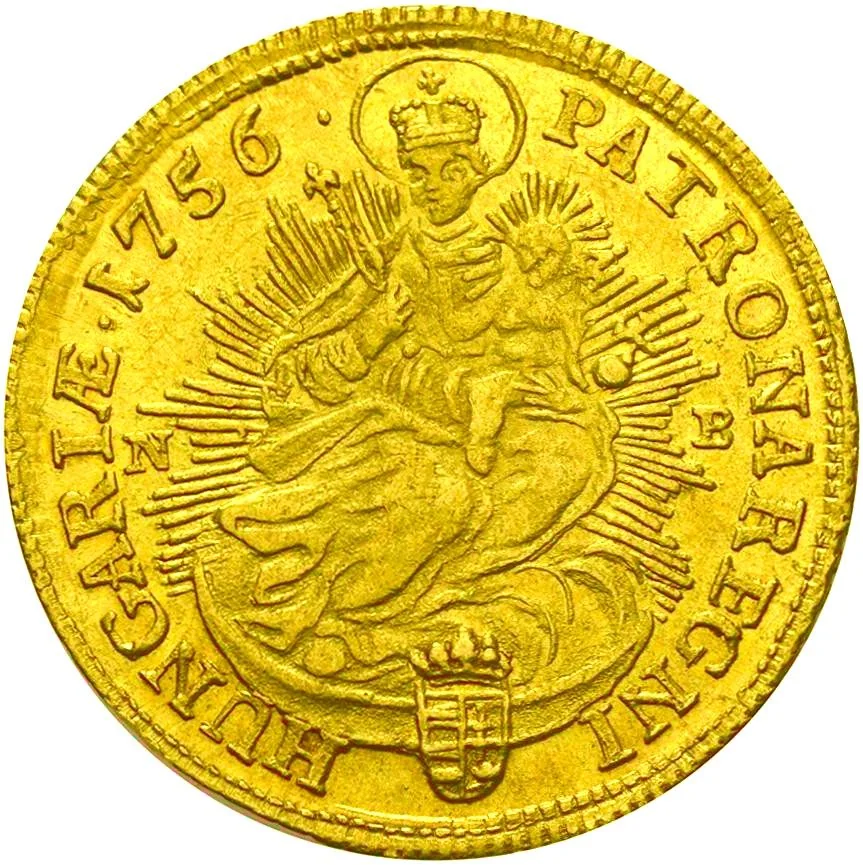
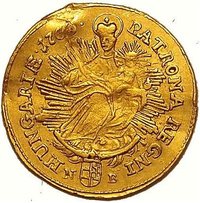
Reverse
Description:
Enthroned, crowned Madonna and Child. She holds an orb and scepter over the crowned Hungarian coat of arms, with mintmark below.
Inscription:
PATRONA · REGNI · HUNGARIÆ · 1757 ·
N B
N B
Edge
Mints
| Name | Mark |
|---|---|
| Baia Mare | — |
Mintings
| Year | Mint Mark | Mintage | Quality | Collection |
|---|---|---|---|---|
| 1756 | N | — | ||
| 1757 | N | — |
Historical background
In 1756, Hungary operated within the complex monetary system of the Habsburg Monarchy, which was characterized by chronic instability and a persistent shortage of sound currency. The official currency was based on the Conventionsthaler (or Konventionstaler), a large silver coin introduced in 1754, which was valued at 2 Gulden (or forints). However, the everyday economy relied on a confusing mix of older silver coins, small change, and heavily debased subsidiary coins. The state's frequent military expenditures, particularly with the looming Seven Years' War (which began that same year), placed immense strain on the treasury, leading to pressures for currency manipulation to fund the army.
The circulation was plagued by a significant disparity between "good" full-weight silver coins and "bad" debased coins. This led to Gresham's Law in practice, where people hoarded high-value silver (like the Conventionsthaler and older Maria Theresa thalers), while the debated kreuzers and polturas flooded the market, causing inflation in everyday transactions. Furthermore, the Kingdom of Hungary had a degree of autonomy in minting, with mints in Nagybánya (today Baia Mare, Romania) and Körmöcbánya (today Kremnica, Slovakia), but their output was insufficient and often followed Vienna's directives, which prioritized the monarchy's wider fiscal needs over local Hungarian economic stability.
Consequently, the monetary situation for most Hungarians—peasants, traders, and nobles alike—was one of uncertainty and inconvenience. Prices were unstable, and the value of money could vary significantly by region, complicating trade and taxation. This fragile system, underpinned by the monarchy's fiscal demands, created a foundation of economic tension that would persist and worsen in the subsequent decades, contributing to broader social and political grievances within the kingdom.
The circulation was plagued by a significant disparity between "good" full-weight silver coins and "bad" debased coins. This led to Gresham's Law in practice, where people hoarded high-value silver (like the Conventionsthaler and older Maria Theresa thalers), while the debated kreuzers and polturas flooded the market, causing inflation in everyday transactions. Furthermore, the Kingdom of Hungary had a degree of autonomy in minting, with mints in Nagybánya (today Baia Mare, Romania) and Körmöcbánya (today Kremnica, Slovakia), but their output was insufficient and often followed Vienna's directives, which prioritized the monarchy's wider fiscal needs over local Hungarian economic stability.
Consequently, the monetary situation for most Hungarians—peasants, traders, and nobles alike—was one of uncertainty and inconvenience. Prices were unstable, and the value of money could vary significantly by region, complicating trade and taxation. This fragile system, underpinned by the monarchy's fiscal demands, created a foundation of economic tension that would persist and worsen in the subsequent decades, contributing to broader social and political grievances within the kingdom.
✨ Legendary