

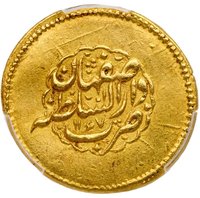
⅓ Mohur – Hotak dynasty
Iran
Context
Years: 1754–1757
Country: Iran 
Issuer: Hotak dynasty
Ruler: Azad Khan Afghan
Currency:
(1501—1798)
Demonetization: 1757
Material
Weight: 3.73 g
Gold weight: 3.73 g
Shape: Irregular round
Composition: Gold
Magnetic: No
Alignment: Coin alignment
flip
References
KM: #Click to copy to clipboard483
Numista: #195608
Value
Bullion value: $621.90
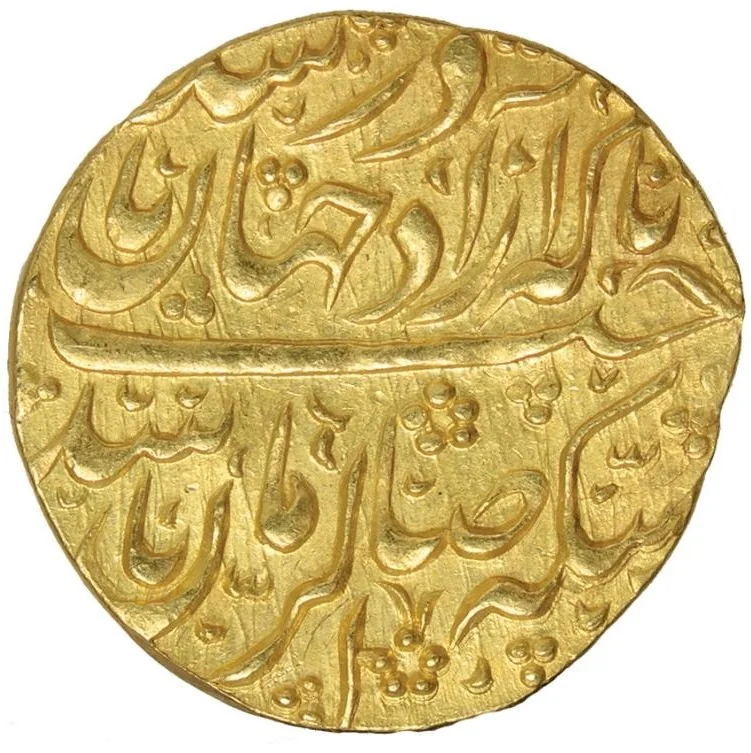
Obverse
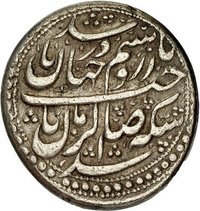
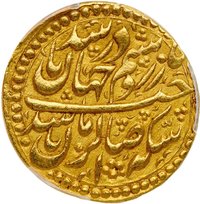
Inscription:
تا که آزاد در جهان باشد
سکّه صاحب الزمان باشد
سکّه صاحب الزمان باشد
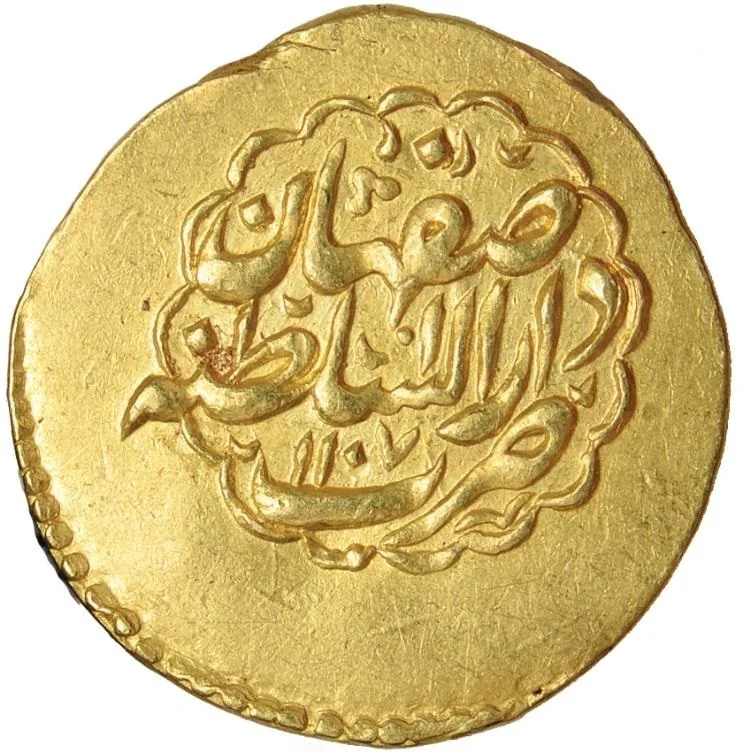
Reverse
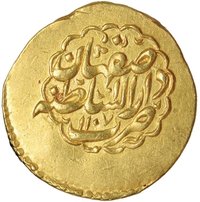
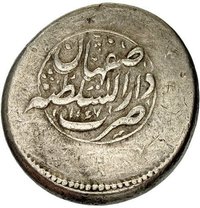
Inscription:
ضرب دارالسلطنه اصفهان
۱۱۰۷
۱۱۰۷
Edge
Plain
Mints
| Name | Mark |
|---|---|
| Isfahan | اصفهان |
Mintings
| Year | Mint Mark | Mintage | Quality | Collection |
|---|---|---|---|---|
| 1754 | — | — | ||
| 1757 | — | — |
Historical background
The Hotak dynasty's currency situation in 1754 was one of severe crisis and debasement, reflecting the empire's terminal political and economic instability. By this late date, the Hotak rulers in Isfahan controlled only fragments of their former territory, having been driven from their Afghan homeland and facing relentless pressure from resurgent Persian forces under Nader Shah Afshar (who had been assassinated in 1747) and his successors. The dynasty's authority was collapsing, and with it, the integrity of the monetary system. The state treasury was depleted from decades of continuous warfare, and the minting of reliable, full-weight coinage had become unsustainable.
In practice, the currency in circulation was a chaotic mix of heavily debased contemporary issues and older, purer coins from the Safavid era and Nader Shah's brief reign, which were hoarded for their intrinsic silver and gold value. The Hotak mints, operating under extreme fiscal pressure, produced coins with progressively lower precious metal content. This led to a classic vicious cycle of inflation and loss of public confidence, as merchants and subjects refused to accept the new debased currency at face value. The economy increasingly reverted to barter or relied on the residual value of older, trusted coins, undermining both trade and state revenue.
Ultimately, the monetary chaos of 1754 was a direct symptom of the dynasty's imminent collapse. The Hotaks were unable to project the sovereign power necessary to maintain a uniform and trusted currency, which is a fundamental pillar of any state. Within a year, in 1755, the last Hotak ruler, Shahrokh Shah, was captured and executed by a chieftain loyal to the Afsharids, definitively ending the dynasty. The currency situation, therefore, stands as a stark indicator of a state in its final death throes, where economic order had completely broken down amidst political and military disintegration.
In practice, the currency in circulation was a chaotic mix of heavily debased contemporary issues and older, purer coins from the Safavid era and Nader Shah's brief reign, which were hoarded for their intrinsic silver and gold value. The Hotak mints, operating under extreme fiscal pressure, produced coins with progressively lower precious metal content. This led to a classic vicious cycle of inflation and loss of public confidence, as merchants and subjects refused to accept the new debased currency at face value. The economy increasingly reverted to barter or relied on the residual value of older, trusted coins, undermining both trade and state revenue.
Ultimately, the monetary chaos of 1754 was a direct symptom of the dynasty's imminent collapse. The Hotaks were unable to project the sovereign power necessary to maintain a uniform and trusted currency, which is a fundamental pillar of any state. Within a year, in 1755, the last Hotak ruler, Shahrokh Shah, was captured and executed by a chieftain loyal to the Afsharids, definitively ending the dynasty. The currency situation, therefore, stands as a stark indicator of a state in its final death throes, where economic order had completely broken down amidst political and military disintegration.

✨ Legendary