

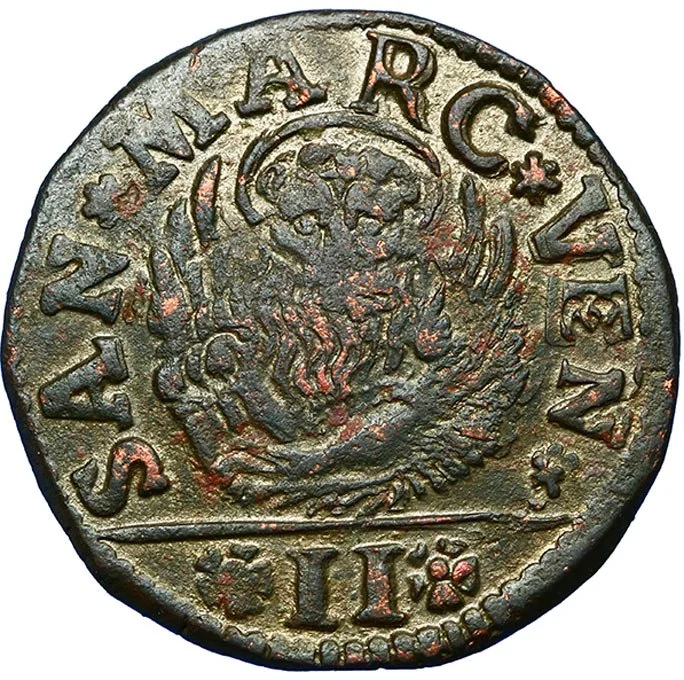
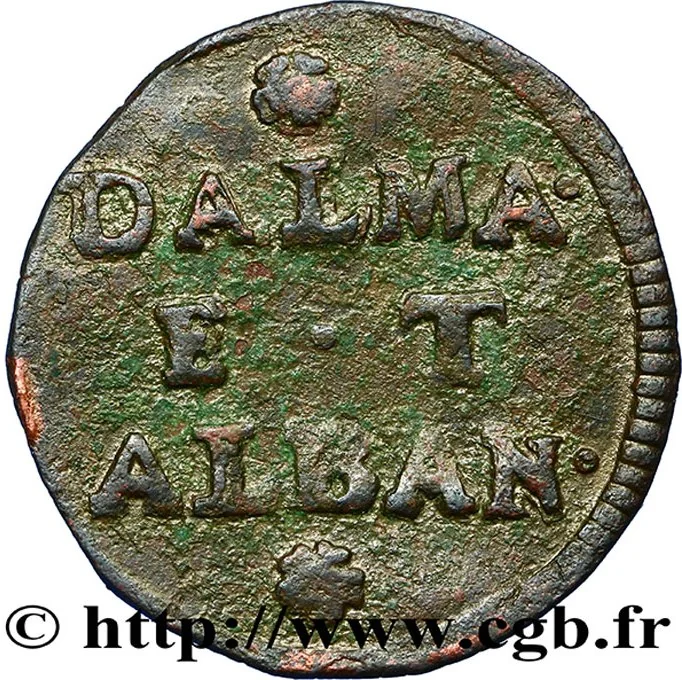
2 Soldi – Venice
Italy

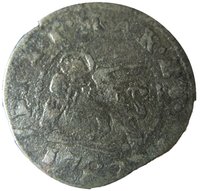
Obverse
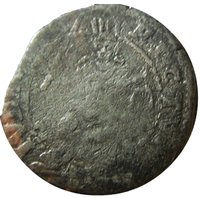
Reverse
Edge
Mints
| Name | Mark |
|---|---|
| Venice | — |
Mintings
| Year | Mint Mark | Mintage | Quality | Collection |
|---|---|---|---|---|
| — | — | — |
Historical background
In 1691, the Republic of Venice was grappling with a severe and protracted monetary crisis, a legacy of the broader "Price Revolution" and decades of warfare. The primary issue was the chronic debasement of the domestic silver lira currency. To finance its long wars against the Ottoman Empire, notably the conflict over Crete (1645-1669), the state mint had repeatedly reduced the silver content of its smaller coins, such as the soldi and denari. This created a two-tiered system: heavy, full-value foreign silver coins (like Spanish reales and Dutch leeuwendaalders) used for international trade, and a constantly deteriorating domestic coinage for everyday use. The result was rampant inflation, price instability, and public mistrust, as the intrinsic metal value of a coin often fell below its face value.
The situation was exacerbated by Gresham's Law, where "bad money drives out good." Full-weight silver scudi and gold zecchini were hoarded, exported, or melted down, leaving the debased and worn petty coins to circulate at forced, unstable rates. This caused significant hardship for the poor and for wage earners, whose purchasing power eroded, and created chaos for merchants and artisans trying to set prices. The government's attempts to fix exchange rates by decree between the various foreign and domestic coins in circulation proved futile, as market forces consistently undermined official proclamations.
By 1691, the crisis demanded urgent action. The Venetian Senate, under the guidance of the Savi alla Mercanzia (Lords of Trade), was actively debating a fundamental monetary reform. This culminated in the major recoinage of 1692-1693, which introduced a new, stable silver lira tied directly to the ducato credit money. The background of 1691 is thus one of the final, tense years of a broken system, with the state preparing a drastic and costly intervention to restore confidence in the Venetian currency, stabilize prices, and protect its commercial reputation in the Mediterranean and beyond.
The situation was exacerbated by Gresham's Law, where "bad money drives out good." Full-weight silver scudi and gold zecchini were hoarded, exported, or melted down, leaving the debased and worn petty coins to circulate at forced, unstable rates. This caused significant hardship for the poor and for wage earners, whose purchasing power eroded, and created chaos for merchants and artisans trying to set prices. The government's attempts to fix exchange rates by decree between the various foreign and domestic coins in circulation proved futile, as market forces consistently undermined official proclamations.
By 1691, the crisis demanded urgent action. The Venetian Senate, under the guidance of the Savi alla Mercanzia (Lords of Trade), was actively debating a fundamental monetary reform. This culminated in the major recoinage of 1692-1693, which introduced a new, stable silver lira tied directly to the ducato credit money. The background of 1691 is thus one of the final, tense years of a broken system, with the state preparing a drastic and costly intervention to restore confidence in the Venetian currency, stabilize prices, and protect its commercial reputation in the Mediterranean and beyond.
🌟 Uncommon